



Subtitle "Afrikaans" was produced by machine.Subtitle "አማርኛ" was produced by machine.Subtitle "العربية " was produced by machine.Subtitle "Ārāmāyâ" was produced by machine.Subtitle "azərbaycan dili " was produced by machine.Subtitle "беларуская мова " was produced by machine.Подзаглавието "България" е създадено от машина.সাবটাইটেল "বাংলা " মেশিন দ্বারা তৈরি করা হয়েছিল।Subtitle "བོད་ཡིག" was produced by machine.Subtitle "босански" was produced by machine.Subtitle "català" was produced by machine.Subtitle "Cebuano" was produced by machine.Subtitle "ગુજરાતી" was produced by machine.Subtitle "corsu" was produced by machine.Podtitul "Čeština" byl vytvořen automaticky.Subtitle "Cymraeg" was produced by machine.Subtitle "Dansk" was produced by machine.Untertitel "Deutsch" wurde maschinell erzeugt.Subtitle "Untertitel" was produced by machine.Ο υπότιτλος "Ελληνικά" δημιουργήθηκε αυτόματα.Subtitle "English" was produced by machine.Subtitle "Esperanto" was produced by machine.El subtítulo "Español" se generó automáticamente.Subtitle "Eesti" was produced by machine.Subtitle "euskara" was produced by machine.Subtitle "فارسی" was produced by machine.Subtitle "Suomi" was produced by machine.Le sous-titrage "Français" a été généré automatiquement.Subtitle "Frysk" was produced by machine.Subtitle "Gaeilge" was produced by machine.Subtitle "Gàidhlig" was produced by machine.Subtitle "Galego" was produced by machine.Subtitle "Schwizerdütsch" was produced by machine.Subtitle "هَوُسَ" was produced by machine.Subtitle "Ōlelo Hawaiʻi" was produced by machine.Subtitle "עברית" was produced by machine.Subtitle "हिन्दी" was produced by machine.Subtitle "Mẹo" was produced by machine.Podnaslov "Hrvatski" generiran je automatski.Subtitle "Kreyòl ayisyen " was produced by machine.A magyar felirat gépi fordítással (MI) készült. Subtitle "Հայերեն" was produced by machine.Subtitle "Bahasa Indonesia " was produced by machine.Subtitle "Asụsụ Igbo " was produced by machine.Textun"Íslenska" var framkvæmt vélrænt.Sottotitoli "Italiano" sono stati generati con l'intelligenza artificiale.字幕は"日本語" 自動的に生成されました。Subtitle "Basa Jawa" was produced by machine.Subtitle "ქართული" was produced by machine.Subtitle "қазақ тілі " was produced by machine.Subtitle "ភាសាខ្មែរ" was produced by machine.Subtitle "ಕನ್ನಡ" was produced by machine.Subtitle "한국어" was produced by machine.Subtitle "कोंकणी語" was produced by machine.Subtitle "کوردی" was produced by machine.Subtitle "Кыргызча" was produced by machine.Subtitle " lingua latina" was produced by machine.Subtitle "Lëtzebuergesch" was produced by machine.Subtitle "Lingala" was produced by machine.Subtitle "ພາສາ" was produced by machine.Antraštė "Lietuvių" buvo sukurta mašina.Subtitle "Latviešu" was produced by machine.Subtitle "fiteny malagasy" was produced by machine.Subtitle "te reo Māori" was produced by machine.Subtitle "македонски јазик" was produced by machine.Subtitle "malayāḷaṁ" was produced by machine.Subtitle "Монгол хэл" was produced by machine.Subtitle "मराठी" was produced by machine.Subtitle "Bahasa Malaysia" was produced by machine.Subtitle "Malti" was produced by machine.Subtitle "မြန်မာစာ " was produced by machine.Subtitle "नेपाली" was produced by machine.Ondertitels "Nederlands" machinaal geproduceerd.Subtitle "Norsk" was produced by machine.Subtitle "chiCheŵa" was produced by machine.Subtitle "ਪੰਜਾਬੀ" was produced by machine.Podtytuł "Polska" został utworzony przez maszynę.Subtitle "پښتو" was produced by machine.Legenda "Português" foi gerada automaticamente.Subtitle "Română" was produced by machine.Subtitle "Язык жестов (Русский)" was produced by machine.Субтитры "Pусский" были созданы машиной.Subtitle "Kinyarwanda" was produced by machine.Subtitle "सिन्धी" was produced by machine.Subtitle "Deutschschweizer Gebärdensprache" was produced by machine.Subtitle "සිංහල" was produced by machine.Subtitle "Slovensky" was produced by machine.Subtitle "Slovenski" was produced by machine.Subtitle "gagana fa'a Samoa" was produced by machine.Subtitle "chiShona" was produced by machine.Subtitle "Soomaaliga" was produced by machine.Titra "Shqip" u krijua automatikisht.Превод "србски" је урађен машински.Subtitle "Sesotho" was produced by machine.Subtitle "Basa Sunda" was produced by machine.Undertext "Svenska" är maskinell skapad.Subtitle "Kiswahili" was produced by machine.Subtitle "தமிழ்" was produced by machine.Subtitle "తెలుగు" was produced by machine.Subtitle "Тоҷикй" was produced by machine.Subtitle "ภาษาไทย" was produced by machine.ንኡስ ኣርእስቲ "ትግርኛ" ብማሽን እዩ ተፈሪዩ።Subtitle "Türkmençe" was produced by machine.Subtitle "Tagalog" ay nabuo sa pamamagitan ng makina.Altyazı "Türkçe" otomatik olarak oluşturuldu.Subtitle "татар теле" was produced by machine.Subtitle "Українська " was produced by machine.ذیلی عنوان "اردو" مشین کے ذریعہ تیار کیا گیا تھا۔Subtitle "Oʻzbek" was produced by machine.Phụ đề được tạo bởi máy.Subtitle "Serbšćina" was produced by machine.Subtitle "isiXhosa" was produced by machine.Subtitle "ייִדיש" was produced by machine.Subtitle "Yorùbá" was produced by machine.字幕 "中文" 由机器生成。Subtitle "isiZulu" was produced by machine.
kla.TV accepts no liability for defective translation.kla.TV accepts no liability for defective translation.kla.TV accepts no liability for defective translation.kla.TV accepts no liability for defective translation.kla.TV accepts no liability for defective translation.kla.TV accepts no liability for defective translation.kla.TV не носи отговорност за некачествен превод.অপর্যাপ্ত অনুবাদের জন্য kla.TV কোন দায় বহন করে না।kla.TV accepts no liability for defective translation.kla.TV accepts no liability for defective translation.kla.TV accepts no liability for defective translation.kla.TV accepts no liability for defective translation.kla.TV accepts no liability for defective translation.kla.TV accepts no liability for defective translation.kla.TV nenese žádnou odpovědnost za chybné překlady.kla.TV accepts no liability for defective translation.kla.TV accepts no liability for defective translation.kla.TV übernimmt keine Haftung für mangelhafte Übersetzung.kla.TV accepts no liability for inadequate translationΗ kla.TV δεν φέρει καμία ευθύνη για ανεπαρκή μετάφραση.kla.TV accepts no liability for defective translation.kla.TV accepts no liability for defective translation.kla.TV no se hace responsable de traducciones incorrectas.kla.TV accepts no liability for defective translation.kla.TV accepts no liability for defective translation.kla.TV accepts no liability for defective translation.kla.TV accepts no liability for defective translation.kla.TV n'assume aucune responsabilité en cas de mauvaise traduction.kla.TV accepts no liability for defective translation.kla.TV accepts no liability for defective translation.kla.TV accepts no liability for defective translation.kla.TV accepts no liability for defective translation.kla.TV accepts no liability for defective translation.kla.TV accepts no liability for defective translation.kla.TV accepts no liability for defective translation.kla.TV accepts no liability for defective translation.kla.TV accepts no liability for defective translation.kla.TV accepts no liability for defective translation.kla.TV ne preuzima nikakvu odgovornost za neadekvatne prijevode.kla.TV accepts no liability for defective translation.A Kla.TV nem vállal felelősséget az esetleges fordítási hibákért.kla.TV accepts no liability for defective translation.kla.TV accepts no liability for defective translation.kla.TV accepts no liability for defective translation.kla.TV tekur enga ábyrgð á áræðanleika þýðingarinnarKla.TV non si assume alcuna responsabilità per traduzioni lacunose e/o errate.Kla.TV は、不適切な翻訳に対して一切の責任を負いません。kla.TV accepts no liability for defective translation.kla.TV accepts no liability for defective translation.kla.TV accepts no liability for defective translation.kla.TV accepts no liability for defective translation.kla.TV accepts no liability for defective translation.kla.TV accepts no liability for defective translation.kla.TV accepts no liability for defective translation.kla.TV accepts no liability for defective translation.kla.TV accepts no liability for defective translation.kla.TV accepts no liability for defective translation.kla.TV accepts no liability for defective translation.kla.TV accepts no liability for defective translation.kla.TV accepts no liability for defective translation.kla.TV neprisiima jokios atsakomybės už netinkamą vertimą.kla.TV accepts no liability for defective translation.kla.TV accepts no liability for defective translation.kla.TV accepts no liability for defective translation.kla.TV accepts no liability for defective translation.kla.TV accepts no liability for defective translation.kla.TV accepts no liability for defective translation.kla.TV accepts no liability for defective translation.kla.TV accepts no liability for defective translation.kla.TV accepts no liability for defective translation.kla.TV accepts no liability for defective translation.kla.TV accepts no liability for defective translation.kla.TV aanvaardt geen aansprakelijkheid voor foutieve vertalingen.kla.TV accepts no liability for defective translation.kla.TV accepts no liability for defective translation.kla.TV accepts no liability for defective translation.kla.TV nie ponosi odpowiedzialności za wadliwe tłumaczenie.kla.TV accepts no liability for defective translation.kla.TV não se responsabiliza por traduções defeituosas.kla.TV accepts no liability for defective translation.kla.TV accepts no liability for defective translation.kla.TV не несет ответственности за некачественный перевод.kla.TV accepts no liability for defective translation.kla.TV accepts no liability for defective translation.kla.TV accepts no liability for defective translation.kla.TV accepts no liability for defective translation.kla.TV accepts no liability for defective translation.kla.TV accepts no liability for defective translation.kla.TV accepts no liability for defective translation.kla.TV accepts no liability for defective translation.kla.TV accepts no liability for defective translation.kla.TV nuk mban asnjë përgjegjësi për përkthime joadekuate.kla.TV не преузима никакву одговорност за неадекватне преводе..kla.TV accepts no liability for defective translation.kla.TV accepts no liability for defective translation.Kla.TV tar inget ansvar för felaktiga översättningar.kla.TV accepts no liability for defective translation.kla.TV accepts no liability for defective translation.kla.TV accepts no liability for defective translation.kla.TV accepts no liability for defective translation.kla.TV accepts no liability for defective translation.kla.TV ንዝኾነ ጉድለት ትርጉም ዝኾነ ይኹን ሓላፍነት ኣይቅበልን እዩ።kla.TV accepts no liability for defective translation.kla. Walang pananagutan ang TV sa mga depektibong pagsasalin.kla.TV hatalı çeviriler için hiçbir sorumluluk kabul etmez.kla.TV accepts no liability for defective translation.kla.TV accepts no liability for defective translation.kla.TV عیب دار ترجمہ کے لیے کوئی ذمہ داری قبول نہیں کرتا ہے۔kla.TV accepts no liability for defective translation.Kla. TV không chịu trách nhiệm về bản dịch không đầy đủ.kla.TV accepts no liability for defective translation.kla.TV accepts no liability for defective translation.kla.TV accepts no liability for defective translation.kla.TV accepts no liability for defective translation.kla.TV 对翻译质量问题不承担任何责任。kla.TV accepts no liability for defective translation.
The impact of wireless radiation and how to restore health, freedom and autonomy – Interview with Olga Sheean
29.12.2025
www.kla.tv/39905
A growing multitude of people are being forced to flee the ever-increasing wireless radiation smog. 3G, 4G, 5G, Smart Meters, Radar, Starlink, Bluetooth, Wifi all of these digitally pulsed transmissions make life on this planet more and more hostile to humans. We visited a well-known witness of this: Olga Sheean. She explains her personal experiences with the radiation and gives important samples of her research into the matter.
Olga is an author and therapist who believes in self-transformation and empowerment instead of victimhood. She shares what she has found to be the root cause of humanity’s decline into passive acquiescence toward all kinds of evil trends. Find out more about this in the interview and links below.
[continue reading]

 Odysee
The impact of wireless radiation and how to restore health, freedom and autonomy – Interview with Olga Sheean
Download broadcast and attachments in the wanted quality: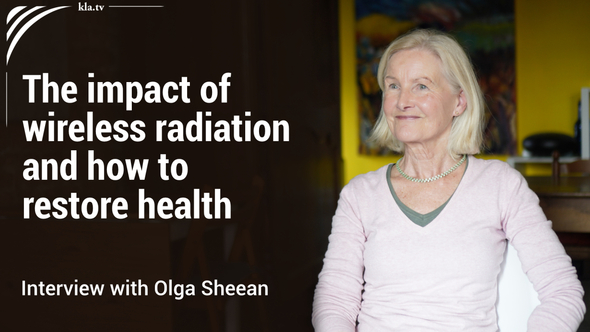
|
Olga Sheean’s websites:
Important Resources:
|
|---|
Useage rights:
Standard-Kla.TV-Licence

Topics A-Z
Enter a word for search or use the alphabetic search-order









29.12.2025 | www.kla.tv/39905
Interviewer: Hi Olga Sheean. How are you doing today? Olga Sheean: Fine, thank you. Interviewer: It is great to be here with you and to have this opportunity for an interview. For people who do not know you yet, you are the author of eight books—non-fiction books. O.S.: Fiction and non-fiction. Interviewer: Oh, you have some fiction books as well. O.S.: Similar themes, but nonetheless fiction as well as non-fiction. Interviewer: Okay, but for all your non-fiction books, you definitely did a lot of research, so in my view, you are also a researcher. You have worked as a photo-journalist for the UN, I guess. O.S.: WWF. Interviewer: Oh, WWF International. Great, and you are a practitioner. O.S.: Yes. Interviewer: What do you do there? O.S.: I am a therapist. I specialize in relationships and human dynamics, looking at the subconscious programming that tends to drive us and shape our lives. Interviewer: That is interesting. When did you get started with that? O.S.: Out of necessity. Needing to address some of my own issues, going way back now— probably 30 years. I was grappling with all kinds of dysfunctional stuff, as so many of us do in relationships and interactions with others, in terms of work, and many personal challenges that I experienced. That pushed me to go deeper. In my work, I started exploring the subconscious, which by definition is beyond our awareness. There is a lot of stuff there. Most of the stuff that affects us is actually lodged there, and we are not able to… I mean, we are not aware of it. We are very unaware of how it drives our lives, how it affects us, the impact it has, or how to address it. Interviewer: That is interesting. So you have been doing this therapy now for many years? O.S.: Helping other people for many decades, yes. Interviewer: So that of course gives you a lot of experience and insights into that area. O.S.: Yes, and I have incorporated a lot of that into my work, into my writings, my videos, and other documents. Interviewer: That is interesting. Last but not least, you are an expert—maybe not on a scientific level in that sense—but definitely an expert with a lot of practical experience when it comes to man-made electromagnetic fields, or EMFs for short. O.S.: Yes. Interviewer: Which I also like to call just wireless radiation, because it comes from all our wireless devices, I believe. And that is where my first question kicks in: how did you become an expert in this, and why do you think you became an expert in this? And what, in your view, is a man-made electromagnetic field? O.S.: Right. Well, once again, it came out of necessity. I think it started to affect me much sooner than I actually realized. I remember when I was a teenager, going shopping and being in shopping centers profoundly affected me. I could not stay for more than 10 or 20 minutes. I would get waves of heat, dizziness, and nausea. And it was before the time of Wi-Fi and all of the rampant wireless radiation that we have now. But there were probably cordless phones and other things, lots of other electrical and magnetic fields that I was sensitive to, but I had no idea. It was not until several decades after that, that I actually developed a tumor—an acoustic neuroma, which is known to be caused by wireless radiation. It sits on the auditory vestibular nerve, so it affects balance and hearing. I ultimately had to be operated on for that. And that really was a huge wake-up call that got me looking much deeper into the whole issue of wireless radiation and how it was affecting us. Since that time, I can physically feel the radiation. I probably could feel it before; I just did not know what it was. I had this buzzing in my head. My brain was profoundly affected. I would get dizziness. I would go into a shop and not remember why I was in there—brain fog, all of the things that people report when they are affected by EMFs. So that was a huge turning point for me. It really upset my life tremendously, but also set me on a course to live a much simpler, healthier life as I began to understand the extent of it and the impact it was having on our environment and on everybody, every form of life. Interviewer: Wow. And so that tumor—how many years ago was that, like 20 years? O.S.: I was operated on in 2012. And I think it actually happened quite fast. Once I started to feel something happening in my brain, it was only a matter of a year or two before I was diagnosed with the tumor. So I think it actually grew quite fast, despite what scientists or doctors might claim in the mainstream media. That is going back 13 years now. I still have neurological fallout from that, but obviously, having removed myself from being surrounded by and saturated in this radiation, I am a lot better. Interviewer: Yeah, that was my next question. How did it affect your life, feeling all of this invisible electrosmog, which is there anyway? How did it feel? How did you have to adapt to that on every level—personal, professional, social? O.S.: On every level, it was very difficult to socialize after getting that tumor and developing that extreme sensitivity, and then knowing what it was that I was feeling and needing to avoid it. I had become more sensitive to it after the surgery on those relevant nerves. So that was a big shift for me—to lose my sense of community and to not be able to connect with people of like mind and have those interactions that we all need. There were also health effects, obviously, affecting my daily functioning: fatigue, insomnia. I have had insomnia for well over a decade now, and it was extreme. Again, I did not understand what was really happening. But there was something I discovered that made quite a big difference, related to EMFs, which I will explain in a moment. And so a lot of stuff to do with nutrition, adjusting my diet, my environment—obviously needing to pull away from any sources of the radiation to get myself well. And a lot of people say, well, you know, if you remove yourself from it, then maybe do not you become more sensitive as a result of having sort of isolated yourself from the radiation? I do not think that is really how it works. I think we cannot heal from this radiation if we are still steeped in it. And I certainly could not. Had I known that I was being so heavily bombarded with wireless radiation at the time, perhaps I could have avoided having a tumor and all the fallout that came from that. So, yes, I had to withdraw from it. I am still, I like to think, in a fairly healthy environment. We live in a stone house where the stone walls buffer the radiation from the outside and do provide some healthy protection from that. There is some neurological fallout as well—a lot of tingling and balance issues sometimes. But I do believe that the nerves can regrow over time, and that can take many, many years. So I have a very positive outlook. And I like to think that it prompted me to really reclaim a level of autonomy that I did not have and definitely deepened my self-awareness about what this whole thing represents and why we are being bombarded, and why governments and industry are doing what they are doing, causing so much damage to people and planet. Interviewer: Yeah, we will go into that in more depth. But while you were speaking, two things came to my mind. One is, I have heard from many other experts that the body needs time to recover; you need to get out of the radiation to recover. I have heard it from many other people, especially regarding sleep—that sleep is so important and that you do not have radiation there. I think that is pretty widely acknowledged. And you told me before that you moved like 20 or 30 times since 2012, I believe. So is it hard to find a place without radiation? O.S.: It is, yes. We were very lucky to find this place. We found a place that did not have a smart meter, a wireless meter, and there are very few of those left. We traveled around a lot, trying to find a country that was perhaps more aware and more open to protecting its population from this stuff. We did not really find it. But here in France, we have managed to at least find a little corner where I can function pretty well and get stronger—building resilience over time. That has been part of it. So, yes, a lot of upheaval. A lot of people experience this, and not everybody has the ability to move or withstand that expense or give up a job. So it is very, very difficult for people who are subjected to this and cannot get away from it. Interviewer: How many people do you think are affected already, maybe without knowing it? What do you think is the percentage in the population? O.S.: I would say that as much as half the population is being affected. Perhaps 10-15% might know they are being affected and are aware of the impact, and perhaps, hopefully, doing something about it. But a huge percentage… I see so much cancer. Our landlady has had three or four brain tumors; she still will not give up her cell phone, even though we have talked about it. Next to our neighbors, two brain tumors. I mean, it is all around us. And it has almost become the norm to think, "Well, what kind of cancer have you got?" as if it is just an anticipated thing in life, an inevitable part of modern living. And that is, I think, quite tragic. Interviewer: That is extremely tragic. I read on your website that you quoted a doctor's newsletter that listed studies showing that brain cancer in children is so much on the rise since cell phones became common. O.S.: That is right, yes. And many other things, as I mentioned: insomnia, nervous disorders, ADHD. Children in school who are being subjected to Wi-Fi and who are considered to be slow, maybe even mentally retarded—in most cases, it is caused by the Wi-Fi. Because I know what that does to my brain; I can feel what it does. I feel quite stuporous, stupefied. Interviewer: Oh, yeah, I know that feeling too. And so I can understand; I really, really feel for these children who are subjected to that, and the parents just do not have a clue. That is extremely tough. Speaking about those symptoms, I think many people feel that if you work in a company or wherever you are and there is Wi-Fi—I know that personally as well —after some time, you definitely feel like your brain is kind of… off. You actually have a definition on one of your websites about microwave sickness, and I just wanted to quote this and ask your take on it. So, Merriam-Webster defines microwave sickness as "a condition of impaired health first reported in the Russian medical literature that is characterized by headaches, anxiety, sleep disturbances, fatigue, and difficulty in concentrating and by changes in the cardiovascular and central nervous systems and that is held to be caused by prolonged exposure to low-intensity microwave radiation." Now, you say 50% of the population is already experiencing this. Do you get many people in your therapy who come because of that reason? O.S.: Some do. I think many, especially the younger people that I work with more and more now, are really oblivious to this and cannot really hear me. We do talk about some of these issues, but they are so attached to their cell phones. It has become so much a part of their lives that they feel it would compromise them greatly professionally and personally if they gave it up. So that is a huge stumbling block for most people, as you know. And it is interesting—I will talk a little bit in a moment about what we have lost over time in terms of separating from our humanity. This has led to this inanimate sort of tech takeover that we are in the process of undergoing. And so, because of that, people are more and more outsourcing their humanity, using gadgets, relying on gadgets to do things that we actually can do and can do much better. There are many, many things. Our brain is hugely underutilized, and we have higher faculties that we do not engage. I see that all of this stuff on the outside, everything that is missing that we are not getting from governments or industry, is really just showing us what is missing in us, what is missing in humanity now that we need to reclaim and rebuild. And that is a tough one to sell, because so many people are enthralled by the technology. They just love it; they think it is the greatest thing ever. "What is your problem, Olga? You know, just get with the program." So there is that whole mentality around it. And people, young people especially, who have never known anything else. And even older people, people my age or older than me, who no longer remember that we used to plug everything in, that we used to hardwire and cable our appliances. They simply have no awareness of that now. So, yes, it is pervasive. Interviewer: Yeah. I would love to get into that next—what you think is the root cause behind the tech takeover. But when you are speaking with these young people and trying to open their eyes to the net that is around them, so to speak, how do you go about that? What are your top three arguments to convince somebody who is enthralled with their smartphone to voluntarily put it away or to separate from that technology? O.S.: Normally, the doorway in is their addiction to social media. Young people admit themselves, "I have to keep checking my phone." You know, it is like a nervous tic. I have seen this with my nephews and nieces as well; it is literally like an extension of their limb. And so that is normally where I go in and say, "Well, look, how does this affect you?" "Well, I stay up all night looking at the screen. I am checking… my friends, I want to know what they think of me. Did everybody like my post?" All of this stuff—it has become an addiction all of its own, and it affects the brain hugely. Some say there are reports and studies that show it is a greater addiction than heroin, more difficult to kick than heroin. So there is all this dopamine release, the feel-good factor that happens with social media frenzy. So we start there: putting away the cell phone, turning it off, getting back to better sleep, better exposure to natural light—all of these simple things. Because usually the people that come to me are having severe enough problems that they know they need to change something. They are extremely stressed at work; they are getting overworked, overextended, and unable to keep juggling things. So that is where we start. And sometimes we can go quite a bit further. Interviewer: Sorry to interject, but do you experience these people as being unable to focus? Do you think that is part of it? O.S.: Yeah, I think that is part of it, yes. And having this obsession with just checking in and staying connected—ironically, staying connected to people, whereas in that process they become more and more disconnected. They no longer really understand the body or feel the body and know what the body needs because they are so focused on the externals and getting that fix. And so, getting them to see what is happening in your body. "Look what you are doing to your body. Look what has happened to your hormones, what happens to your sleep and your anxiety." A lot of young people are on antidepressants and anti-anxiety medication. And I think, well, that is actually not normal. "What can we do about that? How am I changing this? Let us try this and see how that affects things." Because the radiation agitates the nervous system; it stimulates tissue. So it has this very agitating effect. In fact, many people only sort of feel alive when they are in a heavily Wi-Fi environment because they are constantly sort of up and agitated. Interviewer: A stimulant. Constantly vibrating. Yeah. So you actually tell young people to try it out, to leave the smartphone to see if they recover? O.S.: Yes, we take it in baby steps. Looking at the social media to start with, and then going deeper into how their sleep might be affected by the wireless radiation, how to get away from it, turn it off at night—starting with those small steps. Interviewer: Positive effects? O.S.: Yeah, definitely. But they are still hooked. So it is a tough one because they are in an environment; they go to a job, they are exposed to it all day long. They use their phone maybe for their work. It is a tough one to untangle. Interviewer: Yeah. Very often, and this tends to be part of the human condition, we have to be hit over the head or have a big wake-up call to really get the message and put aside what is effectively killing us, is not it? O.S.: Yeah. Interviewer: That is what I ask myself also very often. I mean, what has to happen till humanity gets this? Will it be too late? Will we manage in time? We see all the young kids, age 11, getting their first smartphones—most of the population sooner than that, younger than that. Most of the population is unaware. I do not know. What is your idea? How do we get the word out or get people to voluntarily cut off this extra limb that has been attached to most people out there? O.S.: Yeah, that is a very tough one. And this is more the focus of my work now. I was an activist for many years, producing my book and other material and doing videos and all of that stuff. But now I have kind of zoomed out. And because I have that experience in human dynamics and that expertise in looking at subconscious programming, what I see very, very clearly—and this has been confirmed for me over many decades now—is that everything we see out there, all the crises, all the upheaval, the chaos, the destruction of our environment upon which we depend, these are all symptoms of human dysfunction. And human dysfunction comes from ancestral indoctrination. This happened a long time ago; we go back many, many centuries to when this actually kicked in. And if you think about what is happening in the world right now, the insanity of it, what governments are doing to us, what the wireless industry is doing, what the government is doing to us—it makes no sense. It makes no sense to persecute us and terrorize us and manipulate us and misinform us and coerce us into taking harmful pharmaceuticals. It is all part of a global agenda designed to take control, but it has nothing to do with health, safety, democracy, human rights—none of that stuff. Interviewer: Yeah. I mean, who of us would be doing this if we were president? Right. I mean, nobody in a right mind would be doing that. O.S.: Yeah. So way back—we are going back 17 centuries now, back to the early 300s—our ancestors were very brutally indoctrinated with a new doctrine. This was the Christian doctrine that was forced upon them in the most brutal way. And if they did not convert, they were massacred, they were persecuted, they were tortured. Young children had to see their parents being burned alive. I mean, it was really, really brutal. Of course, nobody alive today has any awareness of this or thinks anything about it, or even goes looking for any reason as to why the world is the way it is today. But there is a direct connection between what happened back then and what is happening now. And I will just walk you through that a little bit. Our ancestors were very wise people. There was the peasant class, pagan peasants, who were very much attached to the land, very connected to the land. And there was the intellectual class that was very expert in metaphysics, cosmology, astronomy, all the esoteric sciences, and they were very connected to nature. They understood natural phenomena, the power of nature to heal, the therapeutic remedies that could be found in nature. And they actually were able to co-create with the cosmos, which sounds very out there, but they were highly attuned spiritually. And when they were forced to submit and convert to this alien doctrine, they lost all of that. Their libraries were burned; their books were burned. All their wisdom, the wisdom of antiquity, was destroyed. The whole culture was just crushed. And what came out of this is that they lost many key elements that are still missing today; in fact, have deepened in terms of us missing out on them. The first one is autonomy. They were spiritually autonomous; they had spiritual sovereignty. They did not need an external authority to tell them how to live. They did not need this sort of alien god telling them what they were worth. So they lost that connection. They also lost their healthy sense of self-worth, of self-acceptance, and faith in self. Most of all, because they understood the nature of reality and the power of nature, they did not have the kind of irrational fears that we have—the doubts, the insecurities, the self-doubts that so many people have today, and the fears. And so all of that was taken away. As well, they lost their sense of safety. And safety comes from understanding how things work, understanding your own body, how your mind works, the power that we have as humans to have an impact on our environment and actually create our reality—which is a very out-there concept for most people. And they also lost that connectedness: the connection they had to themselves, to others, to nature, to the cosmos, the universe, to universal intelligence or God, whatever you want to call it. They lost that. And so, as a result of that, our evolution was basically derailed at that point. I call that moment in time "the split." And from then, we became progressively more denatured. All aspects of our world have become progressively denatured—our food, starting with our food and medicine, the environment, so many things. Even our minds now and our bodies are being imbued with the non-natural. We are being implanted with things, with devices, with all kinds of stuff coming at us, being imposed on us. And we are getting further and further away from our humanity. And that brings us to where we are today, on the brink of this tech takeover, where we are so far away from our essential nature and humanity and our human nature that most people do not even know what that is. They do not even understand that that is missing. They do not perhaps really even know what humanity means and what it means to be a fully actualized human being. And so I see that all these symptoms out there are pushing us to get to root cause. Because for as long as we are oblivious to the root cause and we do not address it, the symptoms keep getting worse. So that distortion of the psyche effectively led to a corruption of our human psyche—a gross distortion of the mind and of the spirit, the human spirit. And it created all kinds of guilt, shame, low self-worth, self-rejection, which led to addiction, all kinds of negative behaviors, destructive behaviors. And this is why we are destroying our environment. It makes no sense for us to destroy the planet on which we depend. But when you understand your programming, it makes perfect sense, because we actually have been programmed to self-destruct. And so we have—we know from just personal relationships that are dysfunctional—that we need acceptance, we are hoping to be loved, we are desperate for acknowledgement, for a sense of belonging, for being loved by other people and accepted for who we are, approved of. All of that stuff runs us, because we have that deep unmet need that humans have to connect, but also to be who we really are. Interviewer: Why do you think this breach that you were speaking about, like 300 years after Christ? The early 300s, right? O.S.: Yes, in the time of Emperor Constantine. That is when the church-state kicked in. Interviewer: Kicked in. Yeah. And from then on, you say this shift began where more and more things got imposed or were forced onto people. How do you believe they managed to impose that on the entire world population, so to speak? O.S.: Well, through persecution and massacre. It happened over time. There was the Spanish Inquisition. Even during the Renaissance, there was kind of an attempted resurgence of the wisdom of antiquity, and that was once again crushed by the church. So the church did an absolute wholesale job of crushing any kind of resistance to the imposition of this doctrine, which was really an inhuman doctrine. When you think about it, people get very, very worked up about religion, and understandably, because they are so deeply programmed that when you challenge them, it feels almost like an attack on their sense of self. Because our sense of self was shaped by what happened back then, very much. So it becomes… I always say there is this conundrum: the programming is the very thing that gets in the way of us realizing that it is the very thing that is getting in our way. So talking about Christianity, another important point to remember is that right now, at the point we are in our evolution—or devolution—it does not matter whether we are religious or not. I am not religious; I would say I am spiritual. I have that connection. I feel that connection to the greater power, whatever it is—universal intelligence. But this is not about religion anymore; this is about programming. And programming was designed for control, just as this second takeover is trying to do the same thing. So people can get very highly charged about the religious issue and start defending it and think that I… they get into the whole aspect of religion, which is not what this is about. This is… I try to keep people on track: this is programming. It started there. But your beliefs are safe inside you. If you have got religious beliefs that work for you, fantastic. Use them; run with them. We cannot touch those anyway. So we do not need to defend beliefs. We do not need to defend or get worked up about them. But we do, because we have been so deeply programmed. And in all of that mix, there is the huge fear, the primal fear, the trauma that we have embedded in our DNA that came from that earlier time of massacre and persecution and torture. That is deeply embedded in us. And so we react very strongly when that is challenged. "We must obey." This is what was bred into us. We have to obey. It is scary not to. You might die if you do not. That is what is in there. Interviewer: I would agree, although I am a Christian, to be honest. But I think what you are describing destroyed true Christianity. It destroyed humanity as well. Because when one looks at Jesus or what he did, he was empowering people, not taking away from them. He was healing them. He was showing them that they can rule over their worries and whatever ailments they had. And then, in the name of this, as you say, these inquisitors come and brutally beat down humanity. So, and we see the fruit. I mean, as you say, we see a people that is very vulnerable to fear, to fear-mongering. O.S.: Yes, exactly. There is a huge fear of government, of authority, and a deference to them. And ironically, the very people who are harming us are the people we turn to. So there is this growing reliance on governments and gadgets to fix us, to rescue us, to comfort us, to distract us from our pain. It is all part of the human dysfunction. So, for me, all I can see is that activism—yes, okay—and education up to a point, it is great to get people informed if they want the information. But it does not ultimately change anything fundamentally. And I would really encourage people who are affected by wireless radiation to try to start understanding it in this context: that everything that is happening out there is a result of our collective programming. And to deal with symptoms changes nothing. Unless we go back inside each one of us and start to get to grips with that negative programming, which is running us and often ruining our lives, then really, I just see that things get worse. Because we know if we do not address the root cause, the symptoms will get worse. So this is what I talk about in my latest book. Interviewer: Right. What is your latest book called? O.S.: My latest book is Psychocide Reversal. "Psychocide" is a term that I coined, talking about the distortion of the human psyche, the crushing of our spirit, our free thinking, our critical thinking. Interviewer: Like genocide on the psyche, huh? O.S.: Exactly. Yeah. And so the book is designed to show people how to reboot. I talk about rebooting the species. And it goes into the nature of subconscious programming, how it runs us, how to identify it, how to go and tease it out. Because when you have beliefs… you have to have beliefs, and it is the way the world is, right? And to change your beliefs, especially your beliefs about yourself, is extremely hard work. And because the programming happens from such a formative age—before you even know you have a mind of your own, before the age of two, you are being programmed and steeped in some kind of culture or indoctrination that gets handed down. That has been handed down ever since that time. So the book explains how to start transforming your programming. It explains how, in fact, we all attract very particular people, situations, dynamics, circumstances in accordance with how we have been programmed. And this is a very direct link. So depending on our programming, we are going to have more or less of a good life. We are going to have more or less money, more or less love, more or less ease, more or less fulfillment. And it is a pivotal link to make—a connection that people really, if they make that link, can start to turn things around. And people might say to me, "But Olga, there are huge forces at work. All these bad people in the world are doing these bad things. What hope do I have of changing that? The circumstances just are." And that may be true on one level. But the fact is that when we change ourselves— changing our minds about who we are and what is behind us—it changes everything. And I have seen it so many times in working with people. I know it to be true for myself. I have seen magic happen in my life from applying this work and staying deep in this work. And in the book, I also show people how to fill in what I call our missing pieces—those formative qualities that were stripped away. Things like healthy self-acceptance, commitment to self, trust in self, faith in self, respect, having healthy boundaries. All of these simple things that go with being truly human and activating the human spirit, the human being. And that changes everything. So I say, too, that when our minds are negatively programmed, they become our biggest saboteurs. And when our minds are positively programmed, they become our greatest allies in creating what we want. Interviewer: Right. And it is powerful. That is a really good point. And it seems that you have taken hold of that and have really changed your life for the positive, despite all the health implications and hardships that you had to endure through the technology, through big tech, so to speak, that they are imposing on the entire world. O.S.: Yes. And I have taken the stance that I am not a victim. Interviewer: Yeah. Because you understand the bigger picture. O.S.: And I see how this has come about—that we are missing all this good stuff. The "bad guys" are missing all this stuff. It is just a matter of who has got more power, perhaps, to wield it. But I am not a victim. And I would encourage people who have been affected to try to see the world in that context: to see it not as something that is horrible that is being done to them, but to understand that their body is trying to get them to see what is really missing and what they need to do to get back their autonomy, their faith in themselves, their nutritional stability, their resilience, their life, basically—and to have a life that really works, where they find fulfillment and they find love, and they can be expansive in going out into the world and being who they really are and loving that, knowing who they are. Because so many people—so many of us, and like me for a long time—we go around having no clue who we are. We do not really know what we are made of or what we are capable of. And we have all of these powers—telepathy, so many higher faculties that are dormant and are not being utilized. Interviewer: Yeah, they are. And we notice that, too. And I think it is also a sense of, what do you use it for? I mean, humans have great power. At some point, people are using them also on the dark side to influence stuff. And so that is… for us now, and that is what the next question I have for you is: where would, or what would be your message? What can everybody do? As you say, we are not victims. I like that very much. So that means humanity is now faced with this, as you coined it before, the tech takeover. We see AI on the rise. We see 5G, 6G, everything being increased, white zones to be eliminated, and stuff. And I really like your point that it is not because we are the victims of this. But what do you think is humanity's task now? Why are we faced with this? What can everybody do to use this opportunity, this chance that we are…? O.S.: So everything that is happening out there is a push to empowerment. And what most people are not aware of—and that we are getting confirmed more and more through neuroscience and quantum physics—is that we are electromagnetic beings. In fact, we know this from getting electrocardiograms and all kinds of stuff in medicine. But our thoughts are electrical; our emotions are magnetic. And we are always transmitting. We are always interacting with this seamless field of energy that connects us all. It surrounds us all; we interact in it; we affect each other through it. And we can use it to access higher awareness, higher consciousness. So understanding that we are electromagnetic beings and that we are meant to radiate that out in a positive, loving, collaborative kind of way— rather than to be irradiated by this other synthetic, man-made, non-human version of an electromagnetic field. So when we understand the programming and we understand the beliefs that we have—the negative beliefs, the insecurities, the self-doubts, the putdowns, all of the stuff that happens in our heads, and the way we therefore live and interact and react to other people—all of this stuff tells us, gives us a very good idea of just how much programming we have got going on. Because we are not meant to be that way. We are not meant to live in fear. We are not meant to be anxious and nervous all the time and to worry about getting into trouble with authorities or having to conform or obey. None of that is the way it is meant to be. So it is coming back to what it means to be human. And I go into all of this in the book. I also talk about how we need to think in terms of putting the planet first. That obviously is not what is happening in terms of what governments and industry are doing with radiation coming from above and around us all over. But we personally, each of us, by starting to make different choices, have more power than ranting and railing against what has been done to us. Because that changes nothing; we become a victim when we do that. So the important thing to remember is that it is what we do. Yes, the choices we make. What we demonstrate—not what we think or say, even, but what we actually demonstrate. Are we demonstrating healthy self-respect? Are we demonstrating respect for others? Because the interesting thing to notice here is that if you look at all of the dynamics being played out by those in power—the ruling elite or whatever—violating our human rights, disregarding our boundaries (in fact, wireless radiation completely disregards all human boundaries), disrespecting us as humans, all the things that are being done to us by government, manipulating us, not being truthful or honest about what is happening… We do all of those things. We do all of those things in our own lives. We manipulate other people. We say one thing, we do another, we mean another. We say yes when we want to say no. We make compromises all over the place because we desperately want to be accepted and loved. And that is because of what is missing. So we have become distorted; our humanity has been distorted by this programming. And recognizing that, and then taking charge of that, and starting to demonstrate healthy self-worth and self-respect and have healthy boundaries— regardless of what is happening out there, to do it in the face of not getting what it is that we are missing. Because in relationships, so often we think, "Well, you just won’t commit. That guy is a total loser, just won’t commit." But in us, there is something that has actually attracted that guy and brought that partner to us to trigger what is actually going on inside. So that with enough awareness, we can address it. We can see what is really happening; we can see where it is really coming from. And when we start to fill in those missing pieces in the practical ways I describe in the book, everything changes on the outside. We start to break those cycles, and we start to attract something very different. And this is how we power up. This is how we change what is happening out there in the world. Interviewer: Yeah, that is interesting. And I personally believe also one of these cycles, in my view, is the cycle of individualism or egoism, where it is all about me and like, "Oh, there are people suffering from radiation. I am not suffering, so who cares, you know?" And that is also something, a cycle which I wish could be broken through this experience that we are having—that more and more people are feeling it, that we feel for each other, and that we understand that there is something to it, even though government does not say it, and that humanity understands that we are one organism, we all are interconnected. How do you see that? Do you think that would be also a good, positive change or a cycle that should be broken? O.S.: Well, only we can break it. Honestly, it is not going to happen by declaiming what is happening out there, by blaming the bad guys for coming at us with this stuff. Even if the bad guys were removed, there would be others to replace them. It would not change anything. Interviewer: Exactly. O.S.: So we are it. This is what it comes down to. And it is ironic, too, because in so many cases where people are really backed into a corner because of the radiation—they do not have a life, they are isolated, they have to withdraw—they are left with just the self. And ideally, at that point, they get to see that the self is where the answer is, because we are both the problem and the solution. So that is what I try to share with people: to encourage them to look deeply at the power that they have to make those changes, and to not rely on governments, not wait for governments, not wait for regulatory bodies to do anything, because they do not. And they have their own agendas that have nothing to do with our health or safety or freedom. We know this. So, yes, it is really up to us to change how we perceive ourselves, to be what we are capable of, to understand what is going on in our minds, and transform that programming so that everything in our environment, in our world, starts to shift. Interviewer: Beautifully said. Well, is there anything you still want to add on, like your latest book Psychocide Reversal, or EMF Off, your 2018 book? O.S.: Well, in the book, because it is all about rebooting the species, it is fairly comprehensive. So I look at the mind, work a lot with the mind and the exercises. In fact, there is a separate downloadable book of exercises that people can work through to do this deeper work, because it is quite challenging. Changing yourself is quite challenging; it is the most powerful thing you can do. But also in there is stuff relating to nutrition. And I have discovered some things that have really made a huge difference for me. It goes against a lot of what is being touted out there as being the way to eat—vegetarianism, veganism. But in fact, again, going back to what worked for our ancestors so beautifully, we are actually much better off and much more nourished when we eat more animal-based foods. Not everybody can do it, but most people actually need it. But one of the things I discovered in my quest for more resilience and really shoring up my health and getting strong again was the issue of oxalates, which I talk about in the book. Oxalates—oxalic acid—is found in many foods, mostly foods eaten by vegetarians. It is not in animal foods. And it disrupts in the same way that wireless disrupts. It disrupts our electrolytes, causes havoc with the electrolytes. Because when we eat this stuff—and it is in things like nuts and seeds and spinach and dark chocolate, all the supposedly really good things, superfoods—they have very, very high content of this oxalate. And it is one of the things that can lead to huge problems, a cascade of problems in the body, because once you disrupt the electrolytes—the sodium, potassium, calcium—everything gets thrown off, and you get all kinds of stuff happening. Kidney disease is kind of the endpoint of that, and that is the only time that now in conventional medicine oxalate is even talked about. But it happens much, much sooner up the chain. And people who have gone on the oxalate-reducing diet, as I have, have found themselves to be much more resilient to EMFs. And there are a lot of things in wireless radiation that also trigger oxalate production, so that makes it worse. It is a whole complex thing to unpick, but can make a huge difference for people in terms of their health and their resilience, just dealing with all the contaminants that are in our environment, including the wireless radiation. So that made a huge difference for me. And it is one of the things I really flag now for people who might see those symptoms, because the oxalate binds with our minerals and pulls them out of where they need to be. And we end up with things like osteoporosis. People age rapidly because of that degeneration of their whole skeletal system. It is a whole syndrome. So that is another piece that I cover in there, along with general nutrition and the pieces that we need to have in place to be really healthy. Interviewer: An interesting building block. Yeah. Wow. Well, wonderful. Maybe one last question before we land. Imagine you are in an elevator with the head of the ICNIRP, which is a regulatory agency, self-appointed, advising all governments of the world—at least many of them— on the threshold values. What would be your elevator pitch to that person? O.S.: Oof. Yes. I think I would talk about the power of being fully human. I would not talk about the science; I would not debate that with them. There is no point because… well, they are going to have their spin on it, which I know is not valid. And there is all kinds of industry propaganda out there that has convinced a lot of people. But not me, not anymore. I know more of what is really happening and the deeper truth around this stuff. Having worked for WHO, I know what really goes on. And I know that they have suppressed all of their own documentation that goes back to 1975 and before. Interviewer: Wow. So I know… "Do not try to tell me." Well, sorry, I have to interject there. What does it mean they suppress their own information? O.S.: Well, they had documents that I have still managed to get hold of that very clearly spelled out the harm caused by wireless radiation. And then when they got on board with industry, and industry was actually funding them, they were severely compromised. Even their EMF unit is run by somebody—not a doctor—who is an engineer who used to work for the mobile phone telecommunications industry. So the conflicts of interest are just so massive; it is almost a joke. So, yes, I know this stuff. There is no point in… I have seen it up close. Interviewer: Sure. O.S.: So I get that. And I would speak about being human. Yes. And appeal to their hopefully humanity, whatever humanity they have that I can reach, and talk about how amazing I have found it to withdraw from the radiation, to tap into what I am really capable of, and understand the deeper push that wireless radiation represents. And I think it is really important for all of us to go back in order to go forward—to go back to what is natural and healthy for us as human beings, and from there to go forward and start creating a world that works. Interviewer: Wonderful. Well, I hope it would convince him. Well, Steve Jobs did not give his kids iPads and stuff. So I think the higher-ups, they know a bit, you know, at least what it does to us technically. But I think re-finding the power that is within us, or our connection to, as you said—I would say God—but the real connection that empowers us, that shows us who we are really supposed to be, gives us real purpose… as I said before, that is the real deal. So thanks for sharing this. O.S.: Yeah. And it really does not matter whether we convince anybody of our argument, or get them to change their mind. The important thing is that we change. And we do that through interacting with others. Our subconscious needs to hear us talking about who we are. It needs to hear us standing up for ourselves, speaking in a self-respecting, selfaccepting way. And that is what changes our programming. We do it by interacting. So while we might wish that they would get it, or that the partner in the relationship would get it, it is we who need to get it. And when we get it and we start to embody that way of thinking and being, then those people will fall away, and we are going to attract a match for that. Interviewer: Well, and I believe—I do not know what you think—but would you say that also empowers or gives us a lot more effectiveness and power in our outreach and in bringing awareness to this world about the topics that people should be aware of? O.S.: Yes. I think the only way to have an impact is to really be authentic and to share what we consider to be the truth about our lives. Never try to convince anybody or convert them, but to just embody what we believe and to share that with people, and maybe inspire them to change also. And so, what I like to say to people in a general sense, to help keep them on track with this very challenging work, is that being human is your superpower. It is your most precious, your most potent resource, and we should never let anyone take that away from us. Interviewer: Wonderful. Well, that said, Olga, where can people find your work, your books? O.S.: On my websites, olgasheean.com and emf-off.com. All my work can be found there. Interviewer: Cool. And is there any other resource you would recommend people if they want to dive deeper into, say, the EMF harms, what you are writing about? O.S.: Well, in my book there are probably 200 references. Also, on my website I offer lots of resources that people can tap into. Arthur Firstenberg's book, The Invisible Rainbow, is also another wonderful resource. And organizations such as EH Trust—you know, there are many, many fabulous organizations out there doing good work and raising awareness. But I do not know of any of them that are doing this work. So I think putting the two together can be very powerful. Interviewer: Wonderful. Thanks for this interview, Olga. O.S.: Thank you. Outro: You witnessed mobile phone radiation damages recorded on Vitopedia, the free encyclopedia for counter voices: www.vitopedia.org.
from dag
https://www.emfoff.com/
Psychocide Reversal: https://olgasheean.com/psychocide/
Important Resources: https://www.emfoff.com/resources/
https://ehtrust.org/
https://www.kla.tv/5G-WirelessCommunication-en