



Alle Videos (English)
AI Data Centers – Building Blocks towards Digital Imprisonment
19.09.2026
Subtitle "Afrikaans" was produced by machine.Subtitle "አማርኛ" was produced by machine.Subtitle "العربية " was produced by machine.Subtitle "Ārāmāyâ" was produced by machine.Subtitle "azərbaycan dili " was produced by machine.Subtitle "беларуская мова " was produced by machine.Подзаглавието "България" е създадено от машина.সাবটাইটেল "বাংলা " মেশিন দ্বারা তৈরি করা হয়েছিল।Subtitle "བོད་ཡིག" was produced by machine.Subtitle "босански" was produced by machine.Subtitle "català" was produced by machine.Subtitle "Cebuano" was produced by machine.Subtitle "ગુજરાતી" was produced by machine.Subtitle "corsu" was produced by machine.Podtitul "Čeština" byl vytvořen automaticky.Subtitle "Cymraeg" was produced by machine.Subtitle "Dansk" was produced by machine.Untertitel "Deutsch" wurde maschinell erzeugt.Subtitle "Untertitel" was produced by machine.Ο υπότιτλος "Ελληνικά" δημιουργήθηκε αυτόματα.Subtitle "English" was produced by machine.Subtitle "Esperanto" was produced by machine.El subtítulo "Español" se generó automáticamente.Subtitle "Eesti" was produced by machine.Subtitle "euskara" was produced by machine.Subtitle "فارسی" was produced by machine.Subtitle "Suomi" was produced by machine.Le sous-titrage "Français" a été généré automatiquement.Subtitle "Frysk" was produced by machine.Subtitle "Gaeilge" was produced by machine.Subtitle "Gàidhlig" was produced by machine.Subtitle "Galego" was produced by machine.Subtitle "Schwizerdütsch" was produced by machine.Subtitle "هَوُسَ" was produced by machine.Subtitle "Ōlelo Hawaiʻi" was produced by machine.Subtitle "עברית" was produced by machine.Subtitle "हिन्दी" was produced by machine.Subtitle "Mẹo" was produced by machine.Podnaslov "Hrvatski" generiran je automatski.Subtitle "Kreyòl ayisyen " was produced by machine.A magyar felirat gépi fordítással (MI) készült. Subtitle "Հայերեն" was produced by machine.Subtitle "Bahasa Indonesia " was produced by machine.Subtitle "Asụsụ Igbo " was produced by machine.Textun"Íslenska" var framkvæmt vélrænt.Sottotitoli "Italiano" sono stati generati con l'intelligenza artificiale.字幕は"日本語" 自動的に生成されました。Subtitle "Basa Jawa" was produced by machine.Subtitle "ქართული" was produced by machine.Subtitle "қазақ тілі " was produced by machine.Subtitle "ភាសាខ្មែរ" was produced by machine.Subtitle "ಕನ್ನಡ" was produced by machine.Subtitle "한국어" was produced by machine.Subtitle "कोंकणी語" was produced by machine.Subtitle "کوردی" was produced by machine.Subtitle "Кыргызча" was produced by machine.Subtitle " lingua latina" was produced by machine.Subtitle "Lëtzebuergesch" was produced by machine.Subtitle "Lingala" was produced by machine.Subtitle "ພາສາ" was produced by machine.Antraštė "Lietuvių" buvo sukurta mašina.Subtitle "Latviešu" was produced by machine.Subtitle "fiteny malagasy" was produced by machine.Subtitle "te reo Māori" was produced by machine.Subtitle "македонски јазик" was produced by machine.Subtitle "malayāḷaṁ" was produced by machine.Subtitle "Монгол хэл" was produced by machine.Subtitle "मराठी" was produced by machine.Subtitle "Bahasa Malaysia" was produced by machine.Subtitle "Malti" was produced by machine.Subtitle "မြန်မာစာ " was produced by machine.Subtitle "नेपाली" was produced by machine.Ondertitels "Nederlands" machinaal geproduceerd.Subtitle "Norsk" was produced by machine.Subtitle "chiCheŵa" was produced by machine.Subtitle "ਪੰਜਾਬੀ" was produced by machine.Podtytuł "Polska" został utworzony przez maszynę.Subtitle "پښتو" was produced by machine.Legenda "Português" foi gerada automaticamente.Subtitle "Română" was produced by machine.Subtitle "Язык жестов (Русский)" was produced by machine.Субтитры "Pусский" были созданы машиной.Subtitle "Kinyarwanda" was produced by machine.Subtitle "सिन्धी" was produced by machine.Subtitle "Deutschschweizer Gebärdensprache" was produced by machine.Subtitle "සිංහල" was produced by machine.Subtitle "Slovensky" was produced by machine.Subtitle "Slovenski" was produced by machine.Subtitle "gagana fa'a Samoa" was produced by machine.Subtitle "chiShona" was produced by machine.Subtitle "Soomaaliga" was produced by machine.Titra "Shqip" u krijua automatikisht.Превод "србски" је урађен машински.Subtitle "Sesotho" was produced by machine.Subtitle "Basa Sunda" was produced by machine.Undertext "Svenska" är maskinell skapad.Subtitle "Kiswahili" was produced by machine.Subtitle "தமிழ்" was produced by machine.Subtitle "తెలుగు" was produced by machine.Subtitle "Тоҷикй" was produced by machine.Subtitle "ภาษาไทย" was produced by machine.ንኡስ ኣርእስቲ "ትግርኛ" ብማሽን እዩ ተፈሪዩ።Subtitle "Türkmençe" was produced by machine.Subtitle "Tagalog" ay nabuo sa pamamagitan ng makina.Altyazı "Türkçe" otomatik olarak oluşturuldu.Subtitle "татар теле" was produced by machine.Subtitle "Українська " was produced by machine.ذیلی عنوان "اردو" مشین کے ذریعہ تیار کیا گیا تھا۔Subtitle "Oʻzbek" was produced by machine.Phụ đề được tạo bởi máy.Subtitle "Serbšćina" was produced by machine.Subtitle "isiXhosa" was produced by machine.Subtitle "ייִדיש" was produced by machine.Subtitle "Yorùbá" was produced by machine.字幕 "中文" 由机器生成。Subtitle "isiZulu" was produced by machine.
kla.TV accepts no liability for defective translation.kla.TV accepts no liability for defective translation.kla.TV accepts no liability for defective translation.kla.TV accepts no liability for defective translation.kla.TV accepts no liability for defective translation.kla.TV accepts no liability for defective translation.kla.TV не носи отговорност за некачествен превод.অপর্যাপ্ত অনুবাদের জন্য kla.TV কোন দায় বহন করে না।kla.TV accepts no liability for defective translation.kla.TV accepts no liability for defective translation.kla.TV accepts no liability for defective translation.kla.TV accepts no liability for defective translation.kla.TV accepts no liability for defective translation.kla.TV accepts no liability for defective translation.kla.TV nenese žádnou odpovědnost za chybné překlady.kla.TV accepts no liability for defective translation.kla.TV accepts no liability for defective translation.kla.TV übernimmt keine Haftung für mangelhafte Übersetzung.kla.TV accepts no liability for inadequate translationΗ kla.TV δεν φέρει καμία ευθύνη για ανεπαρκή μετάφραση.kla.TV accepts no liability for defective translation.kla.TV accepts no liability for defective translation.kla.TV no se hace responsable de traducciones incorrectas.kla.TV accepts no liability for defective translation.kla.TV accepts no liability for defective translation.kla.TV accepts no liability for defective translation.kla.TV accepts no liability for defective translation.kla.TV n'assume aucune responsabilité en cas de mauvaise traduction.kla.TV accepts no liability for defective translation.kla.TV accepts no liability for defective translation.kla.TV accepts no liability for defective translation.kla.TV accepts no liability for defective translation.kla.TV accepts no liability for defective translation.kla.TV accepts no liability for defective translation.kla.TV accepts no liability for defective translation.kla.TV accepts no liability for defective translation.kla.TV accepts no liability for defective translation.kla.TV accepts no liability for defective translation.kla.TV ne preuzima nikakvu odgovornost za neadekvatne prijevode.kla.TV accepts no liability for defective translation.A Kla.TV nem vállal felelősséget az esetleges fordítási hibákért.kla.TV accepts no liability for defective translation.kla.TV accepts no liability for defective translation.kla.TV accepts no liability for defective translation.kla.TV tekur enga ábyrgð á áræðanleika þýðingarinnarKla.TV non si assume alcuna responsabilità per traduzioni lacunose e/o errate.Kla.TV は、不適切な翻訳に対して一切の責任を負いません。kla.TV accepts no liability for defective translation.kla.TV accepts no liability for defective translation.kla.TV accepts no liability for defective translation.kla.TV accepts no liability for defective translation.kla.TV accepts no liability for defective translation.kla.TV accepts no liability for defective translation.kla.TV accepts no liability for defective translation.kla.TV accepts no liability for defective translation.kla.TV accepts no liability for defective translation.kla.TV accepts no liability for defective translation.kla.TV accepts no liability for defective translation.kla.TV accepts no liability for defective translation.kla.TV accepts no liability for defective translation.kla.TV neprisiima jokios atsakomybės už netinkamą vertimą.kla.TV accepts no liability for defective translation.kla.TV accepts no liability for defective translation.kla.TV accepts no liability for defective translation.kla.TV accepts no liability for defective translation.kla.TV accepts no liability for defective translation.kla.TV accepts no liability for defective translation.kla.TV accepts no liability for defective translation.kla.TV accepts no liability for defective translation.kla.TV accepts no liability for defective translation.kla.TV accepts no liability for defective translation.kla.TV accepts no liability for defective translation.kla.TV aanvaardt geen aansprakelijkheid voor foutieve vertalingen.kla.TV accepts no liability for defective translation.kla.TV accepts no liability for defective translation.kla.TV accepts no liability for defective translation.kla.TV nie ponosi odpowiedzialności za wadliwe tłumaczenie.kla.TV accepts no liability for defective translation.kla.TV não se responsabiliza por traduções defeituosas.kla.TV accepts no liability for defective translation.kla.TV accepts no liability for defective translation.kla.TV не несет ответственности за некачественный перевод.kla.TV accepts no liability for defective translation.kla.TV accepts no liability for defective translation.kla.TV accepts no liability for defective translation.kla.TV accepts no liability for defective translation.kla.TV accepts no liability for defective translation.kla.TV accepts no liability for defective translation.kla.TV accepts no liability for defective translation.kla.TV accepts no liability for defective translation.kla.TV accepts no liability for defective translation.kla.TV nuk mban asnjë përgjegjësi për përkthime joadekuate.kla.TV не преузима никакву одговорност за неадекватне преводе..kla.TV accepts no liability for defective translation.kla.TV accepts no liability for defective translation.Kla.TV tar inget ansvar för felaktiga översättningar.kla.TV accepts no liability for defective translation.kla.TV accepts no liability for defective translation.kla.TV accepts no liability for defective translation.kla.TV accepts no liability for defective translation.kla.TV accepts no liability for defective translation.kla.TV ንዝኾነ ጉድለት ትርጉም ዝኾነ ይኹን ሓላፍነት ኣይቅበልን እዩ።kla.TV accepts no liability for defective translation.kla. Walang pananagutan ang TV sa mga depektibong pagsasalin.kla.TV hatalı çeviriler için hiçbir sorumluluk kabul etmez.kla.TV accepts no liability for defective translation.kla.TV accepts no liability for defective translation.kla.TV عیب دار ترجمہ کے لیے کوئی ذمہ داری قبول نہیں کرتا ہے۔kla.TV accepts no liability for defective translation.Kla. TV không chịu trách nhiệm về bản dịch không đầy đủ.kla.TV accepts no liability for defective translation.kla.TV accepts no liability for defective translation.kla.TV accepts no liability for defective translation.kla.TV accepts no liability for defective translation.kla.TV 对翻译质量问题不承担任何责任。kla.TV accepts no liability for defective translation.

AI Data Centers – Building Blocks towards Digital Imprisonment
19.09.2026
www.kla.tv/42623
The constantly growing use of AI and the resulting rapidly increasing demand for storage and computing power is currently leading to a boom in the construction of huge data centers worldwide. At the same time, politicians worldwide are enforcing climate protection to reduce CO₂ emissions. On the other hand, the gigantic energy and water consumption of AI centers is never addressed. Investigative journalist David Icke explains why the construction of data centers and the AI revolution have a higher priority for politicians than the allegedly looming global climate catastrophe.
[weiterlesen]

 Odysee
AI Data Centers – Building Blocks towards Digital Imprisonment
Sendung und Zubehör in der gewünschten Qualität herunterladen: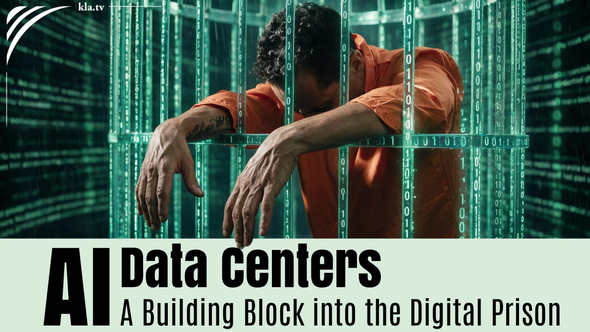

|
|
|---|
Nutzungsrecht:
Standard-Kla.TV-Lizenz


 Element freistellen
 Element sperren
 Element löschen
 Element kopieren
 Reihenfolge ändern
 Deutsch-ID setzten
 Vimeo-ID setzten
 YouTube-ID
setzten
YouTube-ID
setzten
Aktuelle Trends

![]()


19.09.2026 | www.kla.tv/42623
The AI boom and the trend toward accessing and sourcing storage capacity, computing power, and software via the Internet through the cloud are currently driving an unprecedented global boom in data center construction. According to market researchers at Allianz Commercial, up to seven trillion U.S. dollars are expected to be invested in data centers by 2030. The main investors include leading tech and cloud companies in the U.S. and China, such as Amazon, Microsoft, Google, Alibaba, and Tencent. Together, their investment budgets amounted to hundreds of billions of dollars in 2025 alone. The negative consequences of this boom though, are already becoming apparent. For example, electricity consumption by data centers has increased significantly in the United States. According to a study by the Electric Power Research Institute (EPRI), this figure could rise by 80% in the U.S. alone by 2030! Worldwide, energy demand from data centers is expected to more than double during this period, rising to approximately 945 terawatt-hours. This amount of electricity is roughly equivalent to the daily consumption of the whole of Japan, a population of 124 million! As a result of this enormous demand for energy, electricity costs are also skyrocketing. For example, in the period from 2020 to 2025 alone, data centers in the U.S. caused a 34% increase in electricity costs, which, of course, the public has to pay for. In addition, the water consumption of some facilities is alarming. Large data centers can consume up to 19 million liters of water per day – that's equivalent to the water consumption of a city with as many as 50,000 residents! Given that politicians and the mainstream media around the world are repeatedly sounding the alarm about climate change; and are forcing the public and the economy to reduce emissions of gases harmful to the climate through high CO₂ taxes, the following questions are pressing: ● Why aren't politicians and the media addressing, criticizing, and putting a stop to the massive energy and water consumption caused by data centers? ● Why are all the environmental organizations – which are usually so eager to call out environmental and climate sins – remaining silent on this issue? ● Why do the construction of data centers and the AI revolution have higher priority than the allegedly looming global climate catastrophe? However, the consequences of the AI boom – which is being accelerated more and more by the construction of new data centers – are likely to have an even more dramatic impact. More than 200 renowned economists and business experts have issued an urgent appeal warning of the consequences for the labor market. The signatories include, among others, 15 Nobel Prize laureates and even the chief economists of the AI companies OpenAI and Anthropic. They speak of an “unprecedented transformation” and an upheaval of our entire economy that will surpass the Industrial Revolution. As a result, they fear the loss of millions of jobs within a short period of time. Anyone who thinks these developments affect only ordinary workers is greatly mistaken. According to Dario Amodei, CEO of the AI company Anthropic, programming and software development jobs, in particular, are among the first areas that could be fully automated. But database administrators, security specialists, and IT experts in general are also being affected – all of which are professions for which many people have studied for years and, in some cases, gone into debt. This trend is also confirmed by a recent study from the Center for Retirement Research (CRR) at Boston College. According to this study, more than 120,000 technology jobs were eliminated by AI-driven automation in the first half of 2026 alone. The irony here couldn't be more bitter: Ironically, the very jobs that are driving the digital revolution are now being devoured by it. Given the problems and risks described, it is not surprising that opposition to AI data centers is growing. The media portal Natural News sums up what the expansion of this technology also means: Opposition to AI data centers is not only justified it is inevitable. Communities across the United States are becoming increasingly aware of the hidden costs they bear, while technology corporations rake in the profits. These centers are being forced into residential areas, driving up electricity bills, consuming vast amounts of water, and causing noise and light pollution. The real goal is profit and control not progress. People have every reason to be angry. […] Many of these data centers support AI systems used for mass surveillance, autonomous weapons, and authoritarian control not just for streaming movies. [...] Most AI is used to spy on, manipulate, and replace people. The connection between data centers and the globalist push for digital IDs and CBDCs (central bank digital currencies) is no coincidence. This is a coordinated attack on privacy and freedom. According to renowned investigative journalist David Icke, however, there is much more behind this coordinated attack. Icke has developed a remarkable ability to connect key global developments and events and to uncover the agenda behind them. Through his research, he has come to the conclusion that behind the development of AI lies a global cult that seeks to achieve world domination. To achieve this, one of the measures is to systematically destroy the population economically by depriving it of its means of subsistence and access to an independent income. According to Icke, the development of artificial intelligence serves precisely this purpose: It is intended to replace people so that they can no longer earn a living and thus become completely dependent and controlled. Listen to an excerpt from a Kla.TV interview with David Icke from 2023: [www.kla.tv/24827] "And the plan is, it’s already happening in places like China, that if you, for instance, go jaywalking and you are picked up by one of these cameras that can identify you, then the fine is just taken out of your account – this is what the AI plan is about. That’s where this is planned to go. They can basically block your access to money – if you are a dissident of the system and are challenging the system, the idea is that they can just shut your account down. And it people say no, that is far-fetched – remember Justin Trudeau and the truckers in Canada. [Watch our Interview with Hugh Hunter who explains the truckers' situation: www.kla.tv/21654] You know what happened. And that was just a precursor to what is planned everywhere. So this situation in Germany fits absolutely this agenda that I just outlined because it’s targeting the ability of the population to survive and pay its bills. Because the plan is that that is not supposed to happen. You are not supposed to have the ability to live your life and pay your bills but instead be completely dependent on the government for your very survival. This is the plan. And if we go on just standing and watching, then it will happen. But it doesn’t have to. 8 billion cannot be controlled by a handful unless the 8 billion comply with the handful. End of story." So that's what this is all about: It's about power, it's about control, and it's about total dependence on a system we don't control. Since the expansion of AI is directly linked to the global construction of new data centers, these facilities are thus turning out to be a building block on the path to a digital prison. The insidious thing about it is that all of this is being sold to us as progress. However, it is far from certain that these global strategists' plans will succeed. No one knows for sure whether the digital control system will work and whether people will actually allow themselves to be led into this prison. That is why we must now relentlessly expose and denounce the dangers of AI and the puppet masters behind this development, and demand a broad public discourse on this dangerous trend. Only the population can stop these plans. So take action together with us and share this broadcast on all available social media platforms! Because, in the words of David Icke: “… it just needs a vast number of people in each country who are simply saying: "No, we are not doing it anymore, we are not complying with our own enslavement." “… and it’s still that people say, ‘there's nothing we can do’. Well, of course there is. 8 billion people can't be controlled by a relative handful. It's impossible without the acquiescence of the 8 billion. The answer is staring us in the face, but people have to a) be informed so they realize they're being lied to and b) take courage so that they don't acquiesce through fear of what will happen if they don't, and c) join the renegades, the true renegades. And the number of people that are saying we won't cooperate in our own enslavement is getting bigger all the time. And if people just did that, they would suddenly realize where the power not only is, but has been all along.”
von hag
Cloud Computing https://www.bundeswirtschaftsministerium.de/ITS/Navigation/DE/Themen/Cloud-Computing/cloud-computing.html
AI, Data Centers and Cloud as Power and Water Guzzlers https://www.computerwoche.de/article/4086660/sieben-billionen-dollar-ki-und-cloud-sorgen-fur-rz-bauboom.html
https://www.n-tv.de/wirtschaft/KI-und-Krypto-treiben-US-Stromverbrauch-auf-Rekordwerte-id30237324.html
https://www.gtai.de/de/trade/usa/branchen/rechenzentren-strombedarf-1829814
https://powering-intelligence.epri.com/executive-summary.html
https://mgrid.org/2025/04/10/iea-us-data-center-electricity-demand-130-percent-2030-ai/
Economists Warn About AI Boom https://www.computerwoche.de/article/4196753/nobelpreistrager-warnen-ki-konnte-viele-arbeitsplatze-vernichten.html
https://www.heise.de/news/Groesser-als-die-Industrielle-Revolution-230-Fachleute-warnen-vor-Folgen-von-KI-11363619.html
AI – Consequences for the Labour Market https://www.ad-hoc-news.de/wissenschaft/ki-jobkrise-120-000-tech-stellen-im-ersten-halbjahr-2026-gestrichen/69748036
https://www.kettner-edelmetalle.de/news/der-schleichende-jobkiller-wie-ki-bereits-heute-deutsche-arbeitsplatze-vernichtet-03-06-2025
Generative AI https://wirtschaftslexikon.gabler.de/definition/generative-ki-124952
Impacts of Data Centers https://www.naturalnews.com/2026-05-11-war-on-data-centers-why-backlash-justified.html
https://naturalnews.com/2026-04-22-report-data-center-electricity-demand-significantly-rising.html
https://infotakt.kla.tv/p/ki-rechenzentren-serverfarm-fur-den
https://www.windkraft-journal.de/2025/11/11/forschung-der-strombedarf-von-ki-rechenzentren-laesst-stromkosten-weltweit-explodieren/218392
David Icke www.kla.tv/24894
www.kla.tv/37903
www.kla.tv/24954
Ernst Wolff on the Digital Straitjacket https://www.kla.tv/40355
(ab Min. 11:45)