



Subtitle "Afrikaans" was produced by machine.Subtitle "አማርኛ" was produced by machine.Subtitle "العربية " was produced by machine.Subtitle "Ārāmāyâ" was produced by machine.Subtitle "azərbaycan dili " was produced by machine.Subtitle "беларуская мова " was produced by machine.Подзаглавието "България" е създадено от машина.সাবটাইটেল "বাংলা " মেশিন দ্বারা তৈরি করা হয়েছিল।Subtitle "བོད་ཡིག" was produced by machine.Subtitle "босански" was produced by machine.Subtitle "català" was produced by machine.Subtitle "Cebuano" was produced by machine.Subtitle "ગુજરાતી" was produced by machine.Subtitle "corsu" was produced by machine.Podtitul "Čeština" byl vytvořen automaticky.Subtitle "Cymraeg" was produced by machine.Subtitle "Dansk" was produced by machine.Untertitel "Deutsch" wurde maschinell erzeugt.Subtitle "Untertitel" was produced by machine.Ο υπότιτλος "Ελληνικά" δημιουργήθηκε αυτόματα.Subtitle "English" was produced by machine.Subtitle "Esperanto" was produced by machine.El subtítulo "Español" se generó automáticamente.Subtitle "Eesti" was produced by machine.Subtitle "euskara" was produced by machine.Subtitle "فارسی" was produced by machine.Subtitle "Suomi" was produced by machine.Le sous-titrage "Français" a été généré automatiquement.Subtitle "Frysk" was produced by machine.Subtitle "Gaeilge" was produced by machine.Subtitle "Gàidhlig" was produced by machine.Subtitle "Galego" was produced by machine.Subtitle "Schwizerdütsch" was produced by machine.Subtitle "هَوُسَ" was produced by machine.Subtitle "Ōlelo Hawaiʻi" was produced by machine.Subtitle "עברית" was produced by machine.Subtitle "हिन्दी" was produced by machine.Subtitle "Mẹo" was produced by machine.Podnaslov "Hrvatski" generiran je automatski.Subtitle "Kreyòl ayisyen " was produced by machine.A magyar felirat gépi fordítással (MI) készült. Subtitle "Հայերեն" was produced by machine.Subtitle "Bahasa Indonesia " was produced by machine.Subtitle "Asụsụ Igbo " was produced by machine.Textun"Íslenska" var framkvæmt vélrænt.Sottotitoli "Italiano" sono stati generati con l'intelligenza artificiale.字幕は"日本語" 自動的に生成されました。Subtitle "Basa Jawa" was produced by machine.Subtitle "ქართული" was produced by machine.Subtitle "қазақ тілі " was produced by machine.Subtitle "ភាសាខ្មែរ" was produced by machine.Subtitle "ಕನ್ನಡ" was produced by machine.Subtitle "한국어" was produced by machine.Subtitle "कोंकणी語" was produced by machine.Subtitle "کوردی" was produced by machine.Subtitle "Кыргызча" was produced by machine.Subtitle " lingua latina" was produced by machine.Subtitle "Lëtzebuergesch" was produced by machine.Subtitle "Lingala" was produced by machine.Subtitle "ພາສາ" was produced by machine.Antraštė "Lietuvių" buvo sukurta mašina.Subtitle "Latviešu" was produced by machine.Subtitle "fiteny malagasy" was produced by machine.Subtitle "te reo Māori" was produced by machine.Subtitle "македонски јазик" was produced by machine.Subtitle "malayāḷaṁ" was produced by machine.Subtitle "Монгол хэл" was produced by machine.Subtitle "मराठी" was produced by machine.Subtitle "Bahasa Malaysia" was produced by machine.Subtitle "Malti" was produced by machine.Subtitle "မြန်မာစာ " was produced by machine.Subtitle "नेपाली" was produced by machine.Ondertitels "Nederlands" machinaal geproduceerd.Subtitle "Norsk" was produced by machine.Subtitle "chiCheŵa" was produced by machine.Subtitle "ਪੰਜਾਬੀ" was produced by machine.Podtytuł "Polska" został utworzony przez maszynę.Subtitle "پښتو" was produced by machine.Legenda "Português" foi gerada automaticamente.Subtitle "Română" was produced by machine.Subtitle "Язык жестов (Русский)" was produced by machine.Субтитры "Pусский" были созданы машиной.Subtitle "Kinyarwanda" was produced by machine.Subtitle "सिन्धी" was produced by machine.Subtitle "Deutschschweizer Gebärdensprache" was produced by machine.Subtitle "සිංහල" was produced by machine.Subtitle "Slovensky" was produced by machine.Subtitle "Slovenski" was produced by machine.Subtitle "gagana fa'a Samoa" was produced by machine.Subtitle "chiShona" was produced by machine.Subtitle "Soomaaliga" was produced by machine.Titra "Shqip" u krijua automatikisht.Превод "србски" је урађен машински.Subtitle "Sesotho" was produced by machine.Subtitle "Basa Sunda" was produced by machine.Undertext "Svenska" är maskinell skapad.Subtitle "Kiswahili" was produced by machine.Subtitle "தமிழ்" was produced by machine.Subtitle "తెలుగు" was produced by machine.Subtitle "Тоҷикй" was produced by machine.Subtitle "ภาษาไทย" was produced by machine.ንኡስ ኣርእስቲ "ትግርኛ" ብማሽን እዩ ተፈሪዩ።Subtitle "Türkmençe" was produced by machine.Subtitle "Tagalog" ay nabuo sa pamamagitan ng makina.Altyazı "Türkçe" otomatik olarak oluşturuldu.Subtitle "татар теле" was produced by machine.Subtitle "Українська " was produced by machine.ذیلی عنوان "اردو" مشین کے ذریعہ تیار کیا گیا تھا۔Subtitle "Oʻzbek" was produced by machine.Phụ đề được tạo bởi máy.Subtitle "Serbšćina" was produced by machine.Subtitle "isiXhosa" was produced by machine.Subtitle "ייִדיש" was produced by machine.Subtitle "Yorùbá" was produced by machine.字幕 "中文" 由机器生成。Subtitle "isiZulu" was produced by machine.
kla.TV accepts no liability for defective translation.kla.TV accepts no liability for defective translation.kla.TV accepts no liability for defective translation.kla.TV accepts no liability for defective translation.kla.TV accepts no liability for defective translation.kla.TV accepts no liability for defective translation.kla.TV не носи отговорност за некачествен превод.অপর্যাপ্ত অনুবাদের জন্য kla.TV কোন দায় বহন করে না।kla.TV accepts no liability for defective translation.kla.TV accepts no liability for defective translation.kla.TV accepts no liability for defective translation.kla.TV accepts no liability for defective translation.kla.TV accepts no liability for defective translation.kla.TV accepts no liability for defective translation.kla.TV nenese žádnou odpovědnost za chybné překlady.kla.TV accepts no liability for defective translation.kla.TV accepts no liability for defective translation.kla.TV übernimmt keine Haftung für mangelhafte Übersetzung.kla.TV accepts no liability for inadequate translationΗ kla.TV δεν φέρει καμία ευθύνη για ανεπαρκή μετάφραση.kla.TV accepts no liability for defective translation.kla.TV accepts no liability for defective translation.kla.TV no se hace responsable de traducciones incorrectas.kla.TV accepts no liability for defective translation.kla.TV accepts no liability for defective translation.kla.TV accepts no liability for defective translation.kla.TV accepts no liability for defective translation.kla.TV n'assume aucune responsabilité en cas de mauvaise traduction.kla.TV accepts no liability for defective translation.kla.TV accepts no liability for defective translation.kla.TV accepts no liability for defective translation.kla.TV accepts no liability for defective translation.kla.TV accepts no liability for defective translation.kla.TV accepts no liability for defective translation.kla.TV accepts no liability for defective translation.kla.TV accepts no liability for defective translation.kla.TV accepts no liability for defective translation.kla.TV accepts no liability for defective translation.kla.TV ne preuzima nikakvu odgovornost za neadekvatne prijevode.kla.TV accepts no liability for defective translation.A Kla.TV nem vállal felelősséget az esetleges fordítási hibákért.kla.TV accepts no liability for defective translation.kla.TV accepts no liability for defective translation.kla.TV accepts no liability for defective translation.kla.TV tekur enga ábyrgð á áræðanleika þýðingarinnarKla.TV non si assume alcuna responsabilità per traduzioni lacunose e/o errate.Kla.TV は、不適切な翻訳に対して一切の責任を負いません。kla.TV accepts no liability for defective translation.kla.TV accepts no liability for defective translation.kla.TV accepts no liability for defective translation.kla.TV accepts no liability for defective translation.kla.TV accepts no liability for defective translation.kla.TV accepts no liability for defective translation.kla.TV accepts no liability for defective translation.kla.TV accepts no liability for defective translation.kla.TV accepts no liability for defective translation.kla.TV accepts no liability for defective translation.kla.TV accepts no liability for defective translation.kla.TV accepts no liability for defective translation.kla.TV accepts no liability for defective translation.kla.TV neprisiima jokios atsakomybės už netinkamą vertimą.kla.TV accepts no liability for defective translation.kla.TV accepts no liability for defective translation.kla.TV accepts no liability for defective translation.kla.TV accepts no liability for defective translation.kla.TV accepts no liability for defective translation.kla.TV accepts no liability for defective translation.kla.TV accepts no liability for defective translation.kla.TV accepts no liability for defective translation.kla.TV accepts no liability for defective translation.kla.TV accepts no liability for defective translation.kla.TV accepts no liability for defective translation.kla.TV aanvaardt geen aansprakelijkheid voor foutieve vertalingen.kla.TV accepts no liability for defective translation.kla.TV accepts no liability for defective translation.kla.TV accepts no liability for defective translation.kla.TV nie ponosi odpowiedzialności za wadliwe tłumaczenie.kla.TV accepts no liability for defective translation.kla.TV não se responsabiliza por traduções defeituosas.kla.TV accepts no liability for defective translation.kla.TV accepts no liability for defective translation.kla.TV не несет ответственности за некачественный перевод.kla.TV accepts no liability for defective translation.kla.TV accepts no liability for defective translation.kla.TV accepts no liability for defective translation.kla.TV accepts no liability for defective translation.kla.TV accepts no liability for defective translation.kla.TV accepts no liability for defective translation.kla.TV accepts no liability for defective translation.kla.TV accepts no liability for defective translation.kla.TV accepts no liability for defective translation.kla.TV nuk mban asnjë përgjegjësi për përkthime joadekuate.kla.TV не преузима никакву одговорност за неадекватне преводе..kla.TV accepts no liability for defective translation.kla.TV accepts no liability for defective translation.Kla.TV tar inget ansvar för felaktiga översättningar.kla.TV accepts no liability for defective translation.kla.TV accepts no liability for defective translation.kla.TV accepts no liability for defective translation.kla.TV accepts no liability for defective translation.kla.TV accepts no liability for defective translation.kla.TV ንዝኾነ ጉድለት ትርጉም ዝኾነ ይኹን ሓላፍነት ኣይቅበልን እዩ።kla.TV accepts no liability for defective translation.kla. Walang pananagutan ang TV sa mga depektibong pagsasalin.kla.TV hatalı çeviriler için hiçbir sorumluluk kabul etmez.kla.TV accepts no liability for defective translation.kla.TV accepts no liability for defective translation.kla.TV عیب دار ترجمہ کے لیے کوئی ذمہ داری قبول نہیں کرتا ہے۔kla.TV accepts no liability for defective translation.Kla. TV không chịu trách nhiệm về bản dịch không đầy đủ.kla.TV accepts no liability for defective translation.kla.TV accepts no liability for defective translation.kla.TV accepts no liability for defective translation.kla.TV accepts no liability for defective translation.kla.TV 对翻译质量问题不承担任何责任。kla.TV accepts no liability for defective translation.


The Old Order is Over: What’s Next? - Gareth Icke in Kla.TV Interview
10.02.2026
www.kla.tv/40261
Major changes in politics and economy are coming faster than ever and crazy headlines are becoming more frequent these days. Just look at the insane density of changes served to the public in just the first weeks of 2026. The famous British political commentator and activist Gareth Icke joins us to help us make sense of all this.
We discuss why politicians are saying the quiet part out loud these days and what we can expect from the newest Epstein files release. The plight of Gaza, the destabilisation of all civilisation and the incoming technocracy are put into context in this interview.
Watch, share and subscribe to Gareth Icke and Kla.TV for more independent news and commentary.
[continue reading]

 Odysee
The Old Order is Over: What’s Next? - Gareth Icke in Kla.TV Interview
Download broadcast and attachments in the wanted quality: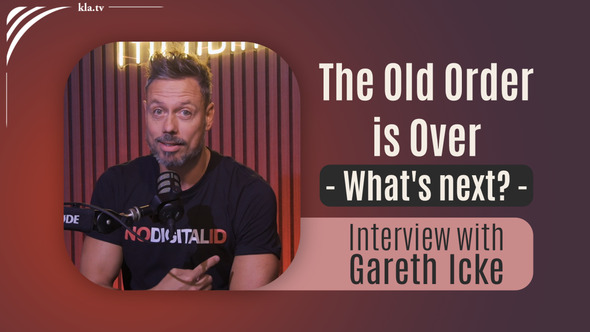
|
Find Gareth Icke’s work here: 100+ Mason-Founded Entities that Run the World: |
|---|

Useage rights:
Standard-Kla.TV-Licence

Topics A-Z
Enter a word for search or use the alphabetic search-order









10.02.2026 | www.kla.tv/40261
Interviewer: It is so great to have Gareth Icke with us today. Gareth, thank you so much for agreeing to the interview. Gareth Icke: Oh, absolute pleasure. Thank you for having me. Interviewer: Yes. I love your work. Love your dad's work. I want to start with ah a quote that came out very recently. And this is from the Canadian Prime Minister, Mark Carney. He says, and this was at a WEF forum. He says: „If we‘re not at the table, we‘re on the menu“. You either come to the table as a participant or you are on the menu. And this is something that I think guys like you and I have known for a while that if you want to call it the world leaders who go rogue like Gaddafi or Saddam Hussein or Castro, maybe you can even put Putin in that category. They know that there's a world cabal that's telling them what they have to do. But I find this quote interesting because they're just coming out and and saying it. And so my question is, are they so cocky and confident that we are on the cusp of them being able to tell us, you know, pretty soon or even now, it really doesn't matter what you think. We have all the power. What do you think about that Carney quote? Gareth Icke: It's a good question. I've been thinking about the same thing because here in the United Kingdom, politicians have been saying the quiet part out loud a lot lately. And kind of, it's interesting, like our Home Secretary came out last week saying that she has a vision for our justice system to be like a panopticon using AI where the eyes of the state are on the citizens at all times. And I was watching her saying it and I was thinking, I know you're thinking it, but you normally pretend not to be. Interviewer: Exactly. Gareth Icke: Now you're just like flat out saying it. And so it's an interesting question you asked there. Do I... I've got a few theories. Part of me thinks that they're so emboldened now that they kind of don't care that we know because in their mind it's like, well, what are you going to do about it anyway? Right? You know, you're not going anything. And part of me has has wondered a little bit as well, particularly with these Epstein files that have come out recently, you know, although they're heavily redacted and sanitized and stuff, even the bits that have come out up are pretty, you know, damning really for the establishment. And so I asked the question the same thing. Why would they let us know these things? Why do they tell us? And I wonder if it's a test, mate. Like... they, lots of people have a theory that it's almost like a karmic thing. So they have to tell you what they're doing. And if you do nothing about it, that in a way is consent. So in terms of, you know, the theory of the the vampire, the vampire needs your consent to pass the threshold, right? Interviewer: Yep. Gareth Icke: They can't just walk in and tear your head off. You need to invite in the vampire. Once they're in, they've had you. So I know a lot of people wonder whether it's to do with a karmic thing and whether that it's like that. And, you know, maybe on one level it is. And part of me wonders whether it's a test in that they tell us what they're going to or they tell us what they're doing. And if we do nothing about it you know, we can whinge about it on social media or whatever, but if we do nothing about it, if we don't stand up to it and don't demand justice and and refuse to, you know, be gaslit into ignoring it, whatever, that then gives them permission almost to take it to the next level and go, okay, well, they ain't going to do anything right, in which case we can take the agenda to the next level. As an example for why I think that, here in the United Kingdom during the COVID time, at the start of it in March 2020, they put out these rules, but they weren't that draconian, not really, not at first. They were lockdown orders, but a lot of people kind of just took them for what they were and got on with it. But a lot followed the rules to the T. And so there were some leaked WhatsApp messages between the then Home Secretary and others within this this supposed independent group of of people, scientists. A lot of them were communists and most of them were behavioural insights. So they were about, you know, the the nudge unit within government of kind of, you know, manipulating what people do, um called Independent Sage. And they say in these messages that they were shocked by the compliance. They didn't realize that the British people would be so compliant with these rules. Now, once the British people were compliant with the rules, they went to the next level on the rules and the lockdowns and the mask mandates and the jab and all this kind of stuff. So they needed us to basically almost give them permission. So I do wonder whether part of that is in play here where they're almost telling us so that when we do nothing, hopefully we do do something, but if we do nothing, then that almost gives them, okay, that's cool. We can go on to the next level then. Interviewer: Yes, I think it's a little of everything you said. It's like ah it's two steps forward, one step back, or just plain old two steps forward. When Pam Bondi or Stephen Miller or Marco Rubio come out and say something insane, like we're not going to pay attention to laws anymore, or you don't have a First Amendment or this latest thing in Minnesota where it's like, well, now you can't even carry a gun. This used to be something that the right used to – It used to be an issue that the right supported. When they say stuff like this, I think that they're thinking, look, let's try it. And then if the people go nuts, maybe then Trump can come in and say, well, we really didn't mean that. We take one step back - or just shove it through. Gareth Icke: I think they pull that play all the time. I think they're doing it here in the United Kingdom with digital ID, where what they do is they absolutely, like you say, they say things that are absolutely insane and they make people frightened. They tell you, basically the equivalent of, they tell you that they're going to punch you in the face and everyone starts freaking out and going, oh my God, we're going to get punched in the face. And then what they do is they slap you in the face and everyone says, oh my goodness, thank goodness for that. Thank goodness you didn't punch me. Interviewer: Thank you for the slap. Gareth Icke: And you're like... dude, you just got slapped, mate. But it's the psychology of it, isn't it? And they do do that for sure. You know, they push you until you resist and then they wait a little bit and then they push you until you resist and they wait a little bit. And then, you know, you do that four or five times over a period of, say, four or five years. All of a sudden you look back half a decade and you're like, oh my goodness, look how far we've been pushed. You know, you've been, you know. Interviewer: Yes. I think the analogy of a slap isn't quite strong enough. I think a better analogy would be, we're going to kill you. And then, no, they just bust your nose. Gareth Icke: Yeah, yeah, we just take both your arms off. Oh, thank goodness they didn't kill me. Yeah, exactly. Interviewer: Yes, exactly. Gareth Icke: Yeah. We see that a lot here. Interviewer: Yes. Speaking of what's going on in the UK, of course, I haven't studied it as much as what's going on in the US. I'm so glad to have you on. I grabbed a book of a guy that I interviewed about a year ago. His name's Joachim Hagopian, and he did this huge series on Pedophilia and Empire, Satan, Sodomy, and the Deep State, book number four. I only read most of book number four, which is 600 pages. But he has he has five volumes. And I read book four, which is North America's shameful pedophilia scandals like never before. So it took a whole 600-page volume to just cover the United States or North America. But book number two and book number three are the United Kingdom, the world's pedophilia epicenter. Royals, Saville, BBC, Rothschilds, Ireland, Wales, etc. So you guys needed two volumes to cover what's going on over there. What might I have missed in only studying the United States? Gareth Icke: Well, I think what these Epstein files have shown is that it's not even individual nations. This is a cesspit that infiltrates everywhere. Do you know what I mean? These people don't have borders, for one. But historically, yeah, the United Kingdom... has some horrendous abuse stories embedded in the royal family up in through the establishment. But what they've done here is exactly what I can see happening in the United States with the Epstein files. And that is to basically bury them somewhere in the past. So with the Epstein files, I've seen articles saying, oh, this is, you know, these are tales of a debaucherous elite that were, past tense, that were, yeah. Interviewer: Were. Gareth Icke: And they basically make it out like when Epstein, you know, didn't kill himself or whatever. That's even if he is dead. I'm not even convinced, to be honest. But when he officially died, that then that's when it died with him. Well, we had the same thing here. It was all in the 1980s. The United, the 80s in the UK were horrendous. You obviously had Savile being probably the most prominent of them, Ted Heath and others. But that was then. That was in the past. It definitely doesn't go on now. And it's like, well, I'm sorry, but, you know, pedophiles don't stop being pedophiles because they lose Internet connection. They just get another provider. That's how it works. So when people like Epstein or people like Jimmy Savile die or whatever, you know, there's someone else. There's someone out there. And these things carry on. Interviewer: Yep. Gareth Icke: And yeah even as we speak now, you know, there's, I think, officially it's admitted that there's grooming gangs in 50 cities and towns in England. Now, obviously, you know, England's a tiny country. I mean, it's a tiny country compared to America, it's a speck on a map. Interviewer: Right. Gareth Icke: And so to have grooming gangs operating, widely accepted to be operating within 50 of our towns and cities with very little happening about it. It just shows how how big this this this thing is. It's insane really. And you know I've got young kids and I'm not someone that lives in fear, I refuse to live like that, but I'm very, very conscious that they are never not in my eyesight. Interviewer: Right, right. Before we leave Mark Carney, another quote that came out possibly in that same speech was, quote: “We know the old order is not coming back.” We heard all kinds of language like this during the COVID situation and build back better and all that. Precisely, what is he talking about when he says the old order? Does he mean stuff like the rights you used to have? The Bill of Rights is gone. What do they mean? Gareth Icke: Yeah. Well, I think they want everything changed. I think this is what's real crazy at the minute is that actually those that would consider themselves probably, anti-establishment and the establishment want the same thing, which is the destruction of the status as quo, with the destruction of the old normal. Interviewer: Yes. Gareth Icke: And so it's actually quite a strange position to be in. And I think that's how Trump has been able to hoodwink a lot of people because they're looking at certain things that he's talking about destroying and they're like, yes, I want to destroy that as well. I don't like the old status quo. I agree with it being changed. And it's like, well, yeah, but unfortunately, once it gets to the point that it's destroyed, what you want to replace it with and what they want to replace it with are not the same thing, of course. So here in England, I mean, they're trying to do, well, they are doing away with jury trials. So they're trying to get rid of that. So that whole, you know, being tried by a jury of your peers will be replaced by a state appointed judge. So essentially the state decides whether you're guilty or not. Interviewer: Yes. Yep. Gareth Icke: That is is unbelievable. And it's got very little scrutiny, really. They've just kind of said, oh, by the way, we're doing that. As you were talking about earlier, you know, this saying the quiet part out loud. So so that I think is is part of it. I think they want away with cash. because cash can give you freedom. Whereas if you have a programmable digital currency, they can decide what you spend it on, where you spend it, all those kind of things. Interviewer: Yes. Yes. Gareth Icke: You know, your 15-minute cities, universal basic income, all these things are even being openly spoken about by government and by ministers now. Of course, the AI takeover, the technocracy rather than than election. So you suddenly have selected so-called experts that make decisions as opposed to elected officials. And I think that's part of the reason why we're seeing or allowed to see some of what's in the Epstein files because that is is making people distrust politicians, because look at them all, they're all wrong-uns basically. And also they certainly in the United Kingdom for a period of time have been elevating the most stupid of people to positions of so-called power. So in the old days, even like thinking back to when I was a kid, I didn't like the politicians. I didn't trust the politicians, but they had charisma. They had something about them. Interviewer: Yes. Gareth Icke: They had a bit of whatever. Whereas now you you look at them and you're like, oh, these guys are just idiots. Interviewer: Yes. Gareth Icke: Someone like Keir Starmer is supposed to be the most powerful man in England. I mean, the, the guy's like a rabbit in headlights. He can barely string a sentence together. And so I think part of that is being done on purpose so that when they try and introduce the technocracy and get away from elections and and elected officials, that actually people will go, well, it can't be much worse than this lot. And so that they will almost agree to this new world order, basically, is what Mark Carney is getting at there, isn't it? Interviewer: Yes. Yep. Yeah. Gareth Icke: It's the old order's dead, so we need to bring in the new world order. Which you know will be less freedoms, less financial independence and any of that. I think even though they've taken a lot of freedoms as it is, I think they want the lot, mate. These guys are crazy. And I think COVID was part of that, destroying small businesses, destroying people's livelihoods so that people then become dependent on the state. As soon as you're dependent on the state for a universal basic income, you have to do what the state says, because if you want your kids to eat, then you do as you're told, mate. So it's like the ultimate control, isn't it? I think that's what Mark's talking about. Interviewer: Yes, yes. Gareth Icke: He obviously knows the bigger picture. Interviewer: Yes. When you mentioned Keir Starmer, I started thinking of some of our American politicians who just appear to be absolute bozos. And why do they put them up there? The funny part for me is like when a guy like, ah I forget his first name, but this Fetterman congressman. He's in his Carhartt hoodie and you know he's stomping around in his basketball shoes and it almost looks like he's trying to act even stupider than he really is. But the funny part is when you get someone from the New York Times or NPR, or if it's in England, they'll get one of their best BBC commentators who does sound quite a intelligent. And they talk about these people as if they're a serious thing. That always gets me. Gareth Icke: Yeah, well, you in the States had it with Biden, where you're looking as an outsider going, mate, this guy, is he's not there. Like the engine's running, but there's no one behind the wheel and no one was stepping in. It was almost like it was a bit of a humiliation ritual for the United States. And we've got that here with people like Ed Miliband, David Lammy, Rachel Reeves. You could reel off the whole front bench of of the UK government. Interviewer: Yes. Gareth Icke: And you know you wouldn't hire any of them to work in your business. No way would you hire them to make any decisions related to your to the success of your company. Interviewer: Yes. Gareth Icke: Yet these people are supposedly in charge of the country. Of course, I don't believe they actually are in control of the country. I think they're basically puppets playing a role. But basically the trust and confidence in politicians and in the media in the US and in in Britain and in the West in general is at the lowest I've ever known it. Interviewer: Yes. Yes. I think I agree with you that they're all playing a role. So then that brings up the idea of: on all levels, is this thing a scripted show? There's a guy that I follow on Substack. His name is Rurik. And he talks a lot about ah Russia and Eastern Europe and what's going on in Ukraine. And he mentions guys like Putin in Russia, Maduro in Venezuela, Saddam Hussein in Iraq, Khomeini in Iran, Jolani in Syria, Castro Cuba. And he says there's this theory called the Tucker Carlson theory, which is, OK, these guys are put into power or helped into power, maybe like Putin used to be a WEF, young global leader. But they get into power and then they go rogue. And then the establishment is like, okay, we got to do something about these guys. Putin's not on our side anymore. Whatever. The other guys are not on our side anymore. But he (Rurik) doesn't agree with this. He says that, quote, the rise and fall of these Western assets is all planned, even the supposed go rogue element. And it's all part of permanent destabilization. What would you think about those two theories? Gareth Icke: It wouldn't surprise me in the slightest. I think they create bogeymen as well. Interviewer: Yes. Gareth Icke: And you said Jolani, in terms of Syria, that's a perfect example. This guy was on the most wanted list of terrorists. I think there was a 200 million pound bounty on his head. There were videos of him leading Al-Qaeda and chopping people's heads off and destabilizing Syria. Suddenly he's had a beard trim and he's got a brand new suit and he's now supposedly a serious politician. But for now. Interviewer: Yes. Gareth Icke: He's serving the agenda right now, certainly in the Middle East, in the fact that he's destroying Syria and he's letting Israel get away with whatever it wants as it encroaches, takes even more land with its eyes on Damascus, of course. Interviewer: Yes. Gareth Icke: But in the end, he will be a bogeyman again. I'll put my house on that, that in the end, they will turn on him because then he becomes the excuse. We've got to go back into Syria because this guy is, you know, he's killing his own people or whatever they come up with, something like that. Interviewer: So you don't think he's going to be portrayed as this Park Avenue doorman for long and he'll be back in his head chopper getup? Gareth Icke: I think so. It wouldn't surprise me. I mean, in fact, it would surprise me if they didn't do that. I mean, they did it with Bin Laden, didn't they? Interviewer: Yeah. Gareth Icke: They had the same thing there where bin Laden was the good guy. He was a freedom fighter. We were supporting the Mujahideen and getting rid of the Soviets in Afghanistan. Interviewer: Yep. Gareth Icke: And then suddenly, Oh no, no, he's a bogeyman now. And so we have to go into Afghanistan and we'll see, we know how that ended. Interviewer: And you think they can flip these narratives as quick as they flipped them in 1984? East Asia is our enemy. No, East Asia is our friend. Gareth Icke: It wouldn't surprise me. As long as they keep people distracted enough and as long as they they keep people in a state of of permanent, well, like you said, the word destabilization. If you keep people in a state of flux all the time where you don't really know what's going on. Interviewer: Yes. Gareth Icke: And that's what we're like at the moment. And i think during like the COVID era, you had one thing to focus on. So it was like, right, they're trying to do this, right? Okay, well, we need to we need to fight back against this. And so you could get yourself organized: What they're trying to do? They're trying to introduce this mandate, right? Well, let's fight back against that. Whereas if you're dealing with a, you know, say the COVID thing, then you've got Russia, Ukraine, then you've got China and the South China Sea, and then you've got all that's going on in the Middle East, you've got terrorism, you've got mass immigration, you're trying to fight back against digital ID, you're trying to fight back against the assisted dying bill, which they're trying to introduce here in the UK. You've got all these different things. And all of a sudden it's like, well, how do you fight all those things at the same time? It's like, if you threw a tennis ball at me, I'd probably catch it. If you threw two tennis balls at me, I'm quite good at catching. I'd back myself. You throw eight at me. I ain't catching all of them. And so things slip through, don't they? And I think that's probably, I mean, I think it's mad. Interviewer: Yeah. Gareth Icke: I'm looking at my screen now and I'm seeing it's only the 9th of February and think what's happened so far this year. Just in a month and nine days, it's been insane. And I don't expect that to change this year. I think that's part of it because then they can flip a narrative like that because you can't really be so focused on it because how are you? Because there's so many other things going on, so many other things being thrown at you. Whilst at the same time, you're worrying about the fact that all your shopping bills are going through the roof. You can barely afford to put fuel in the car anymore. It's this tough, man. It's a tough time, like at the minute for people. And I think that's not by accident. That's not by accident, but it's all happening at the same time. Interviewer: No. Not only keep us stressed, but incredibly busy and fighting just to stay ahead and stay afloat. Gareth Icke: Well, that's it. Interviewer: Yeah. Your dad, David Icke, he talks about the powers that shouldn't be. He uses a word again and again. The word he uses is “the cult”. And I wonder if you also use that word or if you agree with him that that's a good word to describe them. What does that word mean precisely? Is it akin to “the cabal”? It's akin to a lot of things. But what is he saying when he says “the cult”? Gareth Icke: I think it basically is a cult in that - if you have a cult, then whatever it is, even if it's like a low level religious cult in some tiny little village in some backwood somewhere, the cult comes first. So the will of the cult, the agenda of the cult comes before any sort of personal stuff, any things that might affect anyone else around you. It's just that, right? That is what matters. And so I think in that sense that you could use the word cult to describe this because they're kind of undeterred in terms of the agenda. They don't care who they sacrifice, whether it be a politician, whether it be a Charlie Kirk or whoever, that it doesn't matter. If someone gets in the way, then they're gone. Like you were talking about earlier in terms of having politicians that might go rogue - there's no honor among them. If one goes rogue, they're gone. That's it. Interviewer: Do you think Do you think Charlie Kirk went rogue or was going rogue? Gareth Icke: He was starting to say some things that he wasn't really saying before. I certainly don't believe that it was some kid, Tyler Robinson, some kid with a trans girlfriend or boyfriend or whatever, who just suddenly decided to do it on a whim. I don't buy that. I think there's a lot more to know about it. But I do get the feeling that he was killed by higher ups than just some disillusioned young kid, that's for sure. Interviewer: Well, if you're incredulous about the official story on that one, you might also disagree with Trump's ear “boo-boo” incident. Gareth Icke: I didn't buy that from day one, mate. That was the most insane thing. Cause I remember watching it and I remember tweeting straight away. I was like, “right, well, he's president then”. Like he's just won the presidency there and then, that's it, that's done. And that's exactly what it was. It gave him legitimacy immediately. And it basically made everyone go back to thinking he was against the deep state and he was gonna drain the swamp. Despite the fact that he'd already been president and had done everything the swamp wanted for the entirety of it. They suddenly forgot about that because he was shot in the ear. And that ear miraculously healed like nothing I've ever seen before in my life. The whole thing, just at the end of the day you get shot in the ear. There could have been, goodness knows how many shooters out there, yet he's allowed to stand up and punch the air and shout „fight“ in front of the New York Times, I think it was, cameraman. Interviewer: With the crane operator conveniently lowering the flag behind them for the picture. Gareth Icke: Yeah. If someone had asked me to design the perfect assassination attempt and photo opportunity, I don't think I could have come up with anything like as good as what they came up with. It was just absolute perfection. Interviewer: Well, and there's also this aspect of, look, for those of you who are questioning it, yeah, we know that you know. Like in discussion when they were planning this thing in the studio. So one guy raised his hand and said, “yeah, but wait. People are going to get wind of the fact that the crane operator lowered the flag while they're not going to believe that that's part of safety protocol”. And then someone said, “don't worry about it. Do not worry about it. The people that really think about that is small enough and we're giving them a message too.” Gareth Icke: Yeah, that we can do whatever and what are you gonna do about it. But then again, that whole cult element comes into that. I think people that blindly support politicians is cult-like behavior. And that's what I found staggering after that incident in Butler. I was like, hang on a minute. If Joe Biden was stood at a rally and he got nipped in the ear, jumped up in the air, punched the air and screamed „fight“, you would be all over social media calling it an absolute scam. This is a hoax. This was clearly staged to legitimize Joe Biden. And... yet there was silence and it's like, if it's my team doing it, then I refuse to see. And I think that's where tribalism becomes a bad thing. Like I don't have a problem with tribalism, looking after your own - that's fine. I get it. Like find your tribe, I get it. But when you're at a point where - which I think we are now all over the world - it's the same here in England - where it’s not what's being said or done that's important. It's who's saying it and who's doing it. That's really, really bad because what you need - in theory - to have any kind of decent democracy, even though I think it's little bit of an illusion anyway, is that both sides get held to account. So when your side does something good, you say that's good. When your side does something bad, you say that's bad and vice versa. Then in theory, that should incentivize politicians from both sides to do good stuff for people. Whereas, again, looking like you say, Minnesota. Could you imagine if Biden had ICE agents all masked up shooting people in the head in the street? What the MAGA-lot would be saying, they'd be going absolutely ballistic and rightly so. But it's OK when we do it. Interviewer: It's like you seem to only hold to your ideals or any ideals as long as our side's doing it. What also comes up in my mind is the whole – well, yeah, the Minnesota thing. You had Kyle Rittenhouse quite legally and lawfully holding his AR-15 and using it. Of course, all the people on the right were like: “yeah, well, he's just exercising his Second Amendment rights and he was out there protecting the people.” Nothing wrong with that. And then this guy that's carrying a gun in Minnesota gets beaten up and shot to death. And he didn't even touch his gun, didn't even pull his gun, but you can't carry a gun. You can't just carry a gun around to a protest. I'll tell you what, right-wingers have been carrying guns around to protest throughout the flyover states in Texas forever. But now it's their team. So I changed my mind. Gareth Icke: Well, that's the thing. That's the thing, isn't it? I don't have that situation because I don't have a team. I heard the term, a “political atheist”, the other day, and I thought that's absolutely perfect. Because I don't root for a team, I root for a team humanity. So I don't have a political leaning. You know, if the left does something good, I'll go, that was good. And if the right do something good, I'll say that was good. And if they do something bad, I'll say that was bad. But it seems that people on both sides seem unable to do that. Because yeah I'm not just digging out the right here, because it was the same under Biden, where people on the left were happy to ignore the fact that the guy clearly didn't know what day it was. It was almost like they just didn't want to see it. And it's like, you being serious? The guy's just falling up the stairs again. Come on. I think as long as people have political teams that they're willing to overlook any negativity from them, then that's dangerous. That's not good. Interviewer: There was a time years ago when I sort of called myself a libertarian. That would have been sort of a political team. I'm not there anymore. I'm more open to all kinds of ideas. So I don't really have a political team, but I do have a team. My team is called „us“ and I'm against the team called „them“. You guys call it the cult. I call it „them“. Gareth Icke: Yeah, no, I'm the same as you. Interviewer: That's my team. Gareth Icke: I mean, I align with the libertarian view and I'll speak at libertarian conferences and things like that, but I'm the same as my dad. I don't like “isms”. I don't like being pigeonholed into anything really. Because I have it all the time where people say: “oh, I'm such and such and such, such, such, and such such such.” And it's like all these labels and I'm like, “oh, okay, I'm Gareth.” I can't be bothered with that. I think, life is and the world there's infinite possibility. I think the minute you become an “ism”, you've completely boxed yourself off from everything else. So I'm not really one for that. Interviewer: What I was going to ask you when you were talking about you Jimmy Savile. I was talking about, the American side of it, you were talking about the Britain side of it, and then I've always asked myself, what precisely – let's talk about the cult and their motivations. What is it that motivates these sick people that this guy has to write five volumes on – and is it purely power? Is it perverted lusts? Is it just wanting to be in the group, this cult, like fear of being kicked out of the group? Or are they following Satan himself? What motivates these people? What's their main motivation? Gareth Icke: Oh, mate, I don't even want to get inside their head, to be honest. But I there's multiple things. You know I think power and dominance and all that kind of weird stuff is probably some part of it that motivates them. I'm someone that's never wanted to dominate others, so I don't really get that. It's weird. But also I think they feed on it. It's almost like - people have got different terms for it, but it's almost like they feed on this low vibrational energy and this terror and this fear within people, which... When you read, just like I said, the bits that they've allowed from these Epstein files and - can you imagine the terror that these kids must have been going through? You can't compute it. And so I think a lot of it has to do with that. It has to do with having power and creating fear and feeding on that almost dark, negative, low vibrational energy, which I guess - You could say that these people are worshiping Satan or at least a - whatever version of. See, all different religions have got their own names for these beings and stuff, but I think it's certainly otherworldly. I think it's bigger. I don't think it's just simply a fetish and then you go home and put the TV on. I think they are worshiping something and they are almost sacrificing for something. What I'm finding really strange, and see it's my dad I feel for really. Because obviously he's been exposing this stuff for like 30 years and the stuff that's coming out in these files where they're talking about Satanism and eating children, this kind of messed up, twisted stuff, but stuff that he's been saying for a very long time. And I'm seeing so many people now say, „oh my God, like, I never thought I'd see the day when I thought David Icke was right. And now that guy's totally vindicated, man, wow, after 30 years, that's incredible to be vindicated.“ But obviously I know my dad. And so I'm like: “yeah but it doesn't work like that.” Because normally, if you get vindication for something, there's normally either a sense of relief, like: “finally”, like: “people have finally understood”, like: “I didn't do it” or whatever, in whatever scenario. Or joy, like: “get in at last, people are listening.” But there's none of that with something like this, because, deep down, I think most of us that we've been talking about this stuff really hope we were wrong, actually. I would rather that this wasn't happening and I was just a little bit crazy. Interviewer: Exactly. A decent human being would hope that: “hey, brother in Seattle, you were right. I'm just a tinfoil hat and nutter and things aren't as bad.” Gareth Icke: Yeah, exactly. Interviewer: “Things aren't that bad.” Gareth Icke: “This is great. I would bite your hand off for that, mate. It will all just be nonsense.” But unfortunately, that isn't how it is. So it is quite strange. I’ve seen a lot of comments in the last few days towards dad and I'm thinking: “yeah, but he doesn't see it like that because there's no celebration here.” The only positive from it is that it's starting to come out and hopefully then... There will be some form of justice - people held to account and checks and balances put in place so that things like this can't happen again. But that's a long road. Interviewer: No, I didn't see your dad celebrating with champagne when the three million new Epstein things came out and proved him correct over what he'd been saying forever. Gareth Icke: No, no, not at all, mate. Interviewer: But imagine what's in the, like you say, even the stuff that has come out is so redacted. Imagine what's in the files that are still hidden. Gareth Icke: Exactly. And I said, when they said to try and get elected, obviously they were going to release all the Epstein files. I said at the time that Epstein - it’s a blackmail operation, among other things. If you've got a blackmail operation that gives you control over governments, you don't give up that blackmail operation. Because why would you? Because as soon as you give it up, you don't have it anymore. You don't have the control anymore. So they were only ever going to give us... Some low lying fruit, people like George Bush, and that guy's been dead for years. Bill Clinton, just how important is Bill Clinton anymore, to be fair? So these people are surplus to requirements. Peter Mandelson in the United Kingdom, who cares about Peter Mandelson? But it also concentrates the mind of those that at the moment are redacted. So there's politicians in those Epstein files that have black ink over their name that are clearly still important. And it concentrates their mind. I think that's probably part of why they've released what they've released. It's a way of saying: “look, if you don't do as you're told, sunshine, your name doesn't have to remain redacted.That can change.“ And so people go: “oh, okay. Yeah, well, yeah. How hard do you want me to jump?” I think that's part of it as well. Interviewer: I think it would be a good MO (Modus Operandi), a good strategy to just automatically assume for any politician that's been in Washington in the last three, five, 10, 15 years - I’m sorry, but until we get all the files and you take off all the black stripes in the redactions, I'm going to assume your name is under one of those black stripes. Wouldn't that be a a decent strategy? Gareth Icke: I think it's fair enough. And another rule of thumb with that is if you are out there right now, whether you be a journalist or whether you be an influencer or a politician, whatever, pushing this “Jeffrey Epstein was a Russian agent” thing, I think I can assume then that you're either complicit or on the payroll. That's for sure. Because if you can look at these Epstein files and come out of it with the idea that he's a Russian agent, then I don't know what to say, to be honest. It's almost like every time I see a journalist talking about it, I'm like: “mate, this is a humiliation ritual for you if you're doing that.” Interviewer: Yeah. How about this one for humiliation ritual? Not a journalist per se, but one of the biggest influencers. Oh, what's the guy's name? Nick Fuentes! - comes out and says: “ah come on, you guys. Quote: “Epstein is cool as F!” And he was pushing Epstein's - maybe you you don't know this, he was pushing Epstein's sweatshirt that he had, and he flipped right away some for some reason. Gareth Icke: I can't read that guy, Nick Fuentes. Interviewer: I know. Gareth Icke: I honestly can't read him. I see bits and bobs that pop up from him and I'll watch and I'm like: “is that the same guy I was watching last week?” There seems to be a bait and switch. I don't know whether it's an act or whether it's a game or whether he's completely undecided and so he has different opinions from one minute to the next. I'm not sure, but I find him hard to read. Interviewer: Yes, he seems to… Gareth, is there any support in England, in the UK for Trump and his insane antics? Are there people that actually support his position on Venezuela and Greenland and his whopper tariffs and ICE and all this stuff? I'm hoping you're going to say very, very little, but I don't know. Gareth Icke: There is some, yeah, there is some, which is quite strange because it's generally among the the COVID resistance or the COVID freedom movement. Which is very confusing given this guy's Papa Warp Speed. So I don't know how they circle that square, but they do. But yeah, there is a bit of a movement for, they call it MEGA "Make England Great Again! And it's genuinely pushed by, essentially Israel firsters. So people like Tommy Robinson and others that are very pro-Israel, they push Trump quite a bit. But, you know, it's starting to unravel a little bit. Like the Epstein file stuff has unraveled it with quite a few people. So, you know, it's interesting, but there is a bit of support. Yeah. But I think I would say it's minority. I would say minority of people support him. I think most people kind of are of the opinion that he's a politician, right? And, you know, they talk a good game sometimes and deliver very little. Interviewer: Yes. Speaking of Israel and the genocide that the mainstream media won't call a genocide, what do you think about this Board of Peace and the people they are suggesting should be on the Board of Peace, including Trump and his son-in-law, Kushner. Obviously, the people of Gaza have to just laugh at that stuff. And then the idea that they're going to set up a technocracy. What are they going to set up? A police panopticon state to control these people? Gareth Icke: Almost certainly. Almost certainly. Interviewer: Yeah. Gareth Icke: You know, I've felt that Palestinians are basically a bit of a guinea pig testing ground for what they want anyway. You know, Gaza being basically an open air prison under complete surveillance, apart from October 7th, obviously, when they looked the other way. But I think that's what they want for everyone. They want everyone in an open air prison under 24 hours surveillance. And so, you know, when I look at the fact that, you know, Israel sells arms around the world and its main selling point for these arms is that they're battle tested. What that actually means is, we've killed a lot of Palestinians with them. So I think in terms of the bord of peace, the fact that there isn't a single Palestinian on it tells you all you need to know about that. To me, it's trolling. I mean, Tony Blair, for crying out loud, the Butcher of Baghdad on there, you know, it's, they're laughing, I think. Part of that is just, they're joking, they don't care. Like you said at the start, like, they don't care anymore. It's almost like, what are you going about it? You know, what are you going to do about it? And I don't know, to be honest. But I think even a lot of his supporters actually, kind of found the Board of Peace quite strange. And some of the people that that are on it, it has nothing to do with peace at all. I feel for people in the Middle East, you know but when I think going back even to the first Gulf War in the early 90s, that place has taken an absolute battering and it's just been massively exploited. Interviewer: Oh, my. Gareth Icke: And I do, I feel for them. Interviewer: Yep. Okay, we're going to wrap up pretty soon. What would you say, which current development, and it may be something we've already spoken about, maybe something else, but which current development stands out as the main thing right now that we should be focusing on in your mind? That's a hard one. Gareth Icke: Well, personally, yeah I think that that they want us distracted away from the Epstein file. So I'm waiting to see, you know, whether Trump goes into Iran or not. We'll see. I mean, I just saw a couple of days ago that they, the U.S. embassy in Iran, which is a virtual embassy, because they don't have one on the ground, has ordered American citizens to get out of Iran. That tends to... come before a storm, things like that. So I wonder whether that is something that will that will kick off. But I hope people stay focused on the Epstein files, pushing for more. Like you say, until the whole thing's unredacted, let's find out who all these people are. Let's hold them to account, you know. But of course, the move towards digital ID and stuff, that's not gone away. That's a massive movement still. There's so many different things. Like we were saying earlier, that there's so many different things all at the same time that are being thrown at us. Like I do a daily show here and it's called „Trending“. You pick sort of three or four stories from the day. And every morning I come in here in the early morning and I'm like, I could do 20 stories today because there's just so much stuff going on all at the same time. Interviewer: Yes. Gareth Icke: So for me, short term, immediate term, I'm hoping people just keep pushing and pushing and pushing to unredact these files as much as possible. And don't let us be distracted from it because that's what I think they're going to try and do. Interviewer: Okay, we got to keep hammering on that. Now, my good buddy who likes to keep up on everything, and he's a fellow conspiracy theorist like me, and he's a huge fan of you and your father. And I said, well, what do you suppose I should ask Gareth? And he says, oh, ask him this. And I don't know if this is better for your father or if you even cover it, but I do have his question. Then I had another question. KlaTV has done a lot on the Masons and their history. Gareth Icke: Right. Interviewer: And I'd like to ask you two questions: What is the cult of the Black Sun? And two, is America a Christian nation or a Masonic nation? Gareth Icke: Well, I don't think it's a Christian nation at all. That's for sure. Interviewer: Really? Gareth Icke: I don't know the Order of the Black Sun, but I would imagine it's probably Saturn related because that tends to be how it is with all of these organizations. It tends to come back to that, even if you look at Islam. Interviewer: And Saturn represents Satan? Gareth Icke: Well, i mean... That is a theory, isn't it? Interviewer: Yeah. Gareth Icke: For sure. There's lots of theories in terms of the rings of Saturn and the sounds that come from Saturn and and how that impacts earth, you know, but you, apply it to every religion. So of course you've got your Masonic element in there and then you've you've got, even in Islam, you've got the black cube at Mecca and then in Judaism, of course, you've got the black cube where they have the hats and that they're symbolic of Saturn. So I'm imagining black sun is related to Saturn. I'm not entirely sure, but... sounds like it. Sounds about right to me. So there's clearly a connection there. I mean, in terms of sort of ancient accounts of Saturn, there are plenty and there are theories that the rings are a very new thing. They weren't there before. And they're created by sound, which in itself is quite interesting. So there's plenty more to know about that, that's for sure. But that is definitely more for my dad than me, that. Interviewer: Sure, sure. It is interesting how often you see this Black Cube pop up. I mean, what, one of the richest companies in the world, BlackRock, they sure love that Black Cube. Gareth Icke: Don't they just? Don't they just? Yeah. This is the thing, isn't it? Symbolism seems to be something that is everywhere within all of this stuff. It's almost like, you know even even if you look at Disney, it's like the Ring of Saturn, even at Wembley Stadium in London, it's the Ring of Saturn. This sort of symbolism is absolutely everywhere. It's not by accident. These people don't do anything by accident. So there's obviously a reason for it, for sure. Now, see there's lots of theories as to what that is, whether it's just basically symboling it to each other as a kind of a little bit of a nod and a wink or whether it's like we were speaking about earlier about the fact that they have to tell us because it's part of that sort of contract. You know, I'm not sure. Probably a bit of both, to be honest. Interviewer: Okay. Yep. Well, Gareth Icke, it was really a pleasure talking to you. Our time is up. I just want to thank you for coming on. Gareth Icke: It was an absolute pleasure, mate. Appreciate it. Thank you. Interviewer: Great. Thanks so much.
from -