



Subtitle "Afrikaans" was produced by machine.Subtitle "አማርኛ" was produced by machine.Subtitle "العربية " was produced by machine.Subtitle "Ārāmāyâ" was produced by machine.Subtitle "azərbaycan dili " was produced by machine.Subtitle "беларуская мова " was produced by machine.Подзаглавието "България" е създадено от машина.সাবটাইটেল "বাংলা " মেশিন দ্বারা তৈরি করা হয়েছিল।Subtitle "བོད་ཡིག" was produced by machine.Subtitle "босански" was produced by machine.Subtitle "català" was produced by machine.Subtitle "Cebuano" was produced by machine.Subtitle "ગુજરાતી" was produced by machine.Subtitle "corsu" was produced by machine.Podtitul "Čeština" byl vytvořen automaticky.Subtitle "Cymraeg" was produced by machine.Subtitle "Dansk" was produced by machine.Untertitel "Deutsch" wurde maschinell erzeugt.Subtitle "Untertitel" was produced by machine.Ο υπότιτλος "Ελληνικά" δημιουργήθηκε αυτόματα.Subtitle "English" was produced by machine.Subtitle "Esperanto" was produced by machine.El subtítulo "Español" se generó automáticamente.Subtitle "Eesti" was produced by machine.Subtitle "euskara" was produced by machine.Subtitle "فارسی" was produced by machine.Subtitle "Suomi" was produced by machine.Le sous-titrage "Français" a été généré automatiquement.Subtitle "Frysk" was produced by machine.Subtitle "Gaeilge" was produced by machine.Subtitle "Gàidhlig" was produced by machine.Subtitle "Galego" was produced by machine.Subtitle "Schwizerdütsch" was produced by machine.Subtitle "هَوُسَ" was produced by machine.Subtitle "Ōlelo Hawaiʻi" was produced by machine.Subtitle "עברית" was produced by machine.Subtitle "हिन्दी" was produced by machine.Subtitle "Mẹo" was produced by machine.Podnaslov "Hrvatski" generiran je automatski.Subtitle "Kreyòl ayisyen " was produced by machine.A magyar felirat gépi fordítással (MI) készült. Subtitle "Հայերեն" was produced by machine.Subtitle "Bahasa Indonesia " was produced by machine.Subtitle "Asụsụ Igbo " was produced by machine.Textun"Íslenska" var framkvæmt vélrænt.Sottotitoli "Italiano" sono stati generati con l'intelligenza artificiale.字幕は"日本語" 自動的に生成されました。Subtitle "Basa Jawa" was produced by machine.Subtitle "ქართული" was produced by machine.Subtitle "қазақ тілі " was produced by machine.Subtitle "ភាសាខ្មែរ" was produced by machine.Subtitle "ಕನ್ನಡ" was produced by machine.Subtitle "한국어" was produced by machine.Subtitle "कोंकणी語" was produced by machine.Subtitle "کوردی" was produced by machine.Subtitle "Кыргызча" was produced by machine.Subtitle " lingua latina" was produced by machine.Subtitle "Lëtzebuergesch" was produced by machine.Subtitle "Lingala" was produced by machine.Subtitle "ພາສາ" was produced by machine.Antraštė "Lietuvių" buvo sukurta mašina.Subtitle "Latviešu" was produced by machine.Subtitle "fiteny malagasy" was produced by machine.Subtitle "te reo Māori" was produced by machine.Subtitle "македонски јазик" was produced by machine.Subtitle "malayāḷaṁ" was produced by machine.Subtitle "Монгол хэл" was produced by machine.Subtitle "मराठी" was produced by machine.Subtitle "Bahasa Malaysia" was produced by machine.Subtitle "Malti" was produced by machine.Subtitle "မြန်မာစာ " was produced by machine.Subtitle "नेपाली" was produced by machine.Ondertitels "Nederlands" machinaal geproduceerd.Subtitle "Norsk" was produced by machine.Subtitle "chiCheŵa" was produced by machine.Subtitle "ਪੰਜਾਬੀ" was produced by machine.Podtytuł "Polska" został utworzony przez maszynę.Subtitle "پښتو" was produced by machine.Legenda "Português" foi gerada automaticamente.Subtitle "Română" was produced by machine.Subtitle "Язык жестов (Русский)" was produced by machine.Субтитры "Pусский" были созданы машиной.Subtitle "Kinyarwanda" was produced by machine.Subtitle "सिन्धी" was produced by machine.Subtitle "Deutschschweizer Gebärdensprache" was produced by machine.Subtitle "සිංහල" was produced by machine.Subtitle "Slovensky" was produced by machine.Subtitle "Slovenski" was produced by machine.Subtitle "gagana fa'a Samoa" was produced by machine.Subtitle "chiShona" was produced by machine.Subtitle "Soomaaliga" was produced by machine.Titra "Shqip" u krijua automatikisht.Превод "србски" је урађен машински.Subtitle "Sesotho" was produced by machine.Subtitle "Basa Sunda" was produced by machine.Undertext "Svenska" är maskinell skapad.Subtitle "Kiswahili" was produced by machine.Subtitle "தமிழ்" was produced by machine.Subtitle "తెలుగు" was produced by machine.Subtitle "Тоҷикй" was produced by machine.Subtitle "ภาษาไทย" was produced by machine.ንኡስ ኣርእስቲ "ትግርኛ" ብማሽን እዩ ተፈሪዩ።Subtitle "Türkmençe" was produced by machine.Subtitle "Tagalog" ay nabuo sa pamamagitan ng makina.Altyazı "Türkçe" otomatik olarak oluşturuldu.Subtitle "татар теле" was produced by machine.Subtitle "Українська " was produced by machine.ذیلی عنوان "اردو" مشین کے ذریعہ تیار کیا گیا تھا۔Subtitle "Oʻzbek" was produced by machine.Phụ đề được tạo bởi máy.Subtitle "Serbšćina" was produced by machine.Subtitle "isiXhosa" was produced by machine.Subtitle "ייִדיש" was produced by machine.Subtitle "Yorùbá" was produced by machine.字幕 "中文" 由机器生成。Subtitle "isiZulu" was produced by machine.
kla.TV accepts no liability for defective translation.kla.TV accepts no liability for defective translation.kla.TV accepts no liability for defective translation.kla.TV accepts no liability for defective translation.kla.TV accepts no liability for defective translation.kla.TV accepts no liability for defective translation.kla.TV не носи отговорност за некачествен превод.অপর্যাপ্ত অনুবাদের জন্য kla.TV কোন দায় বহন করে না।kla.TV accepts no liability for defective translation.kla.TV accepts no liability for defective translation.kla.TV accepts no liability for defective translation.kla.TV accepts no liability for defective translation.kla.TV accepts no liability for defective translation.kla.TV accepts no liability for defective translation.kla.TV nenese žádnou odpovědnost za chybné překlady.kla.TV accepts no liability for defective translation.kla.TV accepts no liability for defective translation.kla.TV übernimmt keine Haftung für mangelhafte Übersetzung.kla.TV accepts no liability for inadequate translationΗ kla.TV δεν φέρει καμία ευθύνη για ανεπαρκή μετάφραση.kla.TV accepts no liability for defective translation.kla.TV accepts no liability for defective translation.kla.TV no se hace responsable de traducciones incorrectas.kla.TV accepts no liability for defective translation.kla.TV accepts no liability for defective translation.kla.TV accepts no liability for defective translation.kla.TV accepts no liability for defective translation.kla.TV n'assume aucune responsabilité en cas de mauvaise traduction.kla.TV accepts no liability for defective translation.kla.TV accepts no liability for defective translation.kla.TV accepts no liability for defective translation.kla.TV accepts no liability for defective translation.kla.TV accepts no liability for defective translation.kla.TV accepts no liability for defective translation.kla.TV accepts no liability for defective translation.kla.TV accepts no liability for defective translation.kla.TV accepts no liability for defective translation.kla.TV accepts no liability for defective translation.kla.TV ne preuzima nikakvu odgovornost za neadekvatne prijevode.kla.TV accepts no liability for defective translation.A Kla.TV nem vállal felelősséget az esetleges fordítási hibákért.kla.TV accepts no liability for defective translation.kla.TV accepts no liability for defective translation.kla.TV accepts no liability for defective translation.kla.TV tekur enga ábyrgð á áræðanleika þýðingarinnarKla.TV non si assume alcuna responsabilità per traduzioni lacunose e/o errate.Kla.TV は、不適切な翻訳に対して一切の責任を負いません。kla.TV accepts no liability for defective translation.kla.TV accepts no liability for defective translation.kla.TV accepts no liability for defective translation.kla.TV accepts no liability for defective translation.kla.TV accepts no liability for defective translation.kla.TV accepts no liability for defective translation.kla.TV accepts no liability for defective translation.kla.TV accepts no liability for defective translation.kla.TV accepts no liability for defective translation.kla.TV accepts no liability for defective translation.kla.TV accepts no liability for defective translation.kla.TV accepts no liability for defective translation.kla.TV accepts no liability for defective translation.kla.TV neprisiima jokios atsakomybės už netinkamą vertimą.kla.TV accepts no liability for defective translation.kla.TV accepts no liability for defective translation.kla.TV accepts no liability for defective translation.kla.TV accepts no liability for defective translation.kla.TV accepts no liability for defective translation.kla.TV accepts no liability for defective translation.kla.TV accepts no liability for defective translation.kla.TV accepts no liability for defective translation.kla.TV accepts no liability for defective translation.kla.TV accepts no liability for defective translation.kla.TV accepts no liability for defective translation.kla.TV aanvaardt geen aansprakelijkheid voor foutieve vertalingen.kla.TV accepts no liability for defective translation.kla.TV accepts no liability for defective translation.kla.TV accepts no liability for defective translation.kla.TV nie ponosi odpowiedzialności za wadliwe tłumaczenie.kla.TV accepts no liability for defective translation.kla.TV não se responsabiliza por traduções defeituosas.kla.TV accepts no liability for defective translation.kla.TV accepts no liability for defective translation.kla.TV не несет ответственности за некачественный перевод.kla.TV accepts no liability for defective translation.kla.TV accepts no liability for defective translation.kla.TV accepts no liability for defective translation.kla.TV accepts no liability for defective translation.kla.TV accepts no liability for defective translation.kla.TV accepts no liability for defective translation.kla.TV accepts no liability for defective translation.kla.TV accepts no liability for defective translation.kla.TV accepts no liability for defective translation.kla.TV nuk mban asnjë përgjegjësi për përkthime joadekuate.kla.TV не преузима никакву одговорност за неадекватне преводе..kla.TV accepts no liability for defective translation.kla.TV accepts no liability for defective translation.Kla.TV tar inget ansvar för felaktiga översättningar.kla.TV accepts no liability for defective translation.kla.TV accepts no liability for defective translation.kla.TV accepts no liability for defective translation.kla.TV accepts no liability for defective translation.kla.TV accepts no liability for defective translation.kla.TV ንዝኾነ ጉድለት ትርጉም ዝኾነ ይኹን ሓላፍነት ኣይቅበልን እዩ።kla.TV accepts no liability for defective translation.kla. Walang pananagutan ang TV sa mga depektibong pagsasalin.kla.TV hatalı çeviriler için hiçbir sorumluluk kabul etmez.kla.TV accepts no liability for defective translation.kla.TV accepts no liability for defective translation.kla.TV عیب دار ترجمہ کے لیے کوئی ذمہ داری قبول نہیں کرتا ہے۔kla.TV accepts no liability for defective translation.Kla. TV không chịu trách nhiệm về bản dịch không đầy đủ.kla.TV accepts no liability for defective translation.kla.TV accepts no liability for defective translation.kla.TV accepts no liability for defective translation.kla.TV accepts no liability for defective translation.kla.TV 对翻译质量问题不承担任何责任。kla.TV accepts no liability for defective translation.


This could change everything: AN INCONVENIENT STUDY (An ICAN and Del Bigtree Film)
27.02.2026
www.kla.tv/40467
“An Inconvenient Study” – A film that leaves no stone unturned...Kla.TV has dubbed this weighty documentary with enormous explosive power in German. Back in 2016, the Henry Ford Health System in Michigan conducted what is probably the most comprehensive vaccinated-to-unvaccinated comparative study on over 18,000 children, nearly 2,000 of whom were completely unvaccinated. And then? Nothing happened for eight years. Complete break in contact with the study's sponsor. This film shows how, after all these years, the study was finally published and what its revolutionary findings are.
[continue reading]

 Odysee
This could change everything: AN INCONVENIENT STUDY (An ICAN and Del Bigtree Film)
Download broadcast and attachments in the wanted quality: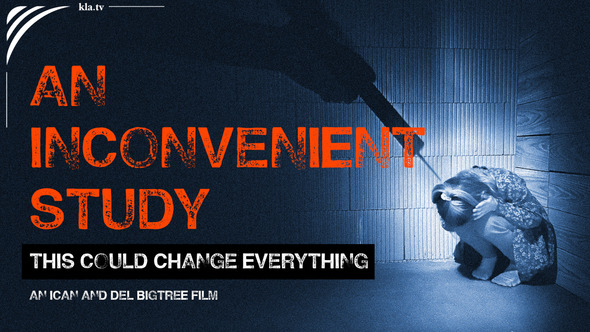
|
"This could change everything: An Inconvenient Study“
|
|---|
Useage rights:
Standard-Kla.TV-Licence

Topics A-Z
Enter a word for search or use the alphabetic search-order









27.02.2026 | www.kla.tv/40467
Children struggling every day with ADHD. Scott’s allergies made it hard to keep up with his friends. Allergic reactions from accidental food exposure. Moderate to severe eczema. Plaque psoriasis. Rheumatoid arthritis. Food allergies. Allergies. Seizure. Asthma… Robert Kennedy Jr.: We are now the sickest country in the world. Women: The health of American children is in crisis. Man: A huge rise in chronic conditions in kids... Trump: 40 percent of American children now have at least one chronic health condition. Robert Kennedy Jr.: Autoimmune diseases like rheumatoid arthritis, diabetes, lupus, Crohn’s disease, all this IBS… Women: …. asthma, allergies, stomach issues. Trump: This is the main one that gets me. Just a few decades ago, one in 10,000 children had autism. Today it's one in 31. Robert Kennedy Jr.: ADD, ADHD, speech-aligned language like tics, Tourette's syndrome, narcolepsy, sleep disorders, ASD, autism. Man1: There's no way in the world that these kind of rapid increases in the incidence of disease could be genetic. Genetic change takes generations, centuries to play out. Man2: What's really causing our kids of this generation to be so chronically? Man3: What the heck is happening? Del Bigtree: America is the sickest nation in the industrialized world. It is now believed that over 54% of our kids have a chronic disease, either a neurological disorder or an autoimmune disease. That's up from only 12.8% back in the 1980s. In roughly 40 years, we have seen the greatest decline in human health ever recorded. What if I told you there is a study that could shed light on this chronic disease epidemic, but no major medical institution seemed willing to do it? What if I told you there was one scientist brave enough to conduct this study? What if I told you that when the study was finished, that scientist was too afraid to publish? What if I told you that when the study was finished, that scientist was too afraid to publish? What would you do? Maybe you would do what I did. I got hidden cameras and recording equipment. I got hidden cameras and recording equipment. And I went to ask him why. And I went to ask him why. Del Bigtree: Thank you, you're very welcome. You're welcome. I want to show you a video. I'm curious of what your reaction is. I'm curious of what your reaction is. Senator Ron Johnson: Okay. Just hit play here? Del Bigtree: Yeah. Senator Ron Johnson: Just hit play here? Del Bigtree: Yeah. What was the most shocking thing, because, I mean, I know what I've seen. Marcus J. Zervos, MD: No, I thought it was important. It was, it was, it's important information because of, you know, it did show a difference between the groups. Del Bigtree: We have some serious issues. Marcus J. Zervos, MD: No, I actually agree with that. Del Bigtree: If I can't get this study out, then what hope is there for every kid in the future? Marcus J. Zervos: I don't want to say it's not the right thing to do, it's the right thing to do. But the... I just don’t wanna. Sylvia Fogel, MD: I mean, I'm obviously like, really emotional. Senator Ron Johnson: It's sick. It's really sick. Marcus J. Zervos, MD: Publishing something like that, I might as well retire, I'd be finished. Senator Ron Johnson: So who was that guy? Senator Ron Johnson: Zervos is probably going to lose his job over this. An inconvenient Study Del Bigtree: You know, I'm... I'm thinking, before we get into the hidden cameras and the study and Dr. Zervos and all that, why don't we just take it all the way back to how this actually started? Yes! Please welcome, down to the... I've been a medical journalist for almost 20 years now. My first 10 years was at CBS, and the last 8 years or so I've had my internet news show called The High Wire. „Good morning. Good afternoon. Good evening. Wherever you are.“ But the biggest change in my career happened when I produced a documentary about vaccinations called Vaxxed. And at the center of that documentary was a whistleblower from the CDC named Dr. William Thompson. He came forward in 2015 and said that they were committing scientific fraud on the vaccine safety studies. Well, that film blew up and became a worldwide sensation, mostly because we got so much bad press, starting with being kicked out of the Tribeca Film Festival. News Presenter: The decision to run a controversial documentary about vaccines has Robert De Niro at the center of a big screen backlash. Tonight, the film festival Robert De Niro started under fire, a controversial new film that many are characterizing as anti-vaccine. Robert de Niro: I think the movie is something that people should see. There was a backlash which I haven't fully explored. I want to know the truth, and I'm not anti-vaccine. I want safe vaccines. News Presenter: Vaxxed producer Del Bigtree says canceling the screening amounts to a suppression of the truth. Del Bigtree: I can imagine what type of pressure came down that would make them pull the movie that they were obviously behind in the beginning. News Presenter: The message from the medical community is clear. Mann Vaccine Firestorm: This is one of those scientific questions that where science has provided any answer. Del Bigtree: Vaxxed ended up being one of the most controversial documentaries in history. And because of that, there were lines down the block everywhere we went. Look at this crowd behind me, look at this line, goes on and on and on. In fact, the very first day we screened at Angelica Film Center in New York, I wanted to know why there's this giant line down the block. What are these people here for? „Can every parent or someone, if you have a family member with autism, would you please stand up right now?“ Like, you see? Three quarters of the room stood up. I remember feeling like the air just got sucked out of the room. I had no idea that there was this many people suffering from this issue. I ended up asking that question three screenings a day, five days a week, for an entire year. And every single time, three quarters of the room stood up. I realized I had stumbled on something absolutely massive. Interviewer: Hello, everybody. This is Jamie. Can you guys both tell us your names? Stephanie: I'm Stephanie. Other mother: And this is... Zion. Del Bigtree: After the screenings, parents of injured children were inspired to tell their own stories. We set up video cameras and started interviewing everybody that wanted to talk. And what I discovered is it wasn't just autism, and it wasn't just the MMR vaccine. There was an ocean of vaccine injury, and nobody was talking about it. Mother2: The doctor says, well, do you want the flu vaccine, and I was like, might as well do it now. Mother3: I gave in. I did polio. Stephanie: They gave her the Hep B vax. Mother4: She got the two-month shots. The MMR vaccine. Stephanie: By 10.30 that morning, she was arching her back, clenching her fists. Mother: That night, we went in the hospital with the 106-degree fever. He began to projectile vomit. He began to have this loud, pitch scream. Stephanie: Like, that's when the blood-curdling screams started. Mother: I did not lay down for 10 months straight, because she would vomit and asphyxiate. Stephanie: She would vomit and she would lie there while she was asleep, and she would choke on it. Vather: When we had that vaccination, he lost all language. Many Parents: He just stopped talking. He wasn't talking. He didn't want to nurse. He went to not talking at all. He was developing really well, except for motor skills. He's got chronic allergies. An eczema rash. Food protein enterocolitis syndrome, she couldn't eat anything on the glycemic index, that was too high. GI symptoms, he started to have a gut inflammation. Chronic snoring. Man: Seizure-like activity. Mother: We woke up, she just ... Interviewer: She died in your arms? Mother: Yeah. Mother: I continued to vaccinate her and make her worse and make her sicker. The guilt... it's so overwhelming. Mother: They killed my daughter. Del Bigtree: Clearly this was a bigger issue than anybody realized but there was one particular interview that we did that really changed my perspective forever. Kathleen Berrett (Mother from Colton): Colton was a 13-year-old healthy strong boy, he loved anything that has to do with an adrenaline rush. Motocross was his passion, the doctor says, hey he's the age that you should get the HPV vaccine. I said okay, so he was administered the vaccine and then this is the last day he got to ride that big boy bike and that day he came home, he was starting to feel nauseous, really sore neck. He still didn't want to get out of bed, I just thought man you're just really weak and exhausted and that evening when he sat up to take a drink of water he just flopped back and his head just hit the pillow and I went: Colton are you going paralyzed? They immediately took him down to Primary Children's hospital and original diagnosis was Transverse myelitis. When the doctor came out and asked me has he been sick I said no, he hasn't been sick. He had the HPV vaccine on February 1st and they went: „Oh well, we'll be reporting that to VAERS.“ Colton Berritt: It does suck not being able to play sports anymore. Now I have to sit on the sideline and just watch everybody. You've got to do your research. You can't just trust a doctor anymore. Do your own ways to find out what's best for you. COLTON BERRETT 2000-2018 Del Bigtree: Unfortunately, Colton ended up taking his life in 2018 because he believed he'd become too much of a burden on his family. But the thing I remember about standing there and watching that interview taking place, my co-producer Polly Tommy was doing the interview, was this box that was hanging on his side that was breathing for him. And it went through a tube that was going through a hole in his throat and he literally had to wait for it to fill his lungs with air before he could answer a question so he'd go shhhh... and then he would start answering the question until he ran out of air. I thought about all of the people that accuse these so-called anti-vaxxers of bringing back polio or the iron lung. TV-speaker: "Once vaccination rates fall you're gonna have a lot of people getting sick and a lot of children paralyzed for the rest of their lives with polio." Del Bigtree: I thought he's wearing an iron lung you're not laying in a metal tube anymore, they've reduced it down to a box that hangs on your side and a hose that goes to your throat. But in this case he wasn't paralyzed because he had polio. He wasn't paralyzed because he didn't vaccinate. He was paralyzed by the Gardasil HPV vaccine. Mother: I chose to get my daughter vaccinated because I want her to be one less woman affected by cervical cancer. Several Women Voices: "One less: Gardasil." Del Bigtree: Then I went home and started looking up all of the inserts, the warning labels that are wrapped around all the childhood vaccines and most of them say it right there in serious adverse events: Guillain-Barré syndrome or Transverse myelitis, paralysis and I realized – TV-speaker: "Polio vaccine is a success." Del Bigtree: … we didn't eradicate paralytic diseases with the vaccine program TV-speaker: "The vaccine works." Del Bigtree: So as we travelled the country some parents would come up, about to have a baby, saying I'm definitely not going to get the MMR vaccine because your movie shows that that one's dangerous. But what about the other 16 vaccines that are given in 72 doses by the time my child's 18? And I'd say, I only have anecdotal evidence from the thousands of interviews I've done that not a single childhood vaccine is safe. But that's not scientific. I wanted something better. I wanted to get to the bottom of this. So I started a nonprofit, called the Informed Consent Action Network. Based on the Nuremberg Code's right to voluntary consent, the ethical principle globally agreed upon in the wake of the Nazi doctors' horrifying human experiments, where it states, the voluntary consent to the human subject is absolutely essential. And there should be no element to force, fraud, deceit, duress, or overreaching, or other ulterior form of constraint or coercion. What I wanted to do was investigate the entire vaccine program. I was really focused on one thing. We hear that vaccines are safe and effective. Different Voices: "Safe... Effective..." Del Bigtree: But before we even worry about if they're effective, how did we determine they're safe? We started looking at all the science around the world, but we hit a big roadblock. You can't sue a manufacturer of a vaccine. It's one of the only products in America that has what they call liability protection. The reason is because of a law that was passed in 1986 by the U.S. government. The pharmaceutical industry basically blackmailed the government. And they said, we are losing so much money from lawsuits for death and injury from our vaccines, we can't make a profit. TV-speaker (women): Studies have shown that the whooping cough, or pertussis vaccine causes brain damage. The controversy isn't really over the fact that it happens, but how often it happens. Del Bigtree: And they said, if you want us to continue making vaccines, you're gonna have to take on the liability. And our government agreed to that. If you want to sue, or you want to get any information outside of what's publicly known, you're going to have to sue the government. And that's when I realized, I need a constitutional attorney. And I found a guy named Aaron Siri. Senator Blumenthal: Mr. Siri, you're not a medical doctor are you? Aaron Siri: No, Sir. Senator Blumenthal: And you're not an immunologist or biologist or any kind of... Aaron Siri: … or vaccinologist, no, but I depose of regularly including world's leading ones with regards to vaccines and I have to make my claims based on actual evidence when I go to court with regards to vaccines, I don't get to rely on titles. Senator Blumenthal: Okay. Del Bigtree: We had a genius way forward. We're gonna sue the government agencies HHS, FDA, NIH and we started winning. And what did we prove in those lawsuits? That the entire science behind vaccine safety was nothing but a complete fraud. Aaron Siri: Doctors still listened to parents. When their parents came in and said, hey my kid is suffering with this condition, has this issue, doctors listened to them. But when parents started coming in and saying my kid went in and got a vaccine and then started having „x“ issue that's when doctors stopped listening. Brenda McDowell: Hi, we have triplets, two boys and a girl. Richie, Robbie and Claire. Every day in our life was a party, every single day they were smiling and laughing and looking at each other, engaging in each other. On June 25th, 2007 we brought them in for the pneumococcal shot. My daughter still has the mark on her leg from the shot, she was the first one to get it and she screamed and never really stopped screaming after that. But we continued, we didn't know, we did the boys as well. By noon Claire shut completely off. It was as if she was blind and deaf and all she did at that moment was stare at the ceiling fan. So that was at noon, we had the shot at 10 am. Two o'clock we watched Richie shut off. They lost all their reflexes. I'm an educational audiologist. I actually did the test for the stapedial reflex which is a little muscle in the middle ear, just to see if a muscle they can't control was still working and it didn't. The stapedial reflex dampens sounds, so your ears don't hurt from a really loud sound. And both of them had no stapedial reflex. They stopped blinking, stopped yawning, stopped coughing, stopped sneezing. The worst was when the final one shut down. We were told it was genetic. And then we were told… that there is no possible way for each other and were shut off on the same day. Now we had severe autism spectrum disorder for all three kids entering kindergarten. We have spent hundreds of thousands of dollars trying to recover them. The only person that we got back is Robbie, the one that was last to shut off. Ritchie can only say single, maybe two words together. Claire is still completely non-verbal, not potty trained and Robbie is approaching grade level but severe OCD. Mr. McDowell: Let me tell you what a day in our life is, so you got, say a six or seven or eight-year-old child who's not potty trained and at two or three or four o'clock in the morning they fill their diaper. You may assume that's pretty uncomfortable, so they take it off. Pretty soon it's all over them, it's all over the bed in short order, it's all over me, it's all over her, I'm snapping at her, she's snapping at me, we're both snapping at the kid who is the only innocent party in the whole scenario. And the one thing that's conspicuously absent from that scenario is anybody who told you that shot was safe. They were all asleep in their bed, they hadn't got a problem in the world. Del Bigtree: This one story of Richie, Robbie and Claire puts an end to any discussion that autism is only caused by genetics. There is no genetic explanation that would turn three brothers and sisters off on the exact same day. Aaron Siri: What you should do when there are widespread complaints that a product is causing a given harm is you should study it. Robert Kennedy Jr.: Vaccines should be tested like other medicines, they should be safety tested and unfortunately vaccines are not safety tested. Of the 72 vaccine doses now mandated, essentially they're recommended, but they're really mandated, our American children none of them, not one, has ever been subject to a pre-licensing placebo-controlled trial. Del Bigtree: Health and Human Services Secretary Robert Kennedy Jr. has been torn apart by mainstream media for saying that there's no placebo trials being done for vaccines. But he's right. It's exactly what we found in our lawsuits against the government. Not a single childhood vaccine is going through a double-blind, randomized placebo-controlled trial prior to licensure. That's the gold standard of safety testing for all pharmaceutical products, but it's being skipped for vaccines. In case you forgot how a double-blind, placebo-based trial worked, as we discussed it back in high school science class, let me remind you. We break up a group of kids into two groups. One group is gonna get the vaccine. The other group is going to get a placebo, which is a product that has no effect on the human body. When it comes to an injectable like vaccines, that is a saline injection. Then it's called double-blinded because both the scientists and the patients are blinded from knowing which one they got. Did they get the vaccine or did they get the placebo? This is so that the scientists will not manipulate the study in favor of the pharmaceutical industry that will stand to make a lot of money if this vaccine proves to be safe. Then we track these two groups for two to five years, sometimes as long as 10 years for a lot of drugs. And at the end of that study, we unblind both the patient and the scientist, so we look at both groups, the vaccinated and the placebo group, and we compare their health outcomes. Who had more cancer? Who had more diabetes or ADD, ADHD or autism or Tourette's or lupus or multiple sclerosis? All of these things that are currently skyrocketing in the United States of America. And if, when you compare them, they both turn out the same, there's the same amount of issues in the vaccinated group as is in the placebo group. Then you know it's safe, if you establish what we call, a safety baseline. But if the vaccinated group has more issues than the placebo group, then we know it's not safe and it shouldn't be put on the market. Only one problem: not a single vaccine on the childhood schedule has ever been through a double-blind, placebo-based trial. Therefore, they cannot say the vaccines are safe, based on science. News Presenter: Are all vaccine trials placebo-controlled? Paul Offit, MD: No. And nor should they be. So for example, when Prevnar 13, so Prevnar was a conjugate pneumococcal vaccine. News Presenter: "The FDA has approved a new pneumococcal vaccine." Paul Offit, MD: It had to be tested in a phase three trial. And so the control group there was Prevnar 7 and had been shown to work. News Presenter: "It will replace Prevnar, which was effective against seven serotypes." Paul Offit, MD: You can't ask parents to take, to put their children at risk of pneumococcal disease when there existed on the market at the time a vaccine to prevent that. And the World Health Organization has been very clear on this. That would have been considered an unethical trial. Del Bigtree: Dr. Paul Opitz, one of the big proponents of vaccinations, probably because he's made a vaccine and made a killing off of it, the rotavirus vaccines on the childhood schedule. Paul Offit, MD: "It doesn't matter whether I financially benefited or not." Del Bigtree: He likes to go around and say, well, we can't always do placebo trials, especially if there's already a vaccine that covers that disease. So he'll use an example like Prevnar 13. Prevnar 13 in its safety trial was tested against Prevnar 7, the earlier version of the vaccine. And he'll say, you cannot test Prevnar 13 against a saline placebo because it would be unethical. You'd be denying children access to a vaccine that is already on the market. And that's not fair to them. But what he leaves out is that Prevnar 7 was never tested against a saline placebo. So we don't know if it's safe. So we're testing one product we don't know the safety profile on with another product, we don't know the safety profile on. And this is how the entire vaccine schedule works. I like to call this the whiskey study. Let me explain. Let's say there's a group of people that are complaining that whiskey is making people drunk and they're crashing their cars and people are getting killed. Now, in order to test does whiskey cause car accidents, you would set up a double-blind placebo trial. One group, the test group, would get the 10 shots of whiskey. The other group, the placebo group, would get 10 shots of water. And then we'd have them both drive on a driving course and see who has more accidents. It's obvious. But in this case, the whiskey company is the one doing the study. And what they say is, oh, we're going to do a placebo-based trial. But our placebo-based trial is not going to be water. It'll be vodka, another product already on the market. And so 10 people get the whiskey shots and 10 people get the vodka shots, and they had them all drive, and guess what? They had just as many car accidents. Therefore, whiskey does not cause car accidents because it didn't cause any more than the vodka did. And so to take this all the way to the end of Dr. Paul Offit's point, if vodka had ever been tested against 10 shots of water and there was no car accidents in the vodka group, then it would make sense to test the whiskey against the vodka. But we all know that study was never done, just like no vaccine placebo study was ever done. All you have to do is type in FDA-licensed vaccines on your computer, and every vaccine that they give your child on the childhood schedule will appear there. And then you can click on any one you're interested in. Let's click on Recombivax HB. This is one of the Hepatitis B vaccines they give your baby on the first day of life. Hello, welcome to the world. Gasp for your first breath, and here comes your first sexually transmitted disease. Now, go to vaccine insert. This is the insert or the warning label that is wrapped around the vaccine when it's delivered to your doctor. It has all kinds of information, like what's in the vaccine, all the ingredients, side effects of the vaccine. But I want you to focus on section 6.1. This is where they talk about the clinical trial they relied upon to establish safety. It's always 6.1 on every single vaccine, so you can look at all of them. But in this one, you'll see that there was only 147 children in the entire trial. And they were only monitored for five days after each dose. Five days. So think about it. Would you take any drug that was only monitored for safety for five days? If your child dies on day six, it wasn't captured by this trial. They'll say, we didn't see any deaths. If a child had autism two years later, or other autoimmune diseases, or neurological disorders, things that take years to develop, they'll say, we didn't see any in our trial. This is why every drug we take goes through a multi-year safety trial. Most of your issues are going to take years to develop. And if your study isn't that long, you'll never, ever see them. We had an interesting opportunity to talk about this with Dr. Stanley Plotkin, who's considered to be the reigning godfather of our vaccine program. Man: Dr. Stan Plotkin. Dr. Plotkin. Virtually every country in the world is affected by his vaccines. Like the rubella vaccine, the rotavirus vaccine, rabies. Paul Offit, MD: He trained just a generation of scientists, including myself, to think like he thinks. Man: He developed the standard textbook for vaccines in 1988. Other Man: Bill Gates calls his book a bible for vaccinologists. Other Male Voice (you see Dr. Plotkin): I hope it's more accurate than the bible. Del Bigtree: In 2018, our attorney, Aaron Siri, had the opportunity to pose under oath Dr. Stanley Plotkin. And he asked him this exact question. Is a five-day safety trial long enough to capture all of the side effects that people are complaining about from the Hepatitis B vaccine? THE DEPOSITION OF DR. STANLEY PLOTKIN – JANUARY 2018 Aaron Siri: Dr. Plotkin, this is the product, the manufacturer insert for Recombivax HB, correct? Stanley Plotkin: Yes. Aaron Siri: And the clinical trial experience would be found in section 6.1, correct? Correct? Dr. Plotkin? Stanley Plotkin: Yes. Aaron Siri: OK. In section 6.1, when you look at the clinical trials that were done pre-licensure for Recombivax HB, how long does it say that safety was monitored after each dose? Stanley Plotkin: Let's see. Five days. Aaron Siri: OK. Is five days long enough to detect an autoimmune issue that arises after five days? Stanley Plotkin: No. Aaron Siri: Is five days long enough to detect any neurological disorder that arose from the vaccine after five days? Stanley Plotkin: No. Aaron Siri: There is no control group, correct? Stanley Plotkin: It does not mention any control group, no. Aaron Siri: If you turn to section 6.2, under the nervous system disorders, it states that there have been reports of Guillain-Barré syndrome, correct? Stanley Plotkin: Yes. Aaron Siri: As well as multiple sclerosis. Exacerbation of multiple sclerosis, myelitis, including transverse myelitis, seizure, febrile seizure, peripheral neuropathy, including Bell's palsy, muscle weakness, hypoesthesia, and encephalitis, correct? Stanley Plotkin: Correct. Aaron Siri: OK. Now, it says at the top... Stanley Plotkin: Before you go on, these reports are required to be included because they have been reported to the authorities as happening after vaccination. That is not proof that the vaccine caused those reactions. Aaron Siri: In order to establish whether it's causal between the vaccine and the condition, you need a randomized placebo-controlled study. But that was not done for this Hepatitis B vaccine before licensure, was it? Stanley Plotkin: No. Aaron Siri: OK. Stanley Plotkin: Without a control group, if you were looking for a phenomenon occurring in the vaccine group, you cannot judge that phenomenon without having a control group. Aaron Siri: Isn't it true that it would now be considered unethical to conduct such a study today? Stanley Plotkin: Yes, it would be, yes, it would be ethically difficult. Del Bigtree: So this is how the entire game is played. They don't do a safety placebo trial before the vaccine is licensed. Then when people start lining up with all of these serious side effects, you say, well, can you do a placebo-based trial now? And they'll say, no, it's unethical. So they won't do it before. They won't do it after those injuries. And when they can't do a study, your doctor says to you: I haven't seen any studies that show that these injuries are being caused by the vaccine. Therefore, I'm going to assume they're safe. Aaron Siri: Do you agree with the CDC's recommendation that babies receive a Hepatitis B on the first day of life? Stanley Plotkin: Yes. Aaron Siri: You stated that Hepatitis B doesn't cause encephalitis. Right? Stanley Plotkin: That's my opinion, yes. Aaron Siri: But the IOM, after doing its review, determined it couldn't find science to support a causal determination one way or another. Correct? Stanley Plotkin: Yes. But that means that they don't have evidence for the supposition. Aaron Siri: That it either causes or doesn't cause? Stanley Plotkin: Right. Aaron Siri: They don't know. Stanley Plotkin: They don't know because there aren't enough data. In the absence of data, my conclusion is that there's no proof that causation exists. Aaron Siri: So if there's no data to show that it causes or doesn't cause, your supposition is that, do I understand correctly, is that it doesn't cause it? Stanley Plotkin: Yes. That there's no proof that it does. Aaron Siri: OK. That's different than saying it doesn't cause it. Correct? Stanley Plotkin: Correct. Del Bigtree: So let's be clear. Vaccine safety is not based on science and data. It's based on an assumption of safety. And that is the stalemate we find ourselves in. But there's one way out of it. Instead of doing a placebo-based study, you can do a retrospective study looking at people that have already made their choice, whether they're going to vaccinate or not. And then you just compare those groups, the ones that got the vaccines and the ones that decided not to vaccinate. We call that the vaccinated versus unvaccinated study. It's been done by a few independent scientists and institutes amongst small groups of children, but never by a major government agency or a major medical facility. The reason this study is important, I think, is illustrated by a study that was done in Guinea-Bissau, Africa by a man named Dr. Peter Aaby. He's one of the lead experts. He's pro-vaccine, and he develops vaccine programs for the third world. He had a DTP vaccine program he'd run 30 years ago in Guinea-Bissau, Africa, and recognized 30 years later, you know what, only half the children in the country got that vaccine, and the other half didn't. I could do a perfect comparative study between the vaccinated and the unvaccinated. And when he did that study, the results blew his mind. Peter Aaby, MD: This is about vaccines. And I think it's important to recognize that no routine vaccine was tested for overall effect on mortality in randomized trials before being introduced. I guess most of you think that we know what our vaccines are doing. We don't. The program we are talking about at this time, the vaccine program was introduced sort of in the late 70s after the success with the eradication of smallpox. WHO made sort of the first immunization program for the low-income countries. What comes out here, you had 2.3 times higher mortality if you were DTP vaccinated. And that is the most commonly used vaccine in the world. So the whooping cough vaccine or the pertussis vaccine was associated with two-fold higher mortality. You can have a vaccine which is fully protective against this specific disease, but associated with higher mortality. How is that possible? Del Bigtree: After looking at this study, it was clear that the vaccine did protect against the diseases they were vaccinated for. The kids didn't die of diphtheria, tetanus and pertussis, only one problem: once they looked at it they were dying at five times the rate of all of these other issues. So it was clear that though it was protecting against these diseases it was weakening their immune systems to all sorts of other problems. One of the other scientists on this study did a TED talk on this. Christine Stabell Benn: Inspite of being protected against three deadly diseases, the introduction of DTP was associated with increased overall mortality. Children who received DTP vaccine had five times higher risk of dying than those who didn't and this is just one example of many studies now done of DTP vaccine and they all show the same. DTP vaccinated children have higher mortality than those who didn't get DTP. So it appears that DTP vaccine has negative non-specific effects. The protection against the three deadly diseases comes at a very high price, namely increased risk of dying. So with the best of intentions, the use of DTP vaccine may kill more children than it saves. I know these results are extremely uncomfortable and most people including myself just wish they weren't true but this is what the data tells us. Del Bigtree: That was just a study of one vaccine in a group of children. What if you studied children that were receiving not one vaccine but between 72 and 100 vaccines by the time they're 18? Of course I'm talking about the most vaccinated nation in the world, the United States of America. Aaron Siri: Our federal health authorities actually paid the Institute of Medicine to look at the safety of the vaccine schedule as a whole and the Institute of Medicine after conducting that review came back with a report in 2013. The report said no studies have compared the differences in health outcomes between entirely unimmunized populations of children and fully immunized children. Robert Kennedy Jr.: It's the CDC's responsibility to do those studies and they've been ordered again and again and again to do them and they have refused. But the Institute of Medicine has looked at the vaccine schedule and said in their 2011 report, there are over 150 injuries that are likely to be associated with vaccines that have never been studied. Aaron Siri: Well, what did the CDC do after the Institute of Medicine issued that report? Instead of doing the study, they ended up doing a study on how to do a vax versus unvax study. It went and it paid a whole lot of money to issue a white paper on how to conduct that study comparing vaccinated versus unvaccinated kids. That white paper came out in 2015. Now, here we are in 2025, 10 years later. They've still never published that study. Now, have they never done the study? I can't tell you. Sylvia Fogel, MD: This is information that vaccine safety advocates want and have been asking for for a long time, and I'm not sure why it hasn't been done. Del Bigtree: This simple study would shut up every anti-vaxxer forever. I have to believe that they have done this study every way they possibly can, and they can't seem to figure out how to make it look like the vaccinated are healthier. But that's just my opinion. Based on several other studies I've seen that did compare vaccinated to unvaccinated, but mainstream medicine says, well, the cohort was too small, or they poke holes in it saying it wasn't done by a major medical institution. So if we're ever going to get a vaxxed versus unvaccinated study that people believe in, it's gonna have to be done by highly credited scientists at a major medical institution who has a database big enough to do a thorough, robust investigation comparing the vaccinated to the unvaccinated. Aaron Siri: As fate would have it, Del met the head of infectious disease at Henry Ford Health System, Marcus Zervos. 05 JUNE 2022 Del Bigtree: I'll never forget that meeting because you said something to me, you said, I've watched your film, it's intriguing. But you said, I'll never forget, you said, you've been saying something, I watched your videos, that I had an issue with. You said that they cannot say that vaccines are safe because they've never done the proper safety studies. And you said to me, I actually researched that because I wanted to see if that was true. And you said, I'm sorry to have to report to you that you're actually right about that. Marcus J. Zervos, MD: No, I say it now too. Del Bigtree: Proper safety studies have not been done. Marcus J. Zervos, MD: They have not been done. And to now too, it's the same thing. Del Bigtree: I still say it now, the proper safety studies haven't been done. So then I said to you, all right. It's still true. And you're like, I don't know what I'm doing here. I don't agree with you. I believe in vaccines. And I said, would you ever consider doing a vaccinated versus unvaccinated study? And you said I would do anything wherever the data, the data's the data, right? Marcus J. Zervos, MD: Yeah. Del Bigtree: The first time I met with Dr. Zervos, he agreed to do a vaccinated versus unvaccinated study. I mean, I was ecstatic. He was perfect. Ford Medical Center is one of the greatest research centers in the world. And Dr. Zervos is in the middle of being a hero for having just worked out the entire Flint, Michigan water crisis. Man: For decades, Flint, one of the poorest cities in America, had bought its water from Detroit. Instead of staying on the Detroit water supply while the pipeline was being built, the city would temporarily get its water from the Flint River. That decision would force the city to activate an old water treatment plant. Several people: „Here's the Flint.“ Women: This is what is coming out of the tap. Water's brown, has a bad odor. Other women: We cannot drink the water. Man: They soon became a breeding ground for Legionella. And people were getting sick. Marcus J. Zervos, MD: The oxygen, you're on that all the time, or do you ever get to take it? Women: I want it all the time. Marcus J. Zervos, MD: Yeah. Man: Her doctor, Marcus Zervos, had been treating a chronic skin infection that her weakened immune system couldn't control. Marcus J. Zervos, MD: They are doing a lot better. Women: I'm ecstatic. Marcus J. Zervos, MD: You know, if I can get them healed over a little bit more, I'm going to get you an appointment with those transplant doctors. Man: There had been 90 confirmed cases in the year and a half following the water switch. 12 people had died. Shawn McElmurry had pulled together a team of 23 scientists and experts from around the state. The team says the state wouldn't authorize them to start the search for the source of the outbreak. Dr. Zervos was the infectious disease expert, and he was worried about the delay. Marcus J. Zervos, MD: It was critical to start right away, because by June, we expected to see more cases of Legionnaires' disease, and there would be more deaths, which is what we expressed in a meeting that included top leadership at MDHHS. Man: I remember my colleague telling him that if he didn't do that, you know, people could die. Unfortunately, Nick Lyon's response was that, well, they have to die of something. Marcus J. Zervos, MD: I mean, you're just in shock as a result of him saying that, the director of the health department. Del Bigtree: Dr. Zervos seemed perfect. He'd stood up against the entire health system in Michigan, so I figured he'd probably be brave enough to do this study. But then a couple of years went by, and still no study. I called Aaron and said, why don't we go see if we can't convince him to finally do this study? Aaron Siri: I flew down to Michigan, and we went to meet Dr. Zervos in person. We said, look, here's your opportunity. The results should be directly in line with the orthodoxy. The vaccinated kids should be healthy across the board. He could be hailed a hero for finally shutting up the anti-vaxxers. He said he's willing to do it. The study was going to use the data they literally already have in their fingertips. The data of millions of people who are ready in the Henry Ford Health System database, including hundreds, maybe thousands, of completely unvaccinated children, as well as obviously children who are vaccinated. What that would allow is taking that multi-million person database, segregating out the children who had been in the Henry Ford system from birth, continuously, for a few years. Because it's a captive HMO environment, meaning it provides the insurance and it provides the medical care. It has most of the health records for these kids. Including if they go out of the Henry Ford medical system, Henry Ford, as the insurer, was still paying for it. So they have the health codes for all the medical services that these kids got. So if you segregated out those kids, now you have a cohort of children from birth for at least a few years where you knew everything about them. Peter McCullough, MD: I previously was a program director at Henry Ford Hospital, so I know it well. It's one of the best integrated health systems to do research. Women: Henry Ford receives over $90 million in annual research funding, with nearly 700 residents and fellows and 53 ACGME accredited training programs. Peter McCullough, MD: I think Henry Ford, like other institutions, has a bias towards the goodness of vaccines. Bret Kast: You can't miss it. It's a full-page letter here from Henry Ford with 56 signatures saying, in bold letters, the science is clear, vaccines save lives. Peter McCullough, MD: If the results came back demonstrating that the battery of vaccines was associated with chronic diseases and that unvaccinated appeared healthier over time, such a result would be particularly convincing. 05 JUNE 2022 Marcus J. Zervos, MD: You know, I'm for vaccines. I think it's the best way of controlling infectious diseases, which are deadly. I'm for mandatory vaccination. Henry Ford has mandatory vaccination because of me. Women: Henry Ford is one of about 90 healthcare systems across the United States that are working to enroll a total of 30,000 volunteers in the Moderna-COVID vaccine study as quickly as possible. Marcus J. Zervos, MD: This is the worst pandemic of the last hundred years and our best hope of dealing with this is by having an effective vaccine. Women: Henry Ford is requiring all 33,000 staff members to be fully vaccinated by September 10th, 2021. TV-speaker: The health system says this is consistent with its existing vaccination policy, which includes team members get the flu shot every year and stay current with other vaccinations. Del Bigtree: It appeared to me that Henry Ford was pro-vaccine, not anti-vaccine, so I had to assume the only reason they would do this study was to prove us wrong. Aaron Siri: Del and I thought that was an excellent opportunity. They can do the comparison and presumably they can get it published. Del Bigtree: We only had one request… Aaron Siri: … the ask was whatever the outcome, you publish it. Would he stick to that if the results show that unvaccinated kids are healthier? And when he realized that if he submitted that for publication, he's going to face the wrath of his entire profession? Didn't know. Del Bigtree: This was our greatest fear. I mean, vaccines are the holy grail of modern medicine. And anyone that decides to challenge vaccines in any way are essentially considered heretics. Joe Biden: Vaccines are safe. Man: Vaccines are safe and effective. Women: Vaccines are safe and highly effective. Other women: Safe and effective. Fauci: Safe and they're highly effective. Man: Vaccines are one of humanity's most incredible accomplishments and they've saved millions of lives. Women: Childhood vaccines have prevented about four million deaths around the world every year. Man: The overwhelming majority of pediatricians in this country strongly support vaccinations. Other man: Missing her vaccination dates. Women: We're not vaccinating. Man: The schedule as it's currently recommended is well tested. Other man: We've studied them in so many millions of children. Man: … Billions of people. Other man: Decades of extensive peer-reviewed scientific studies. Women: … Centuries of science. Man: The science is pretty settled. Women: Settled for many years now. Man: This idea that we're taking too many vaccines. There's really no science to back that up. Other man: The scientific community publishes paper after paper after paper. Women: There is nothing to see. There's nothing to see. Man: I will not stand here and let conspiracy theories distract from real solutions. Suzanne Humphries, MD: Most doctors can't tolerate being called quacks or having their reputation destroyed. And, you know, I went from treating the head of the laboratory at my hospital for hypertension to becoming you know, somebody that was doubted on every levels after a while. Because of one thing that I said, which was can we stop giving vaccines to my sick patients and give it to them on the day of discharge? And had they not tried to intimidate me, doubt me, and pushed me to research and show that what I saw was actually real, I would still be lockstep working as a regular doctor. Joseph Ladapo, MD, PHD: The Florida Department of Health, in partnership with the governor, is going to be working to end all vaccine mandates in Florida law. All of them. All of them. My experience with discussing or disclosing harms associated with vaccines is that those are not welcome ideas or conversations. News Presenter1: That move from the Florida surgeon general, a doctor there, drawing condemnation from public health experts. News Presenter2: Whether it's ignorance, it's stupidity, or it's malice, at the end of the day, people are going to get hurt. News Presenter3: He's not going to necessarily receive a warm embrace by some of the people in his profession, but that's really what courage is all about. Joseph Ladapo, MD, PHD: It's a very hostile environment, both scientifically and in the media, for individuals who reach conclusions or have opinions that counter mainstream ideas. Del Bigtree: Every independent scientist that has ever ventured into doing a vaccinated versus unvaccinated study of any kind is immediately under assault. There's one by Dr. Anthony Mawson out of Mississippi. He did a homeschool study of about 600 kids and discovered alarming rates of allergies, ADD, ADHD, neurological disorders, and a fourfold increased risk of autism amongst the vaccinated. As soon as the study came out, his job was under threat. In fact, I asked him if he'd be in this film, and he said, look, you can show my studies, but I have just been dragged through the coals on this, I can't take anymore. Then there's Dr. Paul Thomas. Paul Thomas, MD: Hey, how you guys doing? What I'm seeing on this side is a pink, dull, scarred-up eardrum. I've been a pediatrician for 35 years. I'm now retired. What I noticed in the first decade or so of my practice is kids were getting sicker and sicker. And over the next decade, as more and more patients chose not to vaccinate, I got to see the difference. But I wanted to see, could I prove it? So we got all the data from my practice. We looked at every baby born into my practice and published it in an international journal of public health. What we found in that study was peer-reviewed. It was robust. We found massive increases. I mean, we're talking 400 to 500% more allergies, autoimmune conditions, neurodevelopmental issues, and then we had infections of all kinds massively increased in the vaccinated compared to the unvaccinated. What happened when I published that study? Within days of it being available online, I get a call from my attorney: „Don't go see any patients. Don't write any prescriptions. Don't go into the office. Your license has been emergently suspended. You are a threat to public health.“ Man: What's today? Paul Thomas, MD: Today is the last time I will be doing clinical medicine in Oregon. Knowing that you guys are keeping it going, the heart of this place lives on. Del Bigtree: So what if Dr. Zervos does this study and it turns out exactly the same way as the others? Would he still publish it? That was the question. Years went by. Aaron Siri: In 2020, I was informed they had put together a study. I had that study in my hand and I looked at it. The significance of it, it was an actual study that when published was the first step in changing this landscape. Weeks went by and then more time went by and at some point what I learned was it was not going to get submitted for publication. Del Bigtree: Aaron called me and said they finished the study. Only one problem. They're not going to publish it. I mean, it was everything we were afraid of. I called Dr. Zervos and said, can I fly out and meet you for dinner? And he agreed. I wanted to look Zervos in the eyes and ask him, what's so damning in this study that you're afraid to publish it? I wanted to know what was in this study. I hadn't seen it. I also imagined there's got to be a way to talk him into publishing this study. But one thing was for sure. This was my last chance. I'm going to bring hidden cameras and recording equipment so that no matter what happens at this dinner, I can prove it happened. 05 JUNE 2022 Del Bigtree: What do you think about the study you guys have done? Marcus J. Zervos, MD: It's important information because of, you know, it did show a difference between the groups. I don't know how to... Oh, she's got it. I don't know how to explain. I don't know how to explain it, but it is, it's important, it was an important finding. I mean, the study was for what... Del Bigtree: Do you find any flaws in the study? I mean, is there a way you can do the study better with what's there? Marcus J. Zervos, MD: Not that I know of. Del Bigtree: No? Senator Ron Johnson: Impact of childhood vaccination on short and long-term chronic health outcomes in children. A birth cohort study. Dr. Paul Thomas: This one is really robust. Man: Well, say the results. Yeah, what were the results? Women: The CDC put out a white paper on how you would look at vaccinated versus unvaccinated, and we followed it to 18. Men: Do you agree with that? Women: No. We 100% did. Other Women: We looked at this every other way and sideways. Sylvia Fogel, MD: I think this is a devastating commentary on our public health interventions, because if this is true, we are systematically making kids sick, and not just a little bit sick. Very sick. Marcus J. Zervos, MD: Publishing something like that, I might as well retire. I'd be finished. Del Bigtree: I mean, I'm just curious. What in this data makes you think it will be as catastrophic to your career as you think? Del Bigtree: What was he so afraid of? The study was a bombshell. Sylvia Fogel, MD: 18,468 subjects, 1,957 of them were fully unvaccinated. When comparing the health outcomes of the vaccinated versus the unvaccinated, they found an increased risk in the vaccinated of several chronic health conditions. The vaccinated subjects were over four times more likely to have an asthma diagnosis. Del Bigtree: 4.29 times in the adjusted. And that seems, I've looked at a lot of studies, that's 3.26 to 5.65. Aaron Siri: They also found three times the risk for atopic diseases which is kind of subset of allergic diseases. Sylvia Fogel, MD: They also found three times the risk for atopic diseases which is kind of subset of allergic diseases. Aaron Siri: They found an almost six times risk for autoimmune disease. Paul Thomas, MD: The autoimmune diseases this paper looked at include thrombocytopenic purpura, rheumatoid arthritis, SLE, systemic lupus erythematosus, MS, multiple sclerosis, and Guillain-Barré syndrome. They mentioned there are over 80 different autoimmune diseases. And what their data showed for autoimmunity, six times increase in those who got vaccines when compared to the unvaccinated. Sylvia Fogel, MD: Which is staggering because autoimmune disorders really represent significant morbidity and health costs and suffering, you know, accrued over a lifetime. Women: Neurodevelopmental disorders. Del Bigtree: What kind of numbers are we talking about? Do you remember? Aaron Siri: Five and a half times risk for neurodevelopmental disorders. Sylvia Fogel, MD: We know that the immune system is intimately connected with both brain development and brain functioning. And so when the immune system gets triggered by illness, potentially by vaccination, you can get neuropsychiatric symptoms presumably related to brain inflammation and, you know, immune processes in the brain. Del Bigtree: 2.92 times the amount of motor disabilities. 4.47 times the amount of speech disorders in the vaccinated compared to the unvaccinated. Aaron Siri: Three times the rate of developmental delay. Paul Thomas, MD: They found the same things I found related to allergy and autoimmunity. Also, six times more acute and chronic ear infections. Sylvia Fogel, MD: Interestingly, there were several health conditions where they couldn't even do this analysis because there were none in the unvaccinated group. The way that the mathematical formulas work, you can't have a zero in any one group and be able to compare risk. Aaron Siri: For example, there were 262 children who had ADHD in the vaccinated group. Amongst the unvaccinated group, there were zero cases of ADHD. Zero. Paul Thomas, MD: These ones are just mind-boggling. These conditions were not found at all in almost 2,000 unvaccinated kids. Zero brain dysfunction. Zero diabetes. Zero behavioral problems. Zero learning disabilities. Zero intellectual disabilities. Zero tics and zero other psychological disabilities in the unvaccinated. I'm going to read the conclusion here. Senator Ron Johnson: Despite this, and in contrast to our expectations, again, the author's expectations was they'd conduct the study and probably find vaccinated people a whole lot healthier than the unvaccinated, right? This is what we found. We found that exposure to vaccination was independently associated with an overall 2.5-fold increase in the likelihood of developing a chronic health condition when compared to children unexposed to vaccination. Sylvia Fogel, MD: Any vaccine, even just one, compared to none, had two and a half times more likely to have a chronic health condition. Paul Thomas, MD: There were no chronic health conditions associated with an increased risk in the unexposed group. None. Del Bigtree: What does this graph mean? Explain that to me. So it's no vaccines versus vaccines. Women: That's basically your likelihood of not having a chronic health condition. Sylvia Fogel, MD: They did something called time-to-event analysis. At 10 years, the likelihood of being free from a chronic illness was only 43% in the vaccinated group versus 83% in the unvaccinated group. It's a big difference. Del Bigtree: So if you're unvaccinated, you stay up here above the 70, or was it 80% of you are going to be perfectly healthy, whereas you're dropping below the 50 percentile, which is exactly what I've been stating. I've been saying 54% of America's children have a chronic illness now. It's right there. That's basically what that's showing. Paul Thomas, MD: 10 years follow, 57% of the vaccinated had a chronic health condition in just 10 years. That should shock everyone. Del Bigtree: Let's remember, the entire conversation of the moment in America is the fact that 54% of our children are chronically ill. And here we are looking at the study, and it's almost exactly those numbers. 57% of the vaccinated are chronically ill whereas only 17% of the unvaccinated. Sylvia Fogel, MD: I think because I have an interest in vaccines and I understand off-target, nonspecific effects, I was sad, but I wasn't surprised. Peter McCullough, MD: I can tell you that these data are consistent with my greatest concerns regarding the childhood vaccination schedule. That despite the good intentions of the field of vaccinology, that is backfiring on us. Del Bigtree: In virtually every single chronic health category, the vaccinated are doing far worse. But there is one issue. It's the one that I have been talking about for years and puts me in the middle of this entire investigation. And that is autism. And in this study, it appears that there was no statistical significance with the vaccine-autism connection. And I wanted to know why. Del Bigtree: Yeah. Autism is neutral. Does that mean we're wrong about autism, Marc? Marcus J. Zervos, MD: No. Del Bigtree: No? Marcus J. Zervos, MD: No. No, there are a lot of variables involved, and it's hard to control for. Aaron Siri: When you don't have a lot of instances, as occurred here with autism, where you only have 23 instances of autism in the vaccinated group, and one instance of autism in the unvaccinated group, that wasn't enough instances to actually be able to determine whether or not there is a statistically significant increased rate of autism. Del Bigtree: So even though the study shows all sorts of neurodevelopmental disorders, when it comes to autism, there weren't enough children diagnosed with autism in this group to answer that question. That is why studies like this need to be replicated at even larger scales. Peter McCullough, MD: The fact is there's a signal. And the signal is unvaccinated kids healthy. This should be a very important positive study. The converse of this is, kids that are vaccinated, it doesn't look so good, particularly for the neuropsychiatric disorders. Looking at the measure of association, I'm an epidemiologist, I live in this, neutral is one. Neutral means no association is one. If it's two, it means there's a two-fold risk. When we're doing non-randomized data, especially from corporate data stores, what have you, we have a higher threshold. And a good threshold to remember is four. If there's a four-fold increased risk in a data set, if we were to go do this somewhere else, almost certainly, we would find an association when this is telling us that the risk relationship is greater than four. Del Bigtree: I was sitting at that dinner reading this study for the first time and thinking, oh my god, the world needs to see this study. But the more I pressed Dr. Zervos to publish it, the more excuses he had. Marcus J. Zervos, MD I think it's a good study, but it does have limitations to it. Del Bigtree: The argument against it is gonna be that it's... same thing, retrospective, it's not a controlled group. There's no control group, that there's other factors involved. It's a heterogeneous group of conditions. The perfect example was hydroxychloroquine. Del Bigtree: Did I happen to mention that not only was Dr. Zervos at the center of the Flint, Michigan water crisis, he was also at the center of the hydroxychloroquine study that was done by Ford and showed a 50% reduction in death for those that received hydroxychloroquine. And for that, he got attacked by Tony Fauci and virtually everybody in mainstream media and the medical world. Fauci: The Henry Ford Hospital study that was published was a non-controlled retrospective cohort study. So that study is a flawed study. Marcus J. Zervos, MD: In the PR at Henry Ford, they put a gag order on me and I couldn't talk about anything. They said to me, Marc, so what, you know? So you go on CNN, you know, which they'd be happy, they'd be thrilled to have you on CNN and you know, you say what you feel. But they're just going to twist what you say anyway and make you look bad anyway. So what good's it gonna do? So I should still be able to defend myself and say what the inaccuracies are. So I'm thinking to myself, maybe the Henry Ford PR was right, is that it's just going to get twisted around anyway and make you look bad and you get fired. So what good does it do? So what's going to happen with this one is the same thing is that somebody's going to come back and they're going to say the study is flawed, as opposed to looking at it in a way that it should be looked at. How about looking at this as important scientific information that can inform how the proper study could be done, it won't be taken like that. And then I can say... Del Bigtree: Why? Marcus J. Zervos, MD: Why? Because there's a political agenda to it. Del Bigtree: I get it has its issues. Any retrospective study is always going to have the same problems, right? It's always going to have the same attacks upon it. Joseph Ladapo, MD: There are limitations to retrospective studies. That's the reason why we like to do randomized clinical trials when we can because they don't have the same limitations. The major one that you have to worry about with retrospective studies is things that are different between the groups that you're comparing that you're unable to account for. Del Bigtree: If you want a flawless study, do a placebo-controlled trial. Any retrospective study is going to have flaws in it. But in this study, they made a point to address many of the flaws that they found themselves. Joseph Ladapo, MD: If someone were critical of the study, I think issues that a researcher might raise would be things like the different lengths of follow-up for the groups between the children who receive no vaccines and the children who receive vaccines. The authors actually did do a sensitivity analysis where they limited the analysis to children who had at least a certain amount of follow-up. Del Bigtree: When they limited the follow-up time for both the vaccinated and the unvaccinated to one year, it's still 2.75 times higher rate of chronic disease in the vaccinated. And when they limited it to three years, it's 3.38 times the rate of chronic disease in the vaccinated. And when they limit it to five years, it's four times greater. So no matter what they did to limit the follow-up time, the results of the study didn't change. Joseph Ladapo, MD: The results indicate that the different follow-up period really did not have a substantial effect on the research question that they were probing. Another concern is that there are just big differences in how likely the children who receive no vaccines were to seek healthcare compared to the children who received vaccines. So in other words, could the differences we're finding in the study just be due to the fact that these kids were being seen less often and so they're getting fewer diagnoses? To try and address this, they limited the population of children who didn't receive any vaccines to children who at least had some number of medical visits. And even in that sensitivity analysis, the main findings persisted. Peter McCullough, MD: In this study, they adjusted for confounders. Confounders can be age, socioeconomic status, gender, racial, ethnic groups, and used a technique called “Cox proportional hazards”, which means holding all other factors equal, what's the relationship between the factor of interest and the outcome? Even after they were adjusted for, the effect of these characteristics was actually pretty small. I actually expected that those adjustments would have a really powerful effect, but they actually didn't. And when you do a lot of sensitivity analysis and what you're seeing doesn't change much, that can be reassuring. The authors did a good job with the information that they had. I've seen studies on vaccines published in good journals that are much weaker in quality. Del Bigtree: Is what your study shows, is it important? Marcus J. Zervos, MD: Yeah, it is important. Del Bigtree: You know who you should send it to? Well do what I told you a while ago. Marcus J. Zervos, MD: Because I'm just not gonna do. I'm not going to do it, because I don't want to end up like Didier or... I don't want to suffer what McCullough did. But you know, I give him credit for taking it, you know, for standing up to it. But I'm just not gonna do. I'm not gonna do that. I'm not gonna be him. Del Bigtree: In any other climate, in a regular climate, you would have put this study out just as it is. Right? If we weren't in this world of censorship. Marcus J. Zervos, MD: I'd put it out just how it is. Del Bigtree: You would? Marcus J. Zervos, MD: I'd put it out just how it is. I'd like to just finish out my work, you know, doing international work. Part of my reluctance to do anything is that nothing is going to come out of it, other than me losing my job, which I'd rather not see happen. Del Bigtree: I'm open to... We're here because I fully respect you, and I recognize the danger of, I said to you, I said to you, if you do this study, I'm going to repeat it to you because I want you to remember, I said that if you do the study, you're going to come under fire. You said, I don't care about that. I'm all about the data and I'm about to retire anyway. That's literally what you said. Marcus J. Zervos, MD: Yeah. Del Bigtree: So your energy has definitely changed on that, but... Marcus J. Zervos, MD: Energy's changing. Del Bigtree: Let me put it this way. I put my whole career on the line because I saw an issue. Marcus J. Zervos, MD: Because what? Del Bigtree: I saw an issue that is affecting the children of America and the world. We have a serious growing problem of immune disease, chronic illness. I am not saying that vaccines are the only cause, but I am saying this program needs some serious work. We had much better health when we were getting 10, 20 vaccines at 54 shots with 72 doses. It is clear we are not making our children healthier. They're going the wrong direction. If there's a way to do this program better, which I believe, you know, I've never said, I'm trying to eradicate vaccines from the planet, but we are at an autism rate now of, what, 1 in 26, 28? We have some serious issues. Marcus J. Zervos, MD: No, I actually agree with this. Is there a different way we could be doing... Del Bigtree: Right, but how do we get there if I finally, I mean, what are the odds, I find someone like you that has got the clout. If we can't... if I can't get this study out, then what hope is there for every kid in the future? I can't do shit for them. Marcus J. Zervos, MD: Unless there's a change in leadership, nothing is gonna happen. Publishing one, you know, one study like this one is not going to, it's not going, um, it's actually the right thing to do. I don't want to say it's not the right thing to do. It's the right thing to do, but I just don't wanna. And I don't want to say I have enough problems, but I've got enough things like that that I'm already dealing with. I don't want another one. Del Bigtree: Hold on, hold on. I just want to say this. This is the Galileo moment. I believe this changes more lives than anything there is. If we can fix this vaccine program, it doesn't just change millions of children's lives here in America. It changes worldwide. You'll be the father of the change in the system. That's historic. And I want to work with you to do that. This is why we're here. Marcus J. Zervos, MD: Yeah. No, I see what you're saying. I see what you're saying. Del Bigtree: We have an ability to do something that no one ever dreams possible. If it's not you, then who? For some reason, they always... Marcus J. Zervos, MD: Hammering always comes towards me. No, I can't handle it. I really can't. I'm not a good person. I can't handle it. I'm not a good person, but I'm just not going to do it. I'm not going to do it. Because I've got other stuff to worry about. Sylvia Fogel, MD: Yeah, I mean, I'm obviously like... really emotional. You know, he's just going to compartmentalize it away. I think someone can look at this and be like, it's unconscionable. How could he? And I think the way that he can is like the way we all can do things that, you know, like not do things we don't want to do is we just convince ourselves. You know, he's saying like, it doesn't matter. This is one study. It won't move the needle. It's too much for me. I can't. And, you know, maybe he's right. Maybe it is too much for him. Peter McCullough, MD: It's very important this study sees the light of day. In the scientific literature, and for the advancement of science, we must have balance. There are always pros and cons to everything. And when we have a deep-seated religious bias in favor of vaccines, we've lost balance. And when we lose balance, the entire scientific enterprise goes off track. And when that happens, large populations are harmed. Senator Ron Johnson: I cannot help but ask myself the question, how many children will suffer a chronic illness that they maybe wouldn't have to suffer had this information been out there? Sylvia Fogel, MD: I treat a lot of kids with neurodevelopmental disability and neuropsychiatric illness, and their lives and their families' lives are hell. And I know so many parents who suffer all kinds of guilt. The parents who've had adverse reactions or who've witnessed neurodevelopmental regression in connection with vaccination. They are devastated. I've had so many mothers say to me: „My child is like this because of me, you know, at my hand. I did this to them“. Paul Thomas, MD: I think we are absolutely destroying our future by destroying the overall health of our most precious asset, our children. Sylvia Fogel, MD: We need to know if this is true. We are morally and ethically obligated to replicate this study again and again and again and find out if this is accurate and if this is true. We have to. Joseph Ladapo, MD: The fact that this study hasn't been peer-reviewed and hasn't been published is extremely concerning. It's important knowledge and other healthcare systems really do need to replicate the analysis. This question really does need to be probed. It's a very important research question. I challenge you, yes, you the doctors, you the researchers, do the research. Find within your data set, within your system, those who are unvaccinated and compare them to the vaccinated cohort. Sylvia Fogel, MD: This is one data set. You could replicate this again. There are other captive payer systems. Aaron Siri: Let Kaiser Permanente Southern California do it. And let the Harvard Pilgrim System in Boston do it. And all the other health systems around the country. And maybe even the CDC with the VSD. And with that we can start actually addressing the problem that these vaccines might be causing. Sylvia Fogel, MD: If these results are valid, this is an absolute sea change in our understanding of the off-target and non-specific effects of vaccination. And we will have to reconsider the way we go about our vaccination program. Del Bigtree: This is a cease and desist letter we received from the attorneys for Henry Ford Health. This letter leads me to believe that they really don't want us to release this film. In the letter, Henry Ford accuses us of defamation for saying that the unpublished study wasn't submitted for publication due to the results of the study. They assert that the reason the study was never submitted for publication was, quote, "due to significant and serious flaws in its data and methodology. And because it did not come close to meeting the rigorous scientific standards Henry Ford Health and its researchers demand." But we just heard from Dr. Marcus Zervos, the lead author on this unpublished study and a world-leading expert on infectious disease at Henry Ford. He told me he believed the study was a good study and he would publish it just as it is. Only one problem. If he does publish it, he believes it would be the end of his career. He'd be finished. Not my words, but his. Now, even if Dr. Zervos stands by his study, does that mean it's a perfect study? Of course not. Can we say that the Henry Ford study proves that vaccines are causing the chronic disease epidemic? No. We cannot. A retrospective study does not prove causation. What we can say is that we believe it is showing a signal. A red flag waved in the air by the scientific method. Houston, there may be a real problem here. Now, this concern is heightened by the fact that this unpublished study does not stand alone. It's not an anomaly. It now stands with several other studies that have all shown similar signals. So there will certainly be attacks on the limitations of this study, which can be found in most retrospective studies. And we acknowledge those limitations. But the only way to really refute it is to do your own vaccinated versus unvaccinated study and prove us wrong. That's what I believe Dr. Zervos attempted to do and failed. But as parents watching this film right now, you have to ask yourself a very important question. Why hasn't a single health agency or major medical institution in the world been able to produce one single vaccinated versus completely unvaccinated study that shows that the vaccinated children are healthier? Wasn't that the entire purpose of the vaccine program? To make our children healthier? And although this may be an inconvenient study for anyone who said that the vaccine program was safe, there is a bright side. In every one of these studies so far, there is a group of children who are thriving. Who aren't suffering from many of the ailments that plague America's children. Who have barely any cases of neurodevelopmental disorders or autoimmune disease. They are living in a world that is flourishing with health. Because their parents went in a different direction. You now have even more data. You've been informed. What are you going to do about it? That choice is yours.
from t.s.
This could change everything: An Inconvenient Study An ICAN and Del Bigtree Film https://www.aninconvenientstudy.com/