



Subtitle "Afrikaans" was produced by machine.Subtitle "አማርኛ" was produced by machine.Subtitle "العربية " was produced by machine.Subtitle "Ārāmāyâ" was produced by machine.Subtitle "azərbaycan dili " was produced by machine.Subtitle "беларуская мова " was produced by machine.Подзаглавието "България" е създадено от машина.সাবটাইটেল "বাংলা " মেশিন দ্বারা তৈরি করা হয়েছিল।Subtitle "བོད་ཡིག" was produced by machine.Subtitle "босански" was produced by machine.Subtitle "català" was produced by machine.Subtitle "Cebuano" was produced by machine.Subtitle "ગુજરાતી" was produced by machine.Subtitle "corsu" was produced by machine.Podtitul "Čeština" byl vytvořen automaticky.Subtitle "Cymraeg" was produced by machine.Subtitle "Dansk" was produced by machine.Untertitel "Deutsch" wurde maschinell erzeugt.Subtitle "Untertitel" was produced by machine.Ο υπότιτλος "Ελληνικά" δημιουργήθηκε αυτόματα.Subtitle "English" was produced by machine.Subtitle "Esperanto" was produced by machine.El subtítulo "Español" se generó automáticamente.Subtitle "Eesti" was produced by machine.Subtitle "euskara" was produced by machine.Subtitle "فارسی" was produced by machine.Subtitle "Suomi" was produced by machine.Le sous-titrage "Français" a été généré automatiquement.Subtitle "Frysk" was produced by machine.Subtitle "Gaeilge" was produced by machine.Subtitle "Gàidhlig" was produced by machine.Subtitle "Galego" was produced by machine.Subtitle "Schwizerdütsch" was produced by machine.Subtitle "هَوُسَ" was produced by machine.Subtitle "Ōlelo Hawaiʻi" was produced by machine.Subtitle "עברית" was produced by machine.Subtitle "हिन्दी" was produced by machine.Subtitle "Mẹo" was produced by machine.Podnaslov "Hrvatski" generiran je automatski.Subtitle "Kreyòl ayisyen " was produced by machine.A magyar felirat gépi fordítással (MI) készült. Subtitle "Հայերեն" was produced by machine.Subtitle "Bahasa Indonesia " was produced by machine.Subtitle "Asụsụ Igbo " was produced by machine.Textun"Íslenska" var framkvæmt vélrænt.Sottotitoli "Italiano" sono stati generati con l'intelligenza artificiale.字幕は"日本語" 自動的に生成されました。Subtitle "Basa Jawa" was produced by machine.Subtitle "ქართული" was produced by machine.Subtitle "қазақ тілі " was produced by machine.Subtitle "ភាសាខ្មែរ" was produced by machine.Subtitle "ಕನ್ನಡ" was produced by machine.Subtitle "한국어" was produced by machine.Subtitle "कोंकणी語" was produced by machine.Subtitle "کوردی" was produced by machine.Subtitle "Кыргызча" was produced by machine.Subtitle " lingua latina" was produced by machine.Subtitle "Lëtzebuergesch" was produced by machine.Subtitle "Lingala" was produced by machine.Subtitle "ພາສາ" was produced by machine.Antraštė "Lietuvių" buvo sukurta mašina.Subtitle "Latviešu" was produced by machine.Subtitle "fiteny malagasy" was produced by machine.Subtitle "te reo Māori" was produced by machine.Subtitle "македонски јазик" was produced by machine.Subtitle "malayāḷaṁ" was produced by machine.Subtitle "Монгол хэл" was produced by machine.Subtitle "मराठी" was produced by machine.Subtitle "Bahasa Malaysia" was produced by machine.Subtitle "Malti" was produced by machine.Subtitle "မြန်မာစာ " was produced by machine.Subtitle "नेपाली" was produced by machine.Ondertitels "Nederlands" machinaal geproduceerd.Subtitle "Norsk" was produced by machine.Subtitle "chiCheŵa" was produced by machine.Subtitle "ਪੰਜਾਬੀ" was produced by machine.Podtytuł "Polska" został utworzony przez maszynę.Subtitle "پښتو" was produced by machine.Legenda "Português" foi gerada automaticamente.Subtitle "Română" was produced by machine.Subtitle "Язык жестов (Русский)" was produced by machine.Субтитры "Pусский" были созданы машиной.Subtitle "Kinyarwanda" was produced by machine.Subtitle "सिन्धी" was produced by machine.Subtitle "Deutschschweizer Gebärdensprache" was produced by machine.Subtitle "සිංහල" was produced by machine.Subtitle "Slovensky" was produced by machine.Subtitle "Slovenski" was produced by machine.Subtitle "gagana fa'a Samoa" was produced by machine.Subtitle "chiShona" was produced by machine.Subtitle "Soomaaliga" was produced by machine.Titra "Shqip" u krijua automatikisht.Превод "србски" је урађен машински.Subtitle "Sesotho" was produced by machine.Subtitle "Basa Sunda" was produced by machine.Undertext "Svenska" är maskinell skapad.Subtitle "Kiswahili" was produced by machine.Subtitle "தமிழ்" was produced by machine.Subtitle "తెలుగు" was produced by machine.Subtitle "Тоҷикй" was produced by machine.Subtitle "ภาษาไทย" was produced by machine.ንኡስ ኣርእስቲ "ትግርኛ" ብማሽን እዩ ተፈሪዩ።Subtitle "Türkmençe" was produced by machine.Subtitle "Tagalog" ay nabuo sa pamamagitan ng makina.Altyazı "Türkçe" otomatik olarak oluşturuldu.Subtitle "татар теле" was produced by machine.Subtitle "Українська " was produced by machine.ذیلی عنوان "اردو" مشین کے ذریعہ تیار کیا گیا تھا۔Subtitle "Oʻzbek" was produced by machine.Phụ đề được tạo bởi máy.Subtitle "Serbšćina" was produced by machine.Subtitle "isiXhosa" was produced by machine.Subtitle "ייִדיש" was produced by machine.Subtitle "Yorùbá" was produced by machine.字幕 "中文" 由机器生成。Subtitle "isiZulu" was produced by machine.
kla.TV accepts no liability for defective translation.kla.TV accepts no liability for defective translation.kla.TV accepts no liability for defective translation.kla.TV accepts no liability for defective translation.kla.TV accepts no liability for defective translation.kla.TV accepts no liability for defective translation.kla.TV не носи отговорност за некачествен превод.অপর্যাপ্ত অনুবাদের জন্য kla.TV কোন দায় বহন করে না।kla.TV accepts no liability for defective translation.kla.TV accepts no liability for defective translation.kla.TV accepts no liability for defective translation.kla.TV accepts no liability for defective translation.kla.TV accepts no liability for defective translation.kla.TV accepts no liability for defective translation.kla.TV nenese žádnou odpovědnost za chybné překlady.kla.TV accepts no liability for defective translation.kla.TV accepts no liability for defective translation.kla.TV übernimmt keine Haftung für mangelhafte Übersetzung.kla.TV accepts no liability for inadequate translationΗ kla.TV δεν φέρει καμία ευθύνη για ανεπαρκή μετάφραση.kla.TV accepts no liability for defective translation.kla.TV accepts no liability for defective translation.kla.TV no se hace responsable de traducciones incorrectas.kla.TV accepts no liability for defective translation.kla.TV accepts no liability for defective translation.kla.TV accepts no liability for defective translation.kla.TV accepts no liability for defective translation.kla.TV n'assume aucune responsabilité en cas de mauvaise traduction.kla.TV accepts no liability for defective translation.kla.TV accepts no liability for defective translation.kla.TV accepts no liability for defective translation.kla.TV accepts no liability for defective translation.kla.TV accepts no liability for defective translation.kla.TV accepts no liability for defective translation.kla.TV accepts no liability for defective translation.kla.TV accepts no liability for defective translation.kla.TV accepts no liability for defective translation.kla.TV accepts no liability for defective translation.kla.TV ne preuzima nikakvu odgovornost za neadekvatne prijevode.kla.TV accepts no liability for defective translation.A Kla.TV nem vállal felelősséget az esetleges fordítási hibákért.kla.TV accepts no liability for defective translation.kla.TV accepts no liability for defective translation.kla.TV accepts no liability for defective translation.kla.TV tekur enga ábyrgð á áræðanleika þýðingarinnarKla.TV non si assume alcuna responsabilità per traduzioni lacunose e/o errate.Kla.TV は、不適切な翻訳に対して一切の責任を負いません。kla.TV accepts no liability for defective translation.kla.TV accepts no liability for defective translation.kla.TV accepts no liability for defective translation.kla.TV accepts no liability for defective translation.kla.TV accepts no liability for defective translation.kla.TV accepts no liability for defective translation.kla.TV accepts no liability for defective translation.kla.TV accepts no liability for defective translation.kla.TV accepts no liability for defective translation.kla.TV accepts no liability for defective translation.kla.TV accepts no liability for defective translation.kla.TV accepts no liability for defective translation.kla.TV accepts no liability for defective translation.kla.TV neprisiima jokios atsakomybės už netinkamą vertimą.kla.TV accepts no liability for defective translation.kla.TV accepts no liability for defective translation.kla.TV accepts no liability for defective translation.kla.TV accepts no liability for defective translation.kla.TV accepts no liability for defective translation.kla.TV accepts no liability for defective translation.kla.TV accepts no liability for defective translation.kla.TV accepts no liability for defective translation.kla.TV accepts no liability for defective translation.kla.TV accepts no liability for defective translation.kla.TV accepts no liability for defective translation.kla.TV aanvaardt geen aansprakelijkheid voor foutieve vertalingen.kla.TV accepts no liability for defective translation.kla.TV accepts no liability for defective translation.kla.TV accepts no liability for defective translation.kla.TV nie ponosi odpowiedzialności za wadliwe tłumaczenie.kla.TV accepts no liability for defective translation.kla.TV não se responsabiliza por traduções defeituosas.kla.TV accepts no liability for defective translation.kla.TV accepts no liability for defective translation.kla.TV не несет ответственности за некачественный перевод.kla.TV accepts no liability for defective translation.kla.TV accepts no liability for defective translation.kla.TV accepts no liability for defective translation.kla.TV accepts no liability for defective translation.kla.TV accepts no liability for defective translation.kla.TV accepts no liability for defective translation.kla.TV accepts no liability for defective translation.kla.TV accepts no liability for defective translation.kla.TV accepts no liability for defective translation.kla.TV nuk mban asnjë përgjegjësi për përkthime joadekuate.kla.TV не преузима никакву одговорност за неадекватне преводе..kla.TV accepts no liability for defective translation.kla.TV accepts no liability for defective translation.Kla.TV tar inget ansvar för felaktiga översättningar.kla.TV accepts no liability for defective translation.kla.TV accepts no liability for defective translation.kla.TV accepts no liability for defective translation.kla.TV accepts no liability for defective translation.kla.TV accepts no liability for defective translation.kla.TV ንዝኾነ ጉድለት ትርጉም ዝኾነ ይኹን ሓላፍነት ኣይቅበልን እዩ።kla.TV accepts no liability for defective translation.kla. Walang pananagutan ang TV sa mga depektibong pagsasalin.kla.TV hatalı çeviriler için hiçbir sorumluluk kabul etmez.kla.TV accepts no liability for defective translation.kla.TV accepts no liability for defective translation.kla.TV عیب دار ترجمہ کے لیے کوئی ذمہ داری قبول نہیں کرتا ہے۔kla.TV accepts no liability for defective translation.Kla. TV không chịu trách nhiệm về bản dịch không đầy đủ.kla.TV accepts no liability for defective translation.kla.TV accepts no liability for defective translation.kla.TV accepts no liability for defective translation.kla.TV accepts no liability for defective translation.kla.TV 对翻译质量问题不承担任何责任。kla.TV accepts no liability for defective translation.
 Deutsch
Dansk
Español
Français
Kiswahili
Magyar
Nederlands
Polska
Português
Pусский
Română
Shqip
Suomi
Türkçe
Türkmençe
Кыргызча
Українська
اردو
العربية
বাংলা
ภาษาไทย
ქართული
ትግርኛ
中文
한국어
Deutsch
Dansk
Español
Français
Kiswahili
Magyar
Nederlands
Polska
Português
Pусский
Română
Shqip
Suomi
Türkçe
Türkmençe
Кыргызча
Українська
اردو
العربية
বাংলা
ภาษาไทย
ქართული
ትግርኛ
中文
한국어
 lingua latina
Afrikaans
Asụsụ Igbo
azərbaycan dili
Bahasa Indonesia
Bahasa Malaysia
Basa Jawa
Basa Sunda
català
Cebuano
Čeština
Cymraeg
Dansk
Deutsch
Eesti
English
Español
Esperanto
euskara
fiteny malagasy
Français
Gaeilge
Galego
Hrvatski
isiXhosa
isiZulu
Íslenska
Italiano
Kiswahili
Kreyòl ayisyen
Latviešu
Lëtzebuergesch
Lietuvių
Lingala
Magyar
malayāḷaṁ
Malti
Nederlands
Norsk
Oʻzbek
Polska
Português
Română
Sesotho
Shqip
Slovenski
Slovensky
Suomi
Svenska
Tagalog
te reo Māori
Tiếng Việt
Türkçe
Ελληνικά
беларуская мова
босански
България
македонски јазик
Монгол хэл
србски
татар теле
Тоҷикй
қазақ тілі
Հայերեն
ייִדיש
اردو
العربية
فارسی
هَوُسَ
پښتو
नेपाली
मराठी
हिन्दी
বাংলা
ਪੰਜਾਬੀ
தமிழ்
తెలుగు
မြန်မာစာ
ትግርኛ
中文
日本語
lingua latina
Afrikaans
Asụsụ Igbo
azərbaycan dili
Bahasa Indonesia
Bahasa Malaysia
Basa Jawa
Basa Sunda
català
Cebuano
Čeština
Cymraeg
Dansk
Deutsch
Eesti
English
Español
Esperanto
euskara
fiteny malagasy
Français
Gaeilge
Galego
Hrvatski
isiXhosa
isiZulu
Íslenska
Italiano
Kiswahili
Kreyòl ayisyen
Latviešu
Lëtzebuergesch
Lietuvių
Lingala
Magyar
malayāḷaṁ
Malti
Nederlands
Norsk
Oʻzbek
Polska
Português
Română
Sesotho
Shqip
Slovenski
Slovensky
Suomi
Svenska
Tagalog
te reo Māori
Tiếng Việt
Türkçe
Ελληνικά
беларуская мова
босански
България
македонски јазик
Монгол хэл
србски
татар теле
Тоҷикй
қазақ тілі
Հայերեն
ייִדיש
اردو
العربية
فارسی
هَوُسَ
پښتو
नेपाली
मराठी
हिन्दी
বাংলা
ਪੰਜਾਬੀ
தமிழ்
తెలుగు
မြန်မာစာ
ትግርኛ
中文
日本語
The Central Theme in the Worldwide Chaos – Interview with Ernst Wolff
27.09.2025
www.kla.tv/38970
„We are probably living in the greatest upheaval in the entire history of mankind”, Ernst Wolff says in the latest interview with Kla.TV. He puts future-decisive connections in a nutshell: How are wars in Ukraine and in the Gaza Strip connected with the current goals of the AI industry? What roles do China, Russia or even the AfD party play? And why did Klaus Schwab lose his position at the WEF? In this program, E. Wolff does not only speak about the background powers, but he also gives an outlook to very important future developments.
[continue reading]

 Odysee
The Central Theme in the Worldwide Chaos – Interview with Ernst Wolff
Download broadcast and attachments in the wanted quality: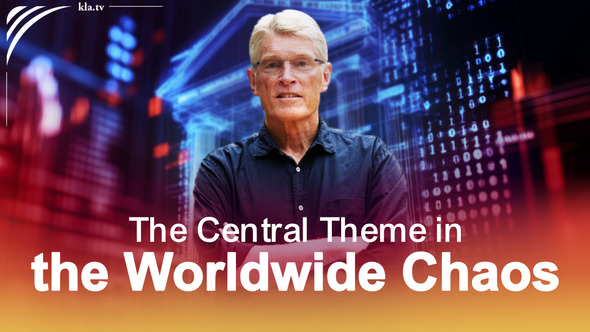
Useage rights:
Standard-Kla.TV-Licence

Topics A-Z
Enter a word for search or use the alphabetic search-order









27.09.2025 | www.kla.tv/38970
[Moderator:] We welcome Ernst Wolff to the studio today. Thank you for taking the time to clarify a few burning questions with us today. [Ernst Wolff:] Thank you very much for the invitation. [Moderator:] Yes, Mr. Wolff, you are one of the leading experts when it comes to current financial developments and financial policy decisions. And that is what we would like to talk to you about today. The current world situation is characterized as a huge mess: The wars in Ukraine, in Gaza, the world that is becoming more digital every day. And then there are the growing mountains of debt worldwide. You couldn't stop listing it. Then we have these interesting figures that are all over the media, such as Trump, Musk and Putin, who divide opinions. There are so many players, events and developments going on that are keeping us very busy and really asking ourselves the big question: is there any connection between them? And that is why today's interview is about putting important events into an overall context. So I would suggest we start with the war in Ukraine. What do the wars in Ukraine and Gaza have in common? [Ernst Wolff:] Definitely the profiteer. The profiteers in the background are, of course, the big arms companies. And behind the defense contractors are the big Wall Street asset managers with BlackRock at the top, followed by Vanguard and State Street. And on the other hand, of course, the big digital companies, the "Magnificent Seven" of Silicon Valley [the world's leading location for the IT and high-tech industry]. All the defense companies are now directly dependent on the digital industry. At this point, nothing works without the digital industry. And this complex is earning an incredible amount making a killing at the moment. Firstly, from the war in Ukraine, but also in the Gaza Strip. And, of course, if the war in the Middle East were to continue in case of a war with Iran. I have serious concerns about that, because they have simply tasted blood and know that there is a lot of money to be made this way. As far as Ukraine is concerned, it has to be said that even if the war ends at some point, it is already clear that the same suspects will continue to earn money. Because Mr. Zelensky put the reconstruction of Ukraine in the hands of BlackRock in, I think it was October 2023. [Moderator:] Yes, and we also have an interesting quote from Zelensky. Can we show that briefly? The quote he used in his Speech to the Nation in 2022: "We are already becoming – and we will become – a leader in the digital transformation of our state and society." [Ernst Wolff:] It's a very interesting phenomenon that two countries are currently leading the way in digitalization. One state is Israel, the other state is Ukraine. Both are at war. War means that data protection is suspended and that the data corporations, i.e. the companies that access all the data, can operate more or less unhindered. It is interesting to note that there is a small district in Kiev that is known as little Silicon Valley, where all the large IT companies from Silicon Valley are located and can actually work there quite freely. A small example of this is the company "Clearview", which operates facial recognition. They came up against legal limits in America, then went to Ukraine and perfected facial recognition there. [Moderator:] A win-win situation. [Ernst Wolff:] Yes. [Moderator:] Unbelievable. You keep talking about the digital-financial complex in your presentations. Can you briefly explain it to us again? What do you mean by that? [Ernst Wolff:] Behind us lies the American century. That was the century of American banks. It has to be said that the 20th century was dominated by the American banks on Wall Street. They were the big beneficiaries of two world wars. They more or less ruled the world. But from the 1970s onwards, we experienced what is known as financialization, i.e. the financial sector became ever stronger. And in the course of this financialization, more and more new financial products have been approved. And hedge funds, for example, have also been authorized. And that is how asset managers have become so strong. So you can say that from 2000 onwards, around the turn of the millennium, asset managers became the most powerful on Wall Street. And there is of course one company that leads the way – BlackRock. BlackRock's main shareholder is Vanguard, the second-largest asset manager. Both, in turn, are major shareholders of the third and fourth largest asset managers, namely State Street and Fidelity. You can't concentrate more power in your hands. They are also brothers and sisters of Silicon Valley, because BlackRock, Vanguard and State Street are the main shareholders of six of the seven largest companies in Silicon Valley. So a symbiosis has emerged between the old instrument of power, namely money, and the new instrument of power, data. So we are now living in a new age, from 30 years ago at the latest, in which data has become increasingly important. And in my opinion, data is now valued even higher than money. So money is a means of power, the second and more important means of power is data. [Moderator:] That means you've already mentioned a connection between AI and the whole development and the financial system. Are there any more connections? [Ernst Wolff:] The most important connection between AI and the financial system is simply that "Aladdin" [IT system for the second-by-second analysis of all financial data worldwide, i.e. Asset, Liability, and Debt and Derivative Investment Network], BlackRock's financial data analysis system, which Mr. Fink founded in 1988, was uploaded to the Microsoft cloud in 2023 and was also connected to artificial intelligence. This basically means that no normal human broker or stockbroker can keep up with BlackRock. So all this information that is transported within nanoseconds cannot be tracked by a human brain. And we just saw last week how this benefits BlackRock. Last week, the third largest bank in the USA, Citibank, handed over its entire asset management to BlackRock. This amounts to 80 billion US dollars. This is simply handed over to BlackRock because BlackRock has more insight into the world's financial flows than anyone else. [Moderator:] That's madness. Okay, you've already mentioned Larry Fink. There is a very interesting connection. Last year, Klaus Schwab suddenly resigned from his major post at the WEF out of the blue. And I would really like to know what actually happened there. [Ernst Wolff:] There is a direct connection. Klaus Schwab appointed Larry Fink to the WEF Board of Directors in 2019. So the two of them have been on the board together ever since. Only Klaus Schwab then did something that I don't think Mr. Fink liked at all. He published a book called "The Great Reset" in July 2020, shortly after the outbreak of the major health crisis – I don't want to mention the name now. And this book has spread worldwide, has become a bestseller and has drawn a lot of attention, international attention, to the WEF. And this is exactly what contradicts Mr. Fink's strategy. Mr. Fink always likes to work in the background. Since 1988, he has seized more and more power, largely unrecognized, and he simply couldn't have liked it. And that's why I think Larry Fink is now in the process of bringing the WEF completely under his own control. Interestingly, this whole conflict became known via the Wall Street Journal. If you look at who owns the Wall Street Journal, it belongs to News Corp and the main shareholder of News Corp is BlackRock. So Larry Fink could have prevented this being made public. But he didn't. He has therefore very consciously seen to it that Mr. Schwab is being dismantled worldwide and is therefore responsible for the fact that Klaus Schwab has now been neutralized. This does not mean that the WEF has been shut down. The WEF will continue to function. The WEF is an incredible network that also works extremely well in China, for example. So there is an annual meeting in Tianjin that is at least as big as the meeting in Davos, where the Chinese prime minister always gives the first speech. So you know how well this network functions. [Moderator:] We've already talked a lot about the great power of digital and financial companies. Now we are about to introduce the digital euro in October. Can you provide some context as to what this means? [Ernst Wolff:] The big problem we are facing is that our monetary system, the way it has worked up to now, can no longer function in the long term. So we now have a huge mountain of debt of over 350 trillion worldwide. The USA alone is over 37 trillion in debt. That won't work in the long term. So at some point, this system will collapse. It has now been kept alive again and again through extreme manipulation, but a new system is being developed in the background. And interestingly, as we have just heard from Larry Fink and Klaus Schwab, the consortium for the development of this digital central bank money was founded in Davos in 2019. So for the last six years at the least, people have been working hard on it in the background. More than 130 central banks are now in the process of developing the money. So this new money will come. And this new money will come at the same time as the abolition of cash. We will then all be more or less forced to fall back on this money. Of course, this means that we can be wonderfully controlled, because this money will be programmable. Firstly, this could have an expiration date. Individual tax rates and individual interest rates can be dictated to us. It will be possible to link us to a social credit system. But it will also be possible to cut us off completely from all financial flows. So that means total control. And what many people don't know is that this is the first two-tier money system that has ever existed. There will be a "wholesale CBDC" [CBDC: central bank digital currency]. This is a CBDC that is traded between the central bank and the large financial groups, i.e. the large insurance companies, hedge funds and pension funds. And there will be a "retail CBDC" for us normal citizens. And that brings me to the digital euro. According to Ms. Lagarde, the digital euro is to be introduced now in autumn. Many people are afraid that they will then have to use the euro in everyday life. I don't believe that. So I think we will now start by introducing this wholesale CBDC between the major financial players and then introduce the other CBDC later. There were major problems with the introduction. Four tests were carried out. The first test was in the Caribbean Union. The second was in Jamaica. The third was in Nigeria. And I don't remember right now where the fourth one was. In any case, there were four major tests. And these tests all went wrong. So people, even in Nigeria, were not prepared to accept this new money. And that's why we now have to take a different path. You can't just offer it to people like that. You can't do it through pressure like in Nigeria. There cash was severely restricted. Suddenly, fees were being charged that had not been charged before. Nevertheless, it was not possible to really spread this money widely among the population. And that is why we are taking a different path. And the other way now is via these "stablecoins" [special "stable" digital currency]. So it's no wonder that a US president like Trump is currently promoting stablecoins. Stablecoins are nothing more than the introduction of CBDC through the back door, because stablecoins are just as programmable as CBDC is. [Moderator:] Wow. So to summarize that now. We are getting a new currency system. [Ernst Wolff:] Yes. [Moderator:] That works completely differently? I have one more question: I believe you have been propagating the collapse of the current financial system for decades. So far, however, ordinary citizens have not noticed any of this. [Ernst Wolff:] Yes, that's due to the enormous manipulation. So in recent years, things have been done that we could never have imagined in the past. So it started in the 70s with financialization. Until the 1980s, for example, share buybacks were prohibited because they were considered unfair manipulation of the markets. Then suddenly they were allowed. Previously there were no hedge funds [capital funds that focus primarily on risk investments], but then they were suddenly allowed. Never before have we taken on as much debt as we have today. Today, debts are simply declared special assets. So there is incredible manipulation going on. And I myself am stunned at how far they have gone. But of course at some point there will be an end. At some point, this system will no longer work. And the insiders know that. They're pushing it now. We are now living in the final phase of this system. And this final phase is being used by the big players to really plunder this system once more. So we live in the absolute plundering of everything and everyone within this system. [Moderator:] That's a blatant statement. And this introduction of the new currency system would then delay that again, is that correct? [Ernst Wolff:] Yes, I don't know how this will be introduced now. So whether this will now work via these stablecoins, that this is being introduced through the back door. There are several possible scenarios. So of course it could be that at some point a major cybercrash [simultaneous failure of many PC systems worldwide] happens and then we are all told, well, we're sorry, your bank accounts can no longer be maintained in their current form. We can only do all this via the CBDC. That would be one option. Another possibility is to go to the extreme of resorting to war and then saying in the context of this war, well, we're sorry, so in order to continue to exist, we have to resort to this new currency. However, it is also possible to do this in other ways. For example, via rising unemployment. We are currently experiencing a large number of insolvencies and a sharp rise in unemployment. This has to do with the resounding effect of AI. And so in the next few years, in the next few months already, but also in the next few years, we will have hundreds of millions of unemployed people worldwide. And then of course it could be that at some point the government will say, well, we have to bring the unemployed back into the system as consumers. We will pay them a universal basic income. So this universal basic income will probably be a very big topic in the near future. And if you then pay that, I assume you will pay it in the form of CBDCs and at the same time, of course, deliver the other payments from the state in CBDCs as well, for example the pension payment. So if you had the unemployed and pensioners in the new system, you would already have a large part of the population in this new system. [Moderator:] Combined with all the child benefit recipients [Ernst Wolff:] Anything is possible, yes exactly. [Moderator:] ... officials, employees. Now you have spoken of a growing number of unemployed people in the context of AI development. Can you elaborate on that a little more? [Ernst Wolff:] Well, AI is far more advanced than most people assume. Some tests have been carried out on AI recently. AI is always classified intellectually with an IQ of 150 to 160 at the moment. 160 equals Einstein's IQ. And you have to know that AI's knowledge is currently doubling every three to four months. In other words, we are on the verge of AI's IQ far surpassing that of humans. And of course, in conjunction with humanoid robots or 3D printers, for example, this means that many production processes will take place without humans in the future. In the field of humanoid robots in particular, a person working as a craftsman somewhere learns from their own experience and therefore gets better and better. A humanoid robot doing the same job can be connected via artificial intelligence to 10,000, 100,000 or a million other robots doing the same job and then learns 10,000, 100,000 or a million times faster. This means that after some time, humans will no longer have a chance to compete with AI. I would like to refer to the interviews with Jeffrey Hinton, which are interesting. Jeffrey Hinton was the former chief developer for artificial intelligence at Google. He is a 75-year-old man. He resigned two years ago, in May '23, and said the whole thing was too dangerous. Jeffrey Hinton was recently asked what he would recommend to his grandson now, what profession he should take up. He said: "I would recommend my grandson to become a plumber, but I could only guarantee that he would have work for about five years." So you can see how incredibly fast this development is progressing. Unfortunately, people are not told about this at all. And the worst thing is that the politicians don't mention a single word about it. Because that would be the biggest and most important topic that everyone would have to talk about all the time. [Moderator:] That's why we are doing this interview today. I would like to add one more thing. We have now heard that the EU wants to introduce a digital identity for every citizen from 2026. Is this related to the whole development in any way? [Ernst Wolff:] Yes, yes, it's all connected. So the digital ID is quite necessary, because once the CBDC comes, that means that each of us will have a "wallet" [digital wallet], on our smartphone. And then it must be ensured that everyone is actually identifiable so that people cannot access a different "wallet". So if, for example, the government cuts off someone who is considered a protester or a dissident from all financial flows, then, if there is no digital ID, they could go to their friend or a relative and say, can you use your account to make payments for me. But if the person can be identified via the eID, then he is indeed sidelined. So absolute and total control is possible. And that is the path we are on at the moment. [Moderator:] And what we are currently experiencing in Germany is that the AfD is soaring to unprecedented heights. What is the AfD's position on all these developments? [Ernst Wolff:] In my opinion, the AfD is more or less the equivalent of what happened in Argentina with Mr. Milei or what happened in the USA with Mr. Trump. So people who don't understand the whole context in the background are relying on some kind of savior. They are then promised something, but you should really take a very close look. You really have to take a close look at the AfD. Firstly, the AfD is in favor of compulsory military service, secondly, it is in favor of NATO, i.e. the alliance that has always been led by the USA, and thirdly, I never hear the AfD criticize digital corporations. On the contrary, Ms. Weidel even spoke to Mr. Musk in Riesa or practically threw herself at him and was pleased that Mr. Musk said something about the AfD. Musk is still posting about the AfD, and just a few days ago he said again that only the AfD can save Germany. So the AfD is nothing more than another arm of this digital-financial complex. So no one should believe that anyone sitting in Parliament today will bring about any major changes for us. This applies to the left side and the right side. So this whole distinction between left and right is nothing more than misleading the public. We live in a time in which all these values from the past don't apply at all. We are living in a new era and we should rely on our common sense and not on our position somewhere on the left or right. [Moderator:] So, in your interviews you keep mentioning the Palantir company. A very interesting company. We have the logo here. I have two questions about this. The first, what role is Palantir playing currently? And the second, do you have any information on whether there are similar projects in Russia or China? [Ernst Wolff:] Well, there are certainly similar projects, but let's take a look at Palantir first. Palantir was founded in 2004 by Peter Thiel. Who is Peter Thiel? Peter Thiel is one of the co-founders of PayPal. So he's a former buddy of Elon Musk. And Peter Thiel focused on facial recognition and the digital industry very early on and founded this company. He did it with the help of the CIA. So the CIA also made a financial contribution at the time. And interestingly, this company then became active not only for the CIA, but also for the NSA, for the FBI and now also works for the Pentagon. It also works for the Ukrainian army in the selection of war targets and also for the Israeli army in the selection of war targets. Palantir is one of the companies that has risen the most on the stock market in recent months. It now has a very high market capitalization. The company has seized an incredible amount of power because we live in a time when it's not just money that matters, but also data. And there is no-one else besides Palantir who possesses truly critical data. So for me, the role that Peter Thiel plays in this is also interesting. Peter Thiel was born in Germany, then grew up in Africa and is now one of the biggest figures in Silicon Valley. Peter Thiel also made sure that his people were positioned in Trump's cabinet. So Trump's advisor on cryptocurrencies [digital currencies] and on AI is a man called David Sachs. This David Sachs also comes from this group of the so-called PayPal mafia. So he's also a buddy of Peter Thiel. And I have to say that anyone who owns as much data as Peter Thiel has at least as much power as someone who owns as much money and wields as much power in the financial system as Larry Fink. So I think if you were to ask who the most powerful men in the world are today, Larry Fink and Peter Thiel would be right at the top for me. [Moderator:] Now you've mentioned PayPal mafia. Why mafia? [Ernst Wolff:] Yes, because PayPal was already using mafia-like methods to take over other companies at the time and, of course, was also securing data from others. It is interesting to note that Peter Thiel, for example, was one of the co-founders of Facebook. And the one question that many people have never asked themselves is why is Facebook actually free of charge? People have never asked themselves the same question with WhatsApp. Nobody wonders why WhatsApp is actually free of charge. These things are free because they are used to collect data. And a lot of money is earned in the background with this data. And with this data, a great deal of power is also usurped. So it's interesting that Peter Thiel is one of the people who really had a finger in the pie right from the start. So not only the founder of PayPal, but also the first co-financier of Facebook, i.e. closely linked to Mr. Zuckerberg. And what's also interesting is that he is one of those people, just like Larry Fink, who likes to stay in the background. So we've just had the meeting at the White House, where Mark Zuckerberg was there, where Bill Gates was there and the two of them sat next to Donald Trump and his wife Melania. Peter Thiel was not there. So the man likes to stay in the background. He pulls the strings from behind the scenes. [Moderator:] Yes, this business model, you'll have to explain that again. How is money earned with data, i.e. in a very practical way, perhaps using an example? So much, in fact, that you can run the whole of Facebook with it. [Ernst Wolff:] Data is the most important thing these days, because a lot of money is made with data. So if you know exactly what someone is buying, if you know exactly where someone is, then you can always offer them exactly what you know they will buy. So one very interesting example, which is a bit older now, is that Amazon knew two weeks earlier than a woman that she was pregnant based on the sales data. So before women found out from their gynecologist that they were pregnant, Amazon already knew two weeks earlier that these women were pregnant due to their purchasing behavior. And then, of course, you can simply rummage through the data to find out what pregnant women like to buy and then give them the right advertising on their cell phone or PC. And then they buy it. So these are trillion-dollar deals in the background. In Russia and China, of course, such movements are also underway. There too, companies like Palantir are being founded. So it's safe to say, we don't know that much about China here in the West. But you could see how far China has come with facial recognition and the development of AI during the major health crisis. So in China it has gone so far that in Shanghai, for example, when the lockdowns were in place and people were told you are not allowed to leave your apartment, you are not allowed to go on to the balcony. When someone went on to the balcony, a drone flew up and announced the person's name very loudly to let all the neighbors know that someone was breaking the law at that moment. So you can see that China is not lagging behind at all. On the contrary, China also has the social credit system – which some people dispute. That is absolute nonsense when you know everything that has happened in China during the health crisis alone. This is, by the way, also an urgent warning regarding the eID. So in China, the QR code was used during the health crisis in a similar way to how the eID will be used later. In China, several banks have gone under in connection with the collapse of a major real estate developer. People who had their accounts with these banks lost all their money. These people wanted to demonstrate and these people noticed on their cell phone in the morning that their health code was red. So they were prevented from demonstrating in this way. So that's the world we'll slide into if this eID actually becomes a fact. [Moderator:] All right. One final comment. I found an interesting comment under one of your videos. Someone says it's all well and good what's going on, but there's only one thing to do: enjoy my life for as long as I can. What do you think? [Ernst Wolff:] Well I'm also trying to do that, but I have to hesitate a bit with the second phrase saying as long as I can. I think it will go on for quite a long time. So humanity has already gone through major crises and it has always continued and will continue after this crisis. I was born in China myself and the Chinese character for crisis consists of two characters. One is danger and the other is opportunity. And I think even in the worst of times, in the greatest upheaval in history, you have to see not only the dangers, but also the opportunities. AI itself is not to blame for what happens. The people who use this AI are to blame. And unfortunately, AI is currently being used by very few corporations for their own benefit. If AI were to be used now, for the benefit of us all, then we have to say that we would be facing a golden future. If we all could actually leave all the nasty jobs that still have to be done by humans to AI, people would be free to do what they are actually meant to do. They could be creative, they could make music, they could read books, they could gather together and live without all this pressure from work. So there would be no limits to human creativity. The problem is that AI is currently in the hands of very, very few people and very few companies that are only interested in themselves. And that is the big problem that we need to change. [Moderator:] Do you have a final sentence when you see it all together like this? [Ernst Wolff:] Yes, we are probably living in the greatest upheaval in the entire history of mankind. And we are living at the end of a huge cycle. And in my view, the whole thing goes much further than is currently being discussed in alternative circles. Because if we imagine that AI will actually take over to the extent that it looks like it will now, then money will also become completely superfluous at some point. Because then all the work in the world will be done by robots to a large extent, i.e. over 90 percent. These robots will have unlimited production capabilities. And if we remember, what does money actually mean? Money came into the world after the barter economy, it developed out of the barter economy and has always been a reflection of how much human labor there is in any given commodity. So a product is expensive because it involves a lot of human labor. Another product is very cheap because there is little human labor involved. But if this human work no longer plays a role in society, if it is all taken over by AI, money will no longer play a role either. So we really are living on a threshold, a historic threshold. Something has to happen. We need to make sure that people are in control of everything and that this new technology is not used to subjugate us all to a few. What I can give in the way of personal advice is to be careful, especially where children and young people are concerned, that they don't get too involved in this digital sphere and believe everything that is put in front of them. Always question every piece of information. Who is informing me? What interest does he have? What does he want from me? Then you objectify the whole thing. When it comes to artificial intelligence and the use of artificial intelligence in particular, you really have to be very careful when it comes to young people. Unfortunately, there are currently a lot of schoolchildren and a lot of students, who are also having their work produced using artificial intelligence. I always recommend the videos of the Korean-born New Zealander Justin Sung, S-U -N -G, to all these people. He is a New Zealand doctor who has spoken about the effect of using AI on the human brain, quite often. That is sometimes very frightening. If, as a young person, you no longer try to analyze certain facts or sort through a lot of information yourself, but leave it to AI, then you are failing to develop the basic structures in your brain. That is a very dangerous development. If you leave work to AI too soon that you should actually be doing yourself in order to develop your brain further, then you end up in a very dangerous spiral. I think all parents and grandparents should take great care to ensure that this doesn't happen to their children and grandchildren. [Moderator:] Thank you for these very insightful words. An exciting interview. Thank you. [Ernst Wolff:] Thank you very much.
from -