



Subtitle "Afrikaans" was produced by machine.Subtitle "አማርኛ" was produced by machine.Subtitle "العربية " was produced by machine.Subtitle "Ārāmāyâ" was produced by machine.Subtitle "azərbaycan dili " was produced by machine.Subtitle "беларуская мова " was produced by machine.Подзаглавието "България" е създадено от машина.সাবটাইটেল "বাংলা " মেশিন দ্বারা তৈরি করা হয়েছিল।Subtitle "བོད་ཡིག" was produced by machine.Subtitle "босански" was produced by machine.Subtitle "català" was produced by machine.Subtitle "Cebuano" was produced by machine.Subtitle "ગુજરાતી" was produced by machine.Subtitle "corsu" was produced by machine.Podtitul "Čeština" byl vytvořen automaticky.Subtitle "Cymraeg" was produced by machine.Subtitle "Dansk" was produced by machine.Untertitel "Deutsch" wurde maschinell erzeugt.Subtitle "Untertitel" was produced by machine.Ο υπότιτλος "Ελληνικά" δημιουργήθηκε αυτόματα.Subtitle "English" was produced by machine.Subtitle "Esperanto" was produced by machine.El subtítulo "Español" se generó automáticamente.Subtitle "Eesti" was produced by machine.Subtitle "euskara" was produced by machine.Subtitle "فارسی" was produced by machine.Subtitle "Suomi" was produced by machine.Le sous-titrage "Français" a été généré automatiquement.Subtitle "Frysk" was produced by machine.Subtitle "Gaeilge" was produced by machine.Subtitle "Gàidhlig" was produced by machine.Subtitle "Galego" was produced by machine.Subtitle "Schwizerdütsch" was produced by machine.Subtitle "هَوُسَ" was produced by machine.Subtitle "Ōlelo Hawaiʻi" was produced by machine.Subtitle "עברית" was produced by machine.Subtitle "हिन्दी" was produced by machine.Subtitle "Mẹo" was produced by machine.Podnaslov "Hrvatski" generiran je automatski.Subtitle "Kreyòl ayisyen " was produced by machine.A magyar felirat gépi fordítással (MI) készült. Subtitle "Հայերեն" was produced by machine.Subtitle "Bahasa Indonesia " was produced by machine.Subtitle "Asụsụ Igbo " was produced by machine.Textun"Íslenska" var framkvæmt vélrænt.Sottotitoli "Italiano" sono stati generati con l'intelligenza artificiale.字幕は"日本語" 自動的に生成されました。Subtitle "Basa Jawa" was produced by machine.Subtitle "ქართული" was produced by machine.Subtitle "қазақ тілі " was produced by machine.Subtitle "ភាសាខ្មែរ" was produced by machine.Subtitle "ಕನ್ನಡ" was produced by machine.Subtitle "한국어" was produced by machine.Subtitle "कोंकणी語" was produced by machine.Subtitle "کوردی" was produced by machine.Subtitle "Кыргызча" was produced by machine.Subtitle " lingua latina" was produced by machine.Subtitle "Lëtzebuergesch" was produced by machine.Subtitle "Lingala" was produced by machine.Subtitle "ພາສາ" was produced by machine.Antraštė "Lietuvių" buvo sukurta mašina.Subtitle "Latviešu" was produced by machine.Subtitle "fiteny malagasy" was produced by machine.Subtitle "te reo Māori" was produced by machine.Subtitle "македонски јазик" was produced by machine.Subtitle "malayāḷaṁ" was produced by machine.Subtitle "Монгол хэл" was produced by machine.Subtitle "मराठी" was produced by machine.Subtitle "Bahasa Malaysia" was produced by machine.Subtitle "Malti" was produced by machine.Subtitle "မြန်မာစာ " was produced by machine.Subtitle "नेपाली" was produced by machine.Ondertitels "Nederlands" machinaal geproduceerd.Subtitle "Norsk" was produced by machine.Subtitle "chiCheŵa" was produced by machine.Subtitle "ਪੰਜਾਬੀ" was produced by machine.Podtytuł "Polska" został utworzony przez maszynę.Subtitle "پښتو" was produced by machine.Legenda "Português" foi gerada automaticamente.Subtitle "Română" was produced by machine.Subtitle "Язык жестов (Русский)" was produced by machine.Субтитры "Pусский" были созданы машиной.Subtitle "Kinyarwanda" was produced by machine.Subtitle "सिन्धी" was produced by machine.Subtitle "Deutschschweizer Gebärdensprache" was produced by machine.Subtitle "සිංහල" was produced by machine.Subtitle "Slovensky" was produced by machine.Subtitle "Slovenski" was produced by machine.Subtitle "gagana fa'a Samoa" was produced by machine.Subtitle "chiShona" was produced by machine.Subtitle "Soomaaliga" was produced by machine.Titra "Shqip" u krijua automatikisht.Превод "србски" је урађен машински.Subtitle "Sesotho" was produced by machine.Subtitle "Basa Sunda" was produced by machine.Undertext "Svenska" är maskinell skapad.Subtitle "Kiswahili" was produced by machine.Subtitle "தமிழ்" was produced by machine.Subtitle "తెలుగు" was produced by machine.Subtitle "Тоҷикй" was produced by machine.Subtitle "ภาษาไทย" was produced by machine.ንኡስ ኣርእስቲ "ትግርኛ" ብማሽን እዩ ተፈሪዩ።Subtitle "Türkmençe" was produced by machine.Subtitle "Tagalog" ay nabuo sa pamamagitan ng makina.Altyazı "Türkçe" otomatik olarak oluşturuldu.Subtitle "татар теле" was produced by machine.Subtitle "Українська " was produced by machine.ذیلی عنوان "اردو" مشین کے ذریعہ تیار کیا گیا تھا۔Subtitle "Oʻzbek" was produced by machine.Phụ đề được tạo bởi máy.Subtitle "Serbšćina" was produced by machine.Subtitle "isiXhosa" was produced by machine.Subtitle "ייִדיש" was produced by machine.Subtitle "Yorùbá" was produced by machine.字幕 "中文" 由机器生成。Subtitle "isiZulu" was produced by machine.
kla.TV accepts no liability for defective translation.kla.TV accepts no liability for defective translation.kla.TV accepts no liability for defective translation.kla.TV accepts no liability for defective translation.kla.TV accepts no liability for defective translation.kla.TV accepts no liability for defective translation.kla.TV не носи отговорност за некачествен превод.অপর্যাপ্ত অনুবাদের জন্য kla.TV কোন দায় বহন করে না।kla.TV accepts no liability for defective translation.kla.TV accepts no liability for defective translation.kla.TV accepts no liability for defective translation.kla.TV accepts no liability for defective translation.kla.TV accepts no liability for defective translation.kla.TV accepts no liability for defective translation.kla.TV nenese žádnou odpovědnost za chybné překlady.kla.TV accepts no liability for defective translation.kla.TV accepts no liability for defective translation.kla.TV übernimmt keine Haftung für mangelhafte Übersetzung.kla.TV accepts no liability for inadequate translationΗ kla.TV δεν φέρει καμία ευθύνη για ανεπαρκή μετάφραση.kla.TV accepts no liability for defective translation.kla.TV accepts no liability for defective translation.kla.TV no se hace responsable de traducciones incorrectas.kla.TV accepts no liability for defective translation.kla.TV accepts no liability for defective translation.kla.TV accepts no liability for defective translation.kla.TV accepts no liability for defective translation.kla.TV n'assume aucune responsabilité en cas de mauvaise traduction.kla.TV accepts no liability for defective translation.kla.TV accepts no liability for defective translation.kla.TV accepts no liability for defective translation.kla.TV accepts no liability for defective translation.kla.TV accepts no liability for defective translation.kla.TV accepts no liability for defective translation.kla.TV accepts no liability for defective translation.kla.TV accepts no liability for defective translation.kla.TV accepts no liability for defective translation.kla.TV accepts no liability for defective translation.kla.TV ne preuzima nikakvu odgovornost za neadekvatne prijevode.kla.TV accepts no liability for defective translation.A Kla.TV nem vállal felelősséget az esetleges fordítási hibákért.kla.TV accepts no liability for defective translation.kla.TV accepts no liability for defective translation.kla.TV accepts no liability for defective translation.kla.TV tekur enga ábyrgð á áræðanleika þýðingarinnarKla.TV non si assume alcuna responsabilità per traduzioni lacunose e/o errate.Kla.TV は、不適切な翻訳に対して一切の責任を負いません。kla.TV accepts no liability for defective translation.kla.TV accepts no liability for defective translation.kla.TV accepts no liability for defective translation.kla.TV accepts no liability for defective translation.kla.TV accepts no liability for defective translation.kla.TV accepts no liability for defective translation.kla.TV accepts no liability for defective translation.kla.TV accepts no liability for defective translation.kla.TV accepts no liability for defective translation.kla.TV accepts no liability for defective translation.kla.TV accepts no liability for defective translation.kla.TV accepts no liability for defective translation.kla.TV accepts no liability for defective translation.kla.TV neprisiima jokios atsakomybės už netinkamą vertimą.kla.TV accepts no liability for defective translation.kla.TV accepts no liability for defective translation.kla.TV accepts no liability for defective translation.kla.TV accepts no liability for defective translation.kla.TV accepts no liability for defective translation.kla.TV accepts no liability for defective translation.kla.TV accepts no liability for defective translation.kla.TV accepts no liability for defective translation.kla.TV accepts no liability for defective translation.kla.TV accepts no liability for defective translation.kla.TV accepts no liability for defective translation.kla.TV aanvaardt geen aansprakelijkheid voor foutieve vertalingen.kla.TV accepts no liability for defective translation.kla.TV accepts no liability for defective translation.kla.TV accepts no liability for defective translation.kla.TV nie ponosi odpowiedzialności za wadliwe tłumaczenie.kla.TV accepts no liability for defective translation.kla.TV não se responsabiliza por traduções defeituosas.kla.TV accepts no liability for defective translation.kla.TV accepts no liability for defective translation.kla.TV не несет ответственности за некачественный перевод.kla.TV accepts no liability for defective translation.kla.TV accepts no liability for defective translation.kla.TV accepts no liability for defective translation.kla.TV accepts no liability for defective translation.kla.TV accepts no liability for defective translation.kla.TV accepts no liability for defective translation.kla.TV accepts no liability for defective translation.kla.TV accepts no liability for defective translation.kla.TV accepts no liability for defective translation.kla.TV nuk mban asnjë përgjegjësi për përkthime joadekuate.kla.TV не преузима никакву одговорност за неадекватне преводе..kla.TV accepts no liability for defective translation.kla.TV accepts no liability for defective translation.Kla.TV tar inget ansvar för felaktiga översättningar.kla.TV accepts no liability for defective translation.kla.TV accepts no liability for defective translation.kla.TV accepts no liability for defective translation.kla.TV accepts no liability for defective translation.kla.TV accepts no liability for defective translation.kla.TV ንዝኾነ ጉድለት ትርጉም ዝኾነ ይኹን ሓላፍነት ኣይቅበልን እዩ።kla.TV accepts no liability for defective translation.kla. Walang pananagutan ang TV sa mga depektibong pagsasalin.kla.TV hatalı çeviriler için hiçbir sorumluluk kabul etmez.kla.TV accepts no liability for defective translation.kla.TV accepts no liability for defective translation.kla.TV عیب دار ترجمہ کے لیے کوئی ذمہ داری قبول نہیں کرتا ہے۔kla.TV accepts no liability for defective translation.Kla. TV không chịu trách nhiệm về bản dịch không đầy đủ.kla.TV accepts no liability for defective translation.kla.TV accepts no liability for defective translation.kla.TV accepts no liability for defective translation.kla.TV accepts no liability for defective translation.kla.TV 对翻译质量问题不承担任何责任。kla.TV accepts no liability for defective translation.


9/11 Witness from the Pentagon - Interview with USAF Lt. Col. Ret. Karen Kwiatkowski
08.09.2026
www.kla.tv/42467
Karen Kwiatkowski has seen and heard a lot in her military career which began during the Cold War. In the 90s she was at the NSA and ended up being a speech-writer for the NSA director. A few years prior to 9/11 her employment at the Pentagon began and she witnessed the 9/11 explosion and its aftermath on site. She also experienced the atmosphere there: people being sidelined for putting truth over imperialistic lies, the second set of rules for Israelis and the way propaganda was handed to news media. She has been sharing her story since she left the Pentagon in 2003 - and today while the world remembers 9/11 at its 25th anniversary she shares her witness report here on Kla.TV and also analyses current developments. This interview is an antidote to the constant war propaganda with which the world is being driven into WW3 today. Please watch and help share this far and wide!
[continue reading]

 Odysee
9/11 Witness from the Pentagon - Interview with USAF Lt. Col. Ret. Karen Kwiatkowski
Download broadcast and attachments in the wanted quality: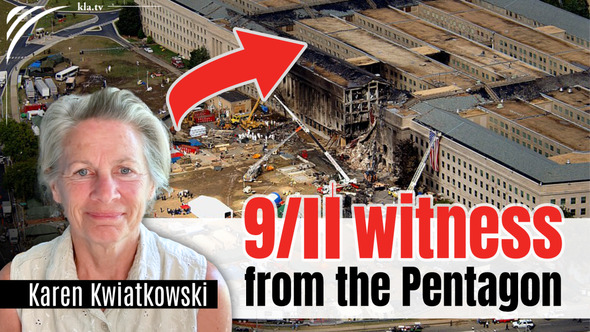
|
Karen Kwiatkowski‘s publishes here:
Karen Kwiatkowski will be speaking on this years 9/11 anniversary at:
Find out more on these topics:
War-profiteers and their secret society connections:
|
|---|
Useage rights:
Standard-Kla.TV-Licence

Topics A-Z
Enter a word for search or use the alphabetic search-order









12.09.2026 | www.kla.tv/42467
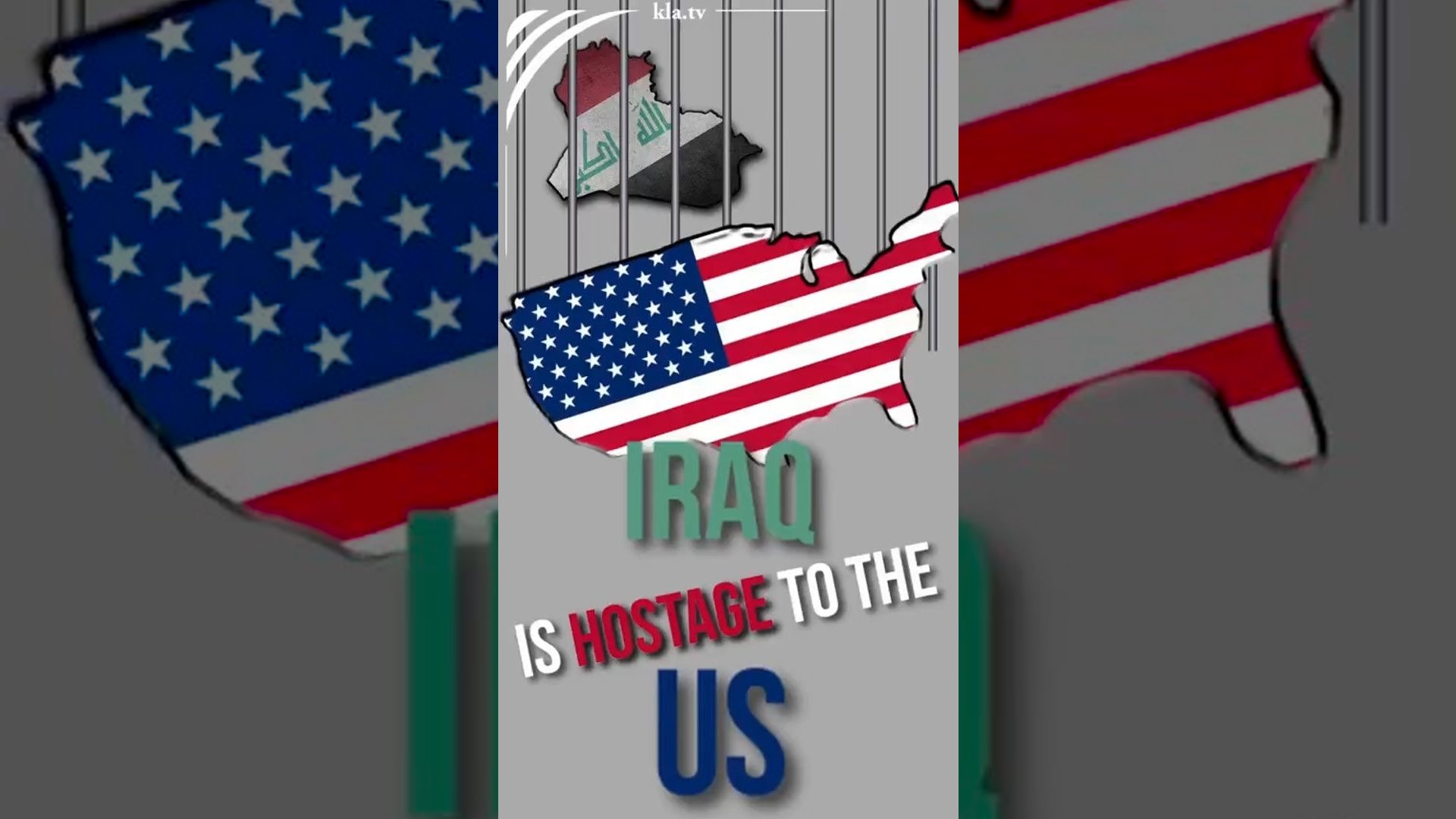
[Kla.TV:] Today I have the honor to welcome the courageous whistleblower from the US Air Force, Retired Lieutenant Colonel Karen Kwiatkowski. Hello, Karen. Thanks for joining us today. [Karen Kwiatkowski:] Well, thanks for having me. [Kla.TV:] Well, I just recently came across you and it's a shame but I'm young, so I wasn't around when you were coming out from the Pentagon and the U.S. Air Force and telling your story. But I really wanted to to hear what was going on back then what you witnessed at the Pentagon and in your career as Lieutenant Colonel in the Air Force. So maybe first to give an overview to our viewers what were your positions in the US Air Force and at the Pentagon? Maybe you can give us a little timeline of what was going on. [Karen Kwiatkowski:] Yeah. Yeah, well, I was commissioned in 1982. Seems like quite a long time ago and the first 10 years of my 20-year career was during the Cold War. So, for me, as a military member, during the cold war we were fighting communism, right? This is what we were doing and I didn't question that very much. I don't like communism, so it made sense and you know, it was really all on the same team. And I didn't have any problems other than just trying to do my job. Then ten years in, in 1991, you saw the Soviet Union collapse. So, You know, the anti-cold warriors said that the United States had sent the Soviet Union into the gunnery - you know, competed with them militarily and that's what caused it. But I was studying Eastern European stuff and government stuff, foreign policy at that time. So I had a broader view of what actually caused the Soviet Union to fail because I come from a libertarian free market perspective. It collapsed from within in many ways. And I kind of said, well, for whatever reason, we don't have the Soviet Union anymore. So NATO should go back to its previous form which was not NATO - no NATO - and that the United States should - would reform. I expected to see a really big change in our military posture, our global defensive posture, which had been prior to that oriented to, you know, anti-Soviet during Cold War rules. So that was over and it didn't change. I was very surprised to find that instead of ceasing war, instead of collapsing NATO and taking that money to return it to those countries and their economies or whatever they wanted to do with it. What we saw was NATO regrouped. It attempted to continue to expand. We had the war in Yugoslavia, the war that was fomented by NATO and the United States. And then we saw, also in 1991, you know, increased war, the first war in Iraq that the United States did. Now, I think they did it with UN and NATO assistance, you know, it's like a war. [Kla.TV:] Right. [Karen Kwiatkowski:] But it's like, these were the things that the Western governments engineered, apparently to replace the war footing that had somehow unexpectedly collapsed. And it is true, the neoconservatives didn't expect that collapse in 1991. They wanted to more of a hot war, some sort of battle that we would take Russia or something. [Kla.TV:] Is that so? Wow. [Karen Kwiatkowski:] I think so, yes. And they planned for that and they didn't get to do it. And now we didn't have the justification for this global military posture the budget of course. We always - the United States have always had a massive military budget compared to that of other countries and even groups of countries like NATO or whatever. That surprised me. And so, because I was shocked at that, it didn't fit with my expectations: I said well what is wrong with my expectations? Why would I think this but the system itself did not think this? And that's when I realized that the Cold War was just a useful construct. And once it went away, we would find another useful construct to continue this massive imperialism, which is really, I think, how you would describe 20th century post-World War II America. It was a global imperialistic project, which continues to this day, but it's failing now, which is great, in my opinion. So I had my eyes opened and then I started out in communications electronics. I did that for 15 years and I worked at NSA under that capacity. Yeah 95 to 98 I was at NSA. [Kla.TV:] Oh wow. [Karen Kwiatkowski:] And I ended up actually working in a number of different jobs there. And I ended up, strangely enough, as a speechwriter for the NSA director. Which was very interesting because you know you could see things. [Kla.TV:] Interesting. [Karen Kwiatkowski:] Yes! It was interesting it was eye-opening. From there, I moved on to the Pentagon. I worked in the air staff for a couple of years. [Kla.TV:] Can I kind of briefly hook into there with the NSA? [Karen Kwiatkowski:] Yeah [Kla.TV:] I mean this NSA for me listening to this with my youthful ears, one can almost say. I only know about this Snowden thing and the NSA scandal spying on everybody. [Karen Kwiatkowski:] Yeah. [Kla.TV:] Was that a thing back then when you were in the and NSA? I mean, what was the and NSA doing? [Karen Kwiatkowski:] Well, it was doing a lot of things a lot of things that they didn't like to talk about. What struck me in the time I worked at the NSA, so it would be late 1990s, was that we were at the NSA carefully cultivating back doors into all of the commercial software. Now, I'm not revealing a secret here because it's well known at this point, right? But we were very interested in back-doors, accessing, working with the Microsoft, working with all these companies. And at that time, Apple was not as cooperative. Now After many years, Apple, of course, is very cooperative these days. It used to be that people said: oh an iPhone can't be tracked. Oh of course it can. We've got it tracked. This was the NSA project of the late 90s, big time. The other thing that was interesting to me is that one of the crises that the NSA was worried about in terms of communications was a lack of bandwidth. Right? At that time - yeah, we don‘t think about that now - but in the late 90s they they thought bandwidth - they thought we would run out of bandwidth. [Kla.TV:] Wow. [Karen Kwiatkowski:] And what they didn't - because it's government and government can't innovate very well - what they didn't foresee of course is compression of data and efficiency in data and improvements in existing bandwidth and all the future - the things that came after the 90s and so bandwidth is not a problem now. I mean we have plenty of bandwidth now. Now what we look at is data processing capability. The AI is the new crisis. But what data are they processing? Is it global data? Sure. But it's also data against Americans because as empire fails, the new enemy becomes the people that remain captured in that empire, and that's domestic citizens in this country. We are seeing that, but I'm not working at and NSA now, but I'm sure they're very much interested. In fact, I know NSA is interested in AI centers and data processing. And the reason we know this is because the military bases are now being identified as locations for small data centers. And even Trump's so-called… his new building on the east wing that he tore down and he's going to have a ballroom. Underneath the ballroom will be a military center and also a data center. It'll be linked, but you know independent probably with its own its own energy, most likely with its own small nuclear energy capability. [Kla.TV:] Oh, that‘s interesting [Karen Kwiatkowski:] Anyway, that's the new problem. But back in the 90s, it was bandwidth. [Karen Kwiatkowski:] And they did also did not like - NSA in the 90s did not like encryption at all. They didn't like other people to have encryption like PGP and and early encryption that was coming outside of governments. They did not like that at all, but I think since then have co-opted most of it. So you know, we talk about - in the news more recently, you know, Hegseth is using Signal to talk to people in his first (meetings), you know, as as as a newly minted Department of War guy and he's using Signal and he's got all these people and it's like: ‚Oh, Signal is secure‘. Well, Signal is not secure! You know, let's go back to to what Snowden revealed to us about so many things and what he continues to talk about. Yeah. Anyway, but it's government, it's the state, it is paranoid. And it's usually wrong in its guesses about what will happen. It was wrong about when the Soviet Union would fail. [Kla.TV:] Yeah. [Karen Kwiatkowski:] And of course, when it did, we quickly, in Washington and in the Pentagon reoriented our existing global war machine to find new and continuing wars. And that has not changed in 30 years because you know we saw the pullout from Afghanistan then immediately flowing into Ukraine. Then when Ukraine kind of settled down, we saw the renewed activity in the Middle East, in Iran. We have Venezuela…We have constant manufactured locations for war and justifications for the expenditures. It has not changed, which is disappointing to me because I thought after you know, 2003 and what we very quickly found out about that invasion of Iraq, that it was based on lies and unnecessary and wrong in every case, in every way. People found out within a few years. Some people knew, obviously, early on that this was false; that it was an escapade. I thought people would turn against it! But, we the people in America seem unable to connect to and influence our government in the way that most people feel that it should act. I know I'm going on a diversion, but I just want to say one thing quickly: Every president that has been elected in the United States since really before JFK, has been elected on a peace platform. They have always been the most „anti-war“ candidate, relative to their opponent. And the most pro peace, relative to their opponent. And Americans have bought that line over and over and over again and you know, we talk about Trump. Now Trump clearly is a caricature of an insane president, an emperor, right? We know this. He proves it every day. But he had a lot of support. And his support was on a platform that he abandoned from day one. He rejected it. And that platform was accountability for the government, anti-war, bringing troops home, ending the empire, strengthening the infrastructure of the United States, which definitely needs to be improved. These are the things people voted for. They didn't get them. But the politicians do know what Americans want. We still want those things. Now, how we will get them is a whole other story. We don't know - I don't know how that's going to happen, but whatever. Sorry. [Kla.TV:] Well, thanks for this little detour here. It was very interesting. And you left off when you were going into the pentagon and maybe you want to pick up there once again. [Karen Kwiatkowski:] Yes, yes. Just, real quickly: so I was working in the Office of Secretary of Defense in planning. My initial area there was Sub-Saharan Africa policy. And In that case, when we talk about imperialism, it's very clear. What we do in Africa and America is very much like it's neo-imperialism and it's operated that way. But that's, you know, that was my job. And and we created policy papers and recommendations and did research for the policymakers in OSD, in the Office of Secretary of Defense. Then I was called over to work from Sub-Saharan Africa over into Near East, South Asia. And that is that's our Middle East from Pakistan, Iran, all the way over to Morocco, the North Africa region. And I worked North Africa, but I worked with different desk officers who had different regions, you know, Egypt etc., whatever. But Israel, Iran, anything to do with Palestine, Lebanon, these guys were all appointees. These Officers, these people, some civilians who worked the policy design from the Pentagon perspective, four particular nations were all political appointees and they were all Zionists.They were all people who were Zionists. I say Zionists, but we didn't think of it that way. [Kla.TV:] Right. [Karen Kwiatkowski:] They were neoconservatives in their political philosophies and they were handpicked by Dick Cheney from for the most part or Dick Cheney's own people. So, they wanted war, they wanted war in the Middle East, they wanted war for Israel, the idea that Israel has a plan of regional... [Karen Kwiatkowski:] It has regional aspirations that include the destruction, destabilization, and sowing of chaos amongst their Arab neighbors. That was not under debate at all. That was accepted, that was how they operated, how we made our decisions. But in doing that, in advocating for Israel... pretty much only. And of course, this is after 9-11, when I moved over there; 2002. So 9-11 had occurred the previous fall and I moved over to the Near East, South Asia about eight months later. Now, we had very quickly gone to war with Afghanistan... in December or late November of 2001. And that was based on - not on where the so-called hijackers had come from because most were Saudis which is a big ally; the others were Tunisians Egyptians, who also are American allies, but because, I guess, because Bin Laden was behind it, we said. And he was being protected or harbored by the Taliban. But really, you know, we were friends with the Taliban up until... about the summer of 2001. Prior to 9-11, we were working a trans-Afghanistan pipeline with Afghanistan. And one of the big problems was that - well, there are probably two. One problem was they couldn't or wouldn't provide what we Americans expected and needed; they would not secure the pipeline route that we wanted. Okay. So that's one problem. The other problem was this: In June of 2001, Colin Powell gave a big multi-million dollar award, had a big ceremony in Washington, awarding and rewarding the Taliban for ending the opium poppy trade out of Afghanistan, which took them a few years to do. Because we remember, the Taliban are very strict about drugs, so they didn't like that. But the CIA, of course, this did not serve the CIA well because the CIA has been running drugs around the world for quite a long time. And that opium source in Afghanistan was a source of money for people that are inside of and working with the U.S. government and also, I think, some of the European governments. Obviously, you know, drug money is a big deal. They ended that and in exchange were not really allowing the US to accelerate the pipeline, the Trans-Afghanistan Pipeline Project, which would have been another source of income from a neo-imperial perspective. And that's how we were thinking about Afghanistan. So after 9-11, Afghanistan was a target. Kind of a made-up thing like because, you know, Bin Laden never admitted to doing it. I think he applauded it. But I think there's a lot of evidence that Bin Laden had very little to do with 9-11. But that's another story. Anyway, so we go to war with Afghanistan in the aftermath of 9-11. American people were clamoring for war, they were very fearful. Plus, the very moment that that happened, in the afternoon of September 11th in the Pentagon, it's well reported that Secretary of Defense Rumsfeld said „It must be Iraq“ because that's where they wanted to go to war. So gather everything you can for Iraq. I don't care where it comes from. I don't care if it's good or bad. Gather it. Let's see if we can pin this. He didn't say pin it, but meant: this must relate to Iraq. I need the proof. You go find me the proof that this relates to Iraq. And of course the intelligence community tried to do that but could not do that because it didn't relate to Iraq. It it was more likely related to Wahhabist or Mossad interests rather than Iraqi interest. Of course realize that at the time Saddam Hussein was still running the place. And he is a Ba'ath Marxist running a secular society and one of his big enemies and one of the people that hated him as much as George Bush and Dick Cheney did was Osama bin Laden for desecrating and secularizing Iraq. They tried to pin it on Iraq at the time after 9-11. That did not work. There wasn't enough stuff. We go to war with Afghanistan. Meanwhile, the plan to pin it on Iraq and get that war that was so desired by Israel and and the neocons in Washington against Iraq - they were ginning up the storyline. That's when I was working at NeSA Near South Asia and that's when I would see classified intelligence that informed our writings, our work, our papers that we were sending up the chain, our policy papers. And then I would look at the newspaper the next day, a couple of days later, I would see new intelligence that I had seen classified in the front page of the paper. The New York Times, The Washington Post, particularly The Times with Judith Miller's articles. Wait a minute. Normally - just like I was confused after the Cold War ended - normally, if you have classified information showing up in the newspaper, in real time. Then you have a leak, right? You have a leak. [Kla.TV:] Right. [Karen Kwiatkowski:] And occasionally Rumsfeld, in the fall and winter of 2002, would say things like, oh, that shouldn't be leaked. But there was never an investigation. There was never anything that locked down to try to trap the leaks. They didn't care about the leaks. This was government policy to put out bits and pieces of intelligence - not whole processed intelligence. [Kla.TV:] In context. Yeah. [Karen Kwiatkowski:] But bits and pieces, very often out of context. Very often. And this is what I was able to see, and others as well, inside the system we would see where bad intelligence had been provided to us and then corrected inside the Pentagon because - oh wait a minute this isn't right, pull that, that has been disproven. We thought it was right a month ago. Now it's been disproven. We would see continual persistence of the disproven bad intelligence out in the newspaper and used in talking points all the way up into presidential speeches, vice presidential speeches, secretary of state speeches, you know, that kind of thing. So what we had - we had Condoleezza Rice, right, national security advisor at the time, talking, saying things that we knew were not true because we had access to the actual intelligence, but it was bits and pieces that had been leaked out strategically to frighten the country, to push Congress into supporting a war, to push the international community, the UN, into supporting war. [Kla.TV:] So was that like deliberate propaganda? [Karen Kwiatkowski:] Yes, that was deliberate propaganda on the back of tax-funded security, the tax-funded security apparatus in the Pentagon. You know, our intelligence officers are paid to tell the truth, to evaluate all the information and give their best - their best assessment up the chain. That best assessment said, Iraq was not involved with 9-11 Iraq did not have WMDs, weapons of mass destruction. Iraq basically is a struggling country, you know. Just, it is not a threat to the United States. That is the real intelligence, but that wouldn't have sold a war. So they had to... leak out and provide - and when I say leak, it wasn't really leaking. It's not leaking when you call your best friend at the New York Times and provide them with actual documentation. [Kla.TV:] Right. [Karen Kwiatkowski:] That's actually - you can go to jail for that, except you didn't go to jail …because they're running - the inmates were running the asylum. The neocons were running the government. So there are in some ways two sets of rules, right. They were running it they could do what they want and they did that. So manufacturing consent for war they did it very well and I was able because of where I was located and the work I did and the people that I knew there, to see this and other people saw it too, not just me…and people with more rank than I had questioned what was happening and they were shut down.They were shut down. No, this is not an issue you need to be concerned about. [Kla.TV:] Wow. [Karen Kwiatkowski:] Shut up. We're doing this. And then obviously not in that way. They said it in a much more diplomatic way and many of these people were sidelined, people that questioned. I mean, Just one tiny example: every... division at OSD, Office of Secretary of Defense; every regional division, like Near East South Asia or Sub-Saharan Africa or Europe or Asia, whatever, has a dedicated senior executive, service defense, intelligence agency, representative attached to their division. [Kla.TV:] That's it. [Karen Kwiatkowski:] And so these guys are pretty high ranking. They come, of course, with a great Defense Intelligence Agency staff and they do the intelligence work. Well, in Near East South Asia, the intelligence guy kept doing his job, okay, and he kept telling them, I can't make up stuff for you to sell your story. This is the truth. You're going to have to take it or leave it. This is the reality. And he got fired. They fired him. They moved him away. [Kla.TV:] Wow. [Karen Kwiatkowski:] And anybody underneath him that stayed and they didn't all stay. But those who did stay understood very clearly: your job is to produce the propaganda or the information that we'll use to make the propaganda to shape congressional and public opinion on a war that of course was never necessary and always unwarranted and based on lies. So I saw that. I was in my 20th year. Or my 19th year. I had almost hit my 20th there. So I put my papers in to retire. And I began to talk to reporters, not anonymously, but they treated it as anonymous at the time, particularly Knight Ridder and Knight Ridder News Agency at that time was a major player - not a big newspaper, but a major player with a lot of regional newspapers. And I worked with them a little bit, and they'd ask me questions, and I'd tell them the truth. And they used that. So I didn't take classified information and hand it to them, you know. I was just a witness and I provided what I witnessed to them, but they had other sources as well. So that story was validated pretty easily. But, unfortunately not in time, not in time to prevent Colin Powell, as the Secretary of State at that time, going to the UN - and making the speech that he made justifying war with Iraq. He eliminated probably 20 or 30 years of a great career in that one speech. He degraded and debased himself by lying, consciously lying. And he knew it, and I knew, unfortunately he knew he was lying and the people around him knew he was lying. That's what it got down to. But, the system in Washington got their war. [Kla.TV:] That's crazy. [Karen Kwiatkowski:] They got their war. And I was, I guess, a little bit of a whistleblower, not much of one. I mean, nothing to the standard of... you know, the people I respect, like Ed Snowden. But anyway, yeah, that was my part there, which is why I kind of, as an individual was pushed into the public eye a little bit back then. [Kla.TV:] Good for you! So just, when was that? That was in 2003 when you came out? [Karen Kwiatkowski:] 2002, 2002 and then early 2003. And we went to war there in March of 2003. And by that time I was pretty much already - the time the war started, I was on terminal leave I guess you could say. I had left the pentagon pretty much. [Kla.TV:] Got it. And so so now you said Rumsfeld was... was trying to get Iraq embroiled. From the day, from 9-11 - basically from the day… [Karen Kwiatkowski:] From the day of, from the afternoon of because obviously 9-11 is a big event, right? A massive shocking event. And the Pentagon itself was attacked, which is unheard of, really, honestly. It was unheard of and so - a big thing - and he wanted to get to the bottom of it. But he wanted the bottom of it to be Iraq which is interesting. You know, he kind of had his mind made up. And eventually, of course, he got that war. He and Cheney, whom he worked hand in glove with, wanted this war in Iraq. Some people say it's for Israel, other people say it's for oil - you know we're still getting all the oil sold from Iraq, even to this day, to the present, goes to the Federal Reserve Bank in New York to be doled out back to the government of Iraq. So 25 years after 9-11, 23 years after we invaded Iraq and and set up a „Dollar only“ sales arrangement for every bit of Iraqi oil that is exported out of the country. 23 years later, that money, those sales dollars, are going into the Federal Reserve Bank in New York to be doled out later. And the way we dole it out will shock you, I think. I mean, it shocked me when I found out. We actually bail it up on pallets, cash money and fly it over there once a month. [Kla.TV:] Really? [Karen Kwiatkowski:] Yeah! And we've been doing that for 23 years. This is also how we got dollars into Afghanistan for 20 years. I mean that was very clear. But when you have cash that lends itself to... you know, this is a kind of a gang style, drug-lord-style-way of doing business, you know, bales of of cash. So it lends itself to control of the government. [Kla.TV:] Yes. [Karen Kwiatkowski:] It lends itself to corruption in the government. It certainly never finds its way in any valuable sense to the people or to the infrastructure. [Kla.TV:] To the population. [Karen Kwiatkowski:] Yeah. I mean, it's corrupt. It's corrupt from day one, but that's how we still do it. And, you know, a few months ago. Iraq was trying to pick out their next - the parliament in Iraq, was going to pick out their next...Prime Minister. And they wanted Al Maliki to be the guy because he had served before and they liked him. But he's too pro Iran for Washington. So we withheld the shipments for two or three months. [Karen Kwiatkowski:] And we forced them to choose Al-Zaidi, which is fine. [Kla.TV:]: Wow [Karen Kwiatkowski:] I mean, Al-Zaidi, you know, he's going to do the job. He's from the same, you know party. But he was seen as amenable and useful to the United States. So we used Iraq's own export money, petroleum export money, which we take all of. And we held it. We withheld it for until they bent the knee to the United States' desire to choose their President. okay so that's how we operate anyway. I would never have expected that that's how we operate, but it is how we operate. And we've been operating like that for for years and decades. Anyway, yeah. [Kla.TV:] That's really crazy what you're just saying here. That means Iraq is totally a hostage to the United States up to this day. [Karen Kwiatkowski:] It really is. Even to this day. Now, ideally this will this will shift and change. I mean, the Iran war has done a number on the U.S. military. And we're pulling our bases out. We're contracting our footprint. We have, I think the military has finally - if it hasn't done it yet it will do it soon in September - has finally taken the last of our military out of Iraq. But you know the financial arrangement remains. It remains even without our military there. The financial arrangement remains. So it'll be interesting to see if the Iraqis can take back control of their... oil money, which is what they should do. [Kla.TV:] Right. [Karen Kwiatkowski:] One of the things that Saddam Hussein did that really enraged Washington happened before 9-11. It happened the December before 9-11, so 2000. And what Saddam Hussein had done was very similar to what Gaddafi had done. And he said I will no longer sell my country's oil on the petrodollar. I will sell it for gold. I will sell it for other currencies, but I will not sell it; I will not denominate my exports in the petrodollar. And that's really what put the target on Saddam Hussein's head for sure. Not only that Israel was interested in removing the Ba‘ath government there, obviously. But it's a complicated thing. But you can see when you track back, you can see, the government, our government in Washington decides something that it wants to do. And then it creates a storyline to sell to the people in order to get their support for something that is described as totally different, unrelated, a moral war. We must stop weapons of mass destruction. Iraq had something to do with 9-11, which of course was a total lie. That's how we operate. [Kla.TV:] And do you believe that Rumsfeld or Bush or even the Israeli government were at the top of of the command in all of this. Or is there a bigger scheme or so some higher masterminds in your opinion? [Karen Kwiatkowski:] At the time of 9-11, I would say the most of our integration with Israel was not in the Pentagon, but it was in the CIA. Because we have for decades and decades lost our human intelligence ability in the region because we have farmed that out to Mossad, because Mossad does intelligence very well in the region. You know, an American in the Middle East who doesn't speak Hebrew or Arabic, which are quite close together in language families, is going to stand out. So, the CIA has…had developed for many, many years, many decades, a dependence on Mossad when it came to regional intelligence in the Middle East. And we use them. So that relationship predates 9-11 for decades, okay. And it has continually grown. In the Pentagon we had… - And one of the things, the story that I tell; and I wrote a three-part series for American Conservative in 2004, three and four, after I was out of the Pentagon - And I tell a story about some impatient Israeli generals who we had to escort up to see Paul Wolfowitz, who was the deputy secretary of defense. This would have been in 2002. And they were waiting because they had to have extra escorts. It took them a while. They were very upset. And as soon as they got through the turnstile at the Pentagon, they pretty much ran to Wolfowitz's office. They did not wait for us to escort. We had to kind of jog to keep up with them. They knew exactly where they were going. And they got into Wolfowitz's office. They walked right past his secretary's desks and his door was shut and they opened the door trying to get in and the secretary had jumped up and blocked - physically blocked the door with her person, because he had a guest in there and they were having a private meeting of some sort. So, they were not happy with that because... I guess Wolfowitz worked for them. You know, I mean, that's a conclusion you might draw. Anyway, they had to mill around and so I said to the secretary, well, here's the sign-in book, do you want these guys - these gentlemen to sign in? And the secretary threw up her arms and said, no, no! No, no, they don't need to sign it. So already again, second set of rules for Israelis, very close relationship with senior Pentagon leadership in 2002. [Kla.TV:] Yeah. [Karen Kwiatkowski:] Now that's 25 years ago, we had strong Mossad-CIA ties. Pretty strong influence in the Pentagon then. Today it's totally different. Today we've actually merged our military with the National Defense Authorization Act of 2027, Section 219, Section 224, all these different sections which integrate the IDF, the Israel Defense Forces into the American military, so big problems! It's gotten worse, you know. Israelis are definitely an influential player and I'm not even talking about buying and selling congress, which is old news, I think to everybody on the planet. [Kla.TV:] Right. Since our time is already running up, we definitely have to do another interview one day. [Kla.TV:] But I want to circle back since we're coming to the 25th anniversary of 9-11. Were you actually in the Pentagon on the day of 9-11? [Karen Kwiatkowski:] Yeah, we were. [Kla.TV:] Did you witness the crash or the attack or the bomb or whatever? [Karen Kwiatkowski:] I did not. I did not witness the crash. I saw - witnessed the explosion which blew out - I was on the fourth floor of a five-story building and our offices were able to look across the the center of the Pentagon, you know, the middle of the Pentagon. [Kla.TV:] Yes. [Karen Kwiatkowski:] No plane hit that. But we could look across to the side of the Pentagon that was supposedly hit by an aircraft. I guess Flight 77 or something. What we saw from that; what I saw from that - obviously we, we were all looking out the window - we're looking at the sky because we had just watched on CNN two airplanes that went into the Twin Towers. So we're watching this. And so we're looking at the sky like, wait a minute, this is very weird. The first one could have been an accident. The second one is clearly terrorism. And I think most people in the Pentagon who were paying attention to it felt that way so we're looking and so I'm looking out across the interior of the pentagon to the side that this impact occurred. And what we saw was - some people felt a little shake. I didn't, but we all saw this huge fireball blow up through - presumably, we didn't know what it was because we didn't see anything hit but presumably it blew up through five stories and blossomed out like a fireball will do, like an an explosion will do when it hits oxygen at the top of the roof so there's a big fireball! And obviously, we didn't know where it came from because your natural thing is, well, something got dropped on the Pentagon. We didn't know. But it turned out it was the explosion from what they tell us is the impact of an aluminum-nosed commercial airliner. I'm not going to say what, we don't know what it is, but that's what they told us. But it was a pretty big explosion. And then, of course, at that time people very quickly began to evacuate. Our sound system in the Pentagon, it was horrendous. You know, there were no emergency procedures per se. We worked in a place where we had a SCIF [SCIF = Sensitive Compartmented Information Facility], so we had to close the SCIF up. You know, I was actually one of the probably last 10 % of the people out of the Pentagon. And I only say that because the Pentagon, as I exited the building was quite empty. Okay and I saw very few people walking beside me or behind me. People did exit the building pretty rapidly and then we walked around from the Riverside. I exited from the Riverside and the impact, of course, was on completely the opposite of the Riverside where all the high ranking officers and Rumsfeld and those guys and Wolfowitz have their offices overlooking the river, which is the direction the airplane came from. But instead of hitting that target of really wonderful opportunity, apparently the aircraft made a very impossible turn around and hit the very opposite side, farthest away as possible from the place where all the generals and the political appointees were working. In any case, we walked around. We exited from the riverside, which was not impacted. And we walked around. We were marshaled and herded around to the side where you could see the point of impact and part of a collapsed building. And the lawn there was the helicopter pad area and there's a very huge flat lawn on that. You've seen the pictures. Well, they're out there, Very common. And you know we hung around there for a while. People didn't just leave they hung around and the military folk and any civilians that wanted to were asked to create groups of four in order to carry…stretchers, to serve and help with any emergency operations ahead. [Kla.TV:] Oh yeah. [Karen Kwiatkowski:] So we went down on the grass and in groups ready to be marshaled. But it became clear after really 15 or 20 minutes that no one was exiting from that side. And that is true because the people exited from the opposite side of the building. And then we were released to go and people milled about a little bit more and most people just walked to wherever the train station was, because obviously the Pentagon Metro system was shut down. But then the weird thing was when we got on the Metro in Springfield, which is south of the Pentagon, it rode right through the Pentagon. The metro system was not really… [Kla.TV:] ..Informed. [Karen Kwiatkowski:] No, it worked just fine. But it's just strange. There's so many things. Anyway… [Kla.TV:] But did you see when you walked around, did you see airplane debris? [Karen Kwiatkowski:] No. And not only did I not see it, nobody saw it, because it wasn't there! And everyone, well, I can‘t say everyone…Some people were very disturbed. Some people were. Some of the civilians and the military who worked in the Pentagon, this was a shocking event and phones were not working. You know, I don't know if they were - they said it was too much - too many people trying to communicate at one time, so we didn't have cell phone service around the Pentagon for quite some time. So people were preoccupied with their own safety. I think you know: fear, fear, there's a fear factor. But there's also a great curiosity factor. And I think many people were looking. It's just like, you know, with what we call „rubbernecking“, right? You look, as the accident happens, you just can't take your eyes off this accident. And so we were looking for that. And there was no airplane debris that anyone could identify. I did see what looked like car parts and stuff like that. Some odd things that shouldn't have been on the lawn but nothing like what... When I was younger than... I guess I was 40 years old then, - but, when I was in my 20s and 30s, there were TV shows on airplane crashes all the time. [Kla.TV:] Yeah. [Karen Kwiatkowski:] And so you would see a lot of airplane wrecks, whether they were on the water, on the ground, midair collisions or whatever. And you would always see luggage and lightweight things, pieces of the airplane that's very light because obviously a commercial airliner is a light weight design. So, none of that was evident. The story that was told, because it wasn't just that I'm saying that it wasn't evident, everybody was saying where's the airplane debris and so they came up with a story which you might be familiar with that the airplane hit the pentagon between the first and second floors I guess, and it penetrated in such a strange physical way that the wings collapsed behind it and went in the same hole. [Kla.TV:] Oh, right. [Karen Kwiatkowski:] That was on the news. Okay. So I say that now and I think it's ridiculous because it's not how things work. But that was the public story because so many people were saying, where's the airplane debris? And they said, it all got sucked in the hole through some weird uh one-time physical phenomenon. [Kla.TV:] Which didn't happen with the Twin Towers where it cut through the steel. [Karen Kwiatkowski:] Oh my gosh! Yeah, Yeah! So, then of course, obviously since I was there, since I did see a little part of this day in person and experienced it…I was always very interested in the whole story. And so I‘ve paid attention to what the researchers and others have revealed about just a number of aspects of 9-11. [Kla.TV:] Yes. [Karen Kwiatkowski:] So I'm very interested in that. And I can tell you this: I read the published 9-11 report that the government put together about two years - 18 months after it happened. And I read that. Well, what was declassified of it. And it was not compelling. By that time, I think most people, if they had paid any attention to the history of that day, would not buy that report. And so you know, it's there, but most people don't believe the government‘s story. And I don't think a lot of them believed it when it was published in I think 2004 or 2003. [Kla.TV:] Wow. And you as a former Air Force person, what are your thoughts on NORAD standing down and …? [Karen Kwiatkowski:] Oh my God, this was … - okay! [Kla.TV:] The whole air defense situation. [Karen Kwiatkowski:] I know we're running out of time, but I have to tell you, this was a... [Kla.TV:] Yes. Please go ahead. We've got to get this. [Karen Kwiatkowski:] This was very strange, okay, because there were two things: one is: The excuse was that there was a NORAD exercise. And the real world somehow intruded, but the people doing the exercise were not able to distinguish between exercise and real world. And that is not real, okay? That's another aberration that has never occurred before or after. When you do exercises, you're... it's extremely planned and controlled so that you don't confuse real world from the exercise. And part of that makes a lot of sense from a defensive perspective, because, you know, when we're doing an exercise, we have enemies that are watching us do the exercise. What better time to strike when our systems are actually being dedicated to a training exercise? So anyway, that was really weird. And the other thing was, of course, that these airplanes that were quote-unquote hijacked. And I think there was some hijacking involved or something. They were squawking … I forget the squat code for hijack. 7700 or something but they were squawking the code that ‚we have been taken over‘ or whatever and we did not do the standard procedure that we do, that the military participates in for an FAA emergency, like a hijack was not followed on 9-11. It was not followed at all, so that's very weird. And I’ll give you an example of something that really stuck out to me. A couple years before 9-11, we had - a Learjet, flew from Florida and it was going somewhere to the Midwest. And it had a famous golfer and his family members and others in this Learjet. And apparently what happened is it went above a certain altitude and for some reason the oxygen failed, oxygen system failed and everyone, it was on autopilot, but the people had passed away from oxygen deprivation. And they did not send a warning like: hey, I think our oxygen is bad. They didn't do anything. They just died on the airplane. It's on autopilot. Immediately. It didn't even leave Florida airspace and already it was escorted by Florida National Guard. They handed it off to Georgia and Alabama National Guard. And then they handed it off to Nebraska National Guard. And then it finally got handed off to South Dakota and North Dakota National Guard. All the way up the Midwest, they tracked this airplane. The fighter pilots were up there looking in the cockpit. They said: looks like the people are sleeping. We think they're dead. We don't know. Nobody's responding. And the people are slumped over in their seats. They could see that. They got close enough to do it. And they escorted this Learjet until it ran out of gas, I believe in North or South Dakota, and crashed. Okay. Now if you think about what they would do for a Learjet that went off its flight plan, [PUT IMAGE OF 911 PLANE ROUTES HERE] then you cannot imagine the lack of procedures, the fact that we didn't follow any of our procedures on 9-11. Why didn't we do that? Good question. I have no idea why we didn't do that, but this is real. This is an aspect that causes an Air Force person in particular to.... you know, to want to find out more information about what it is we were doing, and even if we had a role in this whole thing. So anyway, interesting. [Kla.TV:] Wow, extremely interesting! [Karen Kwiatkowski:] Yes, it is it is interesting. And also nothing like that's happened since then. So it didn't happen before 9-11 and then after 9-11, [Kla.TV:] Yes. [Karen Kwiatkowski:] we haven't seen anything similar. We go with our same procedures. If somebody goes off flight path, if there's an aircraft emergency, we immediately launch. It's no - it's actually not a big deal. It's a procedural thing. So, very strange. 9-11 It's almost like it exists, the whole day exists on a different planet, you know where different rules apply, which is very strange. [Kla.TV:] Wow. Well. [Karen Kwiatkowski:] Yes. [Kla.TV:] Sadly, our time is up now, Karen, but this was eye opening. [Karen Kwiatkowski:] I know. [Kla.TV:] It was. extremely, extremely interesting to hear this from from you, from you first hand with all your experience, so we definitely will have you on again sometime soon, I hope. [Karen Kwiatkowski:] Okay. Great. [Kla.TV:] and [Karen Kwiatkowski:] Happy to do it. [Kla.TV:] Yes, totally. So all of this definitely feeds into the picture that this definitely looks like a false flag operation with 9-11. And I'm very grateful for for your testimony, for your coming out… [Karen Kwiatkowski:] Yeah. [Kla.TV:] …back then already in 2003 and sharing it with the world. So any last words? Where can people find your work, follow you, what you‘re sharing these days. [Karen Kwiatkowski:] Yeah, yeah, I've been writing for 25 years on lewrockwell.com. A couple years ago I created a Substack. It's just my name, [Karen Kwiatkowski:] Substack. And anything that I write goes there. Plus access to my previous writings is also there somewhere. I'm a libertarian. I write a lot on empire and war; a lot of foreign policy stuff, but occasionally I write on domestic issues and I don't know how much it's worth, but I have a perspective and I invite people to sign up for the Substack. It's all free. It's not monetized. So if you want to see what I'm writing, you can go to [Karen Kwiatkowski:] Substack.com and sign up for it. It‘s very easy. Then I'm also on a couple of podcasts on a regular basis. This is part-time for me. This is not my career or anything. I actually, am a farmer. So we we raise cattle and sheep and things like that. [Kla.TV:] Cool. [Karen Kwiatkowski:] Yeah. [Kla.TV:] Nice. Yeah, this is also our part-time thing here at Kla.TV and and we'll definitely have you back on Karen. This was extremely cool thanks for thanks for being here. [Karen Kwiatkowski:] Yeah. Well, thanks for having me and I look forward to talking to you again.
from ---
Lt.Col. Karen Kwiatkowski - The Lost Interview: The Whistleblower Who Tried To Stop A War https://www.youtube.com/watch?v=bgqLURDtOO4
Karen Kwiatkowski‘s Publications: https://karenkwiatkowski.substack.com/
https://x.com/karen4the6th
https://www.lewrockwell.com/author/karen-kwiatkowski/