



Subtitle "Afrikaans" was produced by machine.Subtitle "አማርኛ" was produced by machine.Subtitle "العربية " was produced by machine.Subtitle "Ārāmāyâ" was produced by machine.Subtitle "azərbaycan dili " was produced by machine.Subtitle "беларуская мова " was produced by machine.Подзаглавието "България" е създадено от машина.সাবটাইটেল "বাংলা " মেশিন দ্বারা তৈরি করা হয়েছিল।Subtitle "བོད་ཡིག" was produced by machine.Subtitle "босански" was produced by machine.Subtitle "català" was produced by machine.Subtitle "Cebuano" was produced by machine.Subtitle "ગુજરાતી" was produced by machine.Subtitle "corsu" was produced by machine.Podtitul "Čeština" byl vytvořen automaticky.Subtitle "Cymraeg" was produced by machine.Subtitle "Dansk" was produced by machine.Untertitel "Deutsch" wurde maschinell erzeugt.Subtitle "Untertitel" was produced by machine.Ο υπότιτλος "Ελληνικά" δημιουργήθηκε αυτόματα.Subtitle "English" was produced by machine.Subtitle "Esperanto" was produced by machine.El subtítulo "Español" se generó automáticamente.Subtitle "Eesti" was produced by machine.Subtitle "euskara" was produced by machine.Subtitle "فارسی" was produced by machine.Subtitle "Suomi" was produced by machine.Le sous-titrage "Français" a été généré automatiquement.Subtitle "Frysk" was produced by machine.Subtitle "Gaeilge" was produced by machine.Subtitle "Gàidhlig" was produced by machine.Subtitle "Galego" was produced by machine.Subtitle "Schwizerdütsch" was produced by machine.Subtitle "هَوُسَ" was produced by machine.Subtitle "Ōlelo Hawaiʻi" was produced by machine.Subtitle "עברית" was produced by machine.Subtitle "हिन्दी" was produced by machine.Subtitle "Mẹo" was produced by machine.Podnaslov "Hrvatski" generiran je automatski.Subtitle "Kreyòl ayisyen " was produced by machine.A magyar felirat gépi fordítással (MI) készült. Subtitle "Հայերեն" was produced by machine.Subtitle "Bahasa Indonesia " was produced by machine.Subtitle "Asụsụ Igbo " was produced by machine.Textun"Íslenska" var framkvæmt vélrænt.Sottotitoli "Italiano" sono stati generati con l'intelligenza artificiale.字幕は"日本語" 自動的に生成されました。Subtitle "Basa Jawa" was produced by machine.Subtitle "ქართული" was produced by machine.Subtitle "қазақ тілі " was produced by machine.Subtitle "ភាសាខ្មែរ" was produced by machine.Subtitle "ಕನ್ನಡ" was produced by machine.Subtitle "한국어" was produced by machine.Subtitle "कोंकणी語" was produced by machine.Subtitle "کوردی" was produced by machine.Subtitle "Кыргызча" was produced by machine.Subtitle " lingua latina" was produced by machine.Subtitle "Lëtzebuergesch" was produced by machine.Subtitle "Lingala" was produced by machine.Subtitle "ພາສາ" was produced by machine.Antraštė "Lietuvių" buvo sukurta mašina.Subtitle "Latviešu" was produced by machine.Subtitle "fiteny malagasy" was produced by machine.Subtitle "te reo Māori" was produced by machine.Subtitle "македонски јазик" was produced by machine.Subtitle "malayāḷaṁ" was produced by machine.Subtitle "Монгол хэл" was produced by machine.Subtitle "मराठी" was produced by machine.Subtitle "Bahasa Malaysia" was produced by machine.Subtitle "Malti" was produced by machine.Subtitle "မြန်မာစာ " was produced by machine.Subtitle "नेपाली" was produced by machine.Ondertitels "Nederlands" machinaal geproduceerd.Subtitle "Norsk" was produced by machine.Subtitle "chiCheŵa" was produced by machine.Subtitle "ਪੰਜਾਬੀ" was produced by machine.Podtytuł "Polska" został utworzony przez maszynę.Subtitle "پښتو" was produced by machine.Legenda "Português" foi gerada automaticamente.Subtitle "Română" was produced by machine.Subtitle "Язык жестов (Русский)" was produced by machine.Субтитры "Pусский" были созданы машиной.Subtitle "Kinyarwanda" was produced by machine.Subtitle "सिन्धी" was produced by machine.Subtitle "Deutschschweizer Gebärdensprache" was produced by machine.Subtitle "සිංහල" was produced by machine.Subtitle "Slovensky" was produced by machine.Subtitle "Slovenski" was produced by machine.Subtitle "gagana fa'a Samoa" was produced by machine.Subtitle "chiShona" was produced by machine.Subtitle "Soomaaliga" was produced by machine.Titra "Shqip" u krijua automatikisht.Превод "србски" је урађен машински.Subtitle "Sesotho" was produced by machine.Subtitle "Basa Sunda" was produced by machine.Undertext "Svenska" är maskinell skapad.Subtitle "Kiswahili" was produced by machine.Subtitle "தமிழ்" was produced by machine.Subtitle "తెలుగు" was produced by machine.Subtitle "Тоҷикй" was produced by machine.Subtitle "ภาษาไทย" was produced by machine.ንኡስ ኣርእስቲ "ትግርኛ" ብማሽን እዩ ተፈሪዩ።Subtitle "Türkmençe" was produced by machine.Subtitle "Tagalog" ay nabuo sa pamamagitan ng makina.Altyazı "Türkçe" otomatik olarak oluşturuldu.Subtitle "татар теле" was produced by machine.Subtitle "Українська " was produced by machine.ذیلی عنوان "اردو" مشین کے ذریعہ تیار کیا گیا تھا۔Subtitle "Oʻzbek" was produced by machine.Phụ đề được tạo bởi máy.Subtitle "Serbšćina" was produced by machine.Subtitle "isiXhosa" was produced by machine.Subtitle "ייִדיש" was produced by machine.Subtitle "Yorùbá" was produced by machine.字幕 "中文" 由机器生成。Subtitle "isiZulu" was produced by machine.
kla.TV accepts no liability for defective translation.kla.TV accepts no liability for defective translation.kla.TV accepts no liability for defective translation.kla.TV accepts no liability for defective translation.kla.TV accepts no liability for defective translation.kla.TV accepts no liability for defective translation.kla.TV не носи отговорност за некачествен превод.অপর্যাপ্ত অনুবাদের জন্য kla.TV কোন দায় বহন করে না।kla.TV accepts no liability for defective translation.kla.TV accepts no liability for defective translation.kla.TV accepts no liability for defective translation.kla.TV accepts no liability for defective translation.kla.TV accepts no liability for defective translation.kla.TV accepts no liability for defective translation.kla.TV nenese žádnou odpovědnost za chybné překlady.kla.TV accepts no liability for defective translation.kla.TV accepts no liability for defective translation.kla.TV übernimmt keine Haftung für mangelhafte Übersetzung.kla.TV accepts no liability for inadequate translationΗ kla.TV δεν φέρει καμία ευθύνη για ανεπαρκή μετάφραση.kla.TV accepts no liability for defective translation.kla.TV accepts no liability for defective translation.kla.TV no se hace responsable de traducciones incorrectas.kla.TV accepts no liability for defective translation.kla.TV accepts no liability for defective translation.kla.TV accepts no liability for defective translation.kla.TV accepts no liability for defective translation.kla.TV n'assume aucune responsabilité en cas de mauvaise traduction.kla.TV accepts no liability for defective translation.kla.TV accepts no liability for defective translation.kla.TV accepts no liability for defective translation.kla.TV accepts no liability for defective translation.kla.TV accepts no liability for defective translation.kla.TV accepts no liability for defective translation.kla.TV accepts no liability for defective translation.kla.TV accepts no liability for defective translation.kla.TV accepts no liability for defective translation.kla.TV accepts no liability for defective translation.kla.TV ne preuzima nikakvu odgovornost za neadekvatne prijevode.kla.TV accepts no liability for defective translation.A Kla.TV nem vállal felelősséget az esetleges fordítási hibákért.kla.TV accepts no liability for defective translation.kla.TV accepts no liability for defective translation.kla.TV accepts no liability for defective translation.kla.TV tekur enga ábyrgð á áræðanleika þýðingarinnarKla.TV non si assume alcuna responsabilità per traduzioni lacunose e/o errate.Kla.TV は、不適切な翻訳に対して一切の責任を負いません。kla.TV accepts no liability for defective translation.kla.TV accepts no liability for defective translation.kla.TV accepts no liability for defective translation.kla.TV accepts no liability for defective translation.kla.TV accepts no liability for defective translation.kla.TV accepts no liability for defective translation.kla.TV accepts no liability for defective translation.kla.TV accepts no liability for defective translation.kla.TV accepts no liability for defective translation.kla.TV accepts no liability for defective translation.kla.TV accepts no liability for defective translation.kla.TV accepts no liability for defective translation.kla.TV accepts no liability for defective translation.kla.TV neprisiima jokios atsakomybės už netinkamą vertimą.kla.TV accepts no liability for defective translation.kla.TV accepts no liability for defective translation.kla.TV accepts no liability for defective translation.kla.TV accepts no liability for defective translation.kla.TV accepts no liability for defective translation.kla.TV accepts no liability for defective translation.kla.TV accepts no liability for defective translation.kla.TV accepts no liability for defective translation.kla.TV accepts no liability for defective translation.kla.TV accepts no liability for defective translation.kla.TV accepts no liability for defective translation.kla.TV aanvaardt geen aansprakelijkheid voor foutieve vertalingen.kla.TV accepts no liability for defective translation.kla.TV accepts no liability for defective translation.kla.TV accepts no liability for defective translation.kla.TV nie ponosi odpowiedzialności za wadliwe tłumaczenie.kla.TV accepts no liability for defective translation.kla.TV não se responsabiliza por traduções defeituosas.kla.TV accepts no liability for defective translation.kla.TV accepts no liability for defective translation.kla.TV не несет ответственности за некачественный перевод.kla.TV accepts no liability for defective translation.kla.TV accepts no liability for defective translation.kla.TV accepts no liability for defective translation.kla.TV accepts no liability for defective translation.kla.TV accepts no liability for defective translation.kla.TV accepts no liability for defective translation.kla.TV accepts no liability for defective translation.kla.TV accepts no liability for defective translation.kla.TV accepts no liability for defective translation.kla.TV nuk mban asnjë përgjegjësi për përkthime joadekuate.kla.TV не преузима никакву одговорност за неадекватне преводе..kla.TV accepts no liability for defective translation.kla.TV accepts no liability for defective translation.Kla.TV tar inget ansvar för felaktiga översättningar.kla.TV accepts no liability for defective translation.kla.TV accepts no liability for defective translation.kla.TV accepts no liability for defective translation.kla.TV accepts no liability for defective translation.kla.TV accepts no liability for defective translation.kla.TV ንዝኾነ ጉድለት ትርጉም ዝኾነ ይኹን ሓላፍነት ኣይቅበልን እዩ።kla.TV accepts no liability for defective translation.kla. Walang pananagutan ang TV sa mga depektibong pagsasalin.kla.TV hatalı çeviriler için hiçbir sorumluluk kabul etmez.kla.TV accepts no liability for defective translation.kla.TV accepts no liability for defective translation.kla.TV عیب دار ترجمہ کے لیے کوئی ذمہ داری قبول نہیں کرتا ہے۔kla.TV accepts no liability for defective translation.Kla. TV không chịu trách nhiệm về bản dịch không đầy đủ.kla.TV accepts no liability for defective translation.kla.TV accepts no liability for defective translation.kla.TV accepts no liability for defective translation.kla.TV accepts no liability for defective translation.kla.TV 对翻译质量问题不承担任何责任。kla.TV accepts no liability for defective translation.


Winds of War - Iran on the Brink: Interview with Vanessa Beeley
28.02.2026
www.kla.tv/40460
Western media is trying to enshrine as historical fact that the government of Iran massacred thousands of their own people in January of 2026. But is that the truth or is a secret-service playbook being implemented against Iran here? Mossad told Iranian protesters: „We are with you on the Ground“ and US-President Trump now is mobilizing the biggest military force since the Iraq invasion. We hear nothing in Western media about the millions of Iranians who are celebrating on the streets in support of their government, the infiltration of the Iranian protests and who exactly provides all the cruelty-stories about the Iranian Government to Western media.
Vanessa Beeley a truly independent journalist and expert commentator on the Middle East joins Kla.TV from Lebanon to share what really is going on in Iran, Palestine and the whole region. She also gives important insights into who the powers are that are driving Iran and all of humanity to the brink of war and what their goals are. Don‘t miss this interview which is an emergency call to wake up to reality and stop yet another satanic war.
[continue reading]

 Odysee
Winds of War - Iran on the Brink: Interview with Vanessa Beeley
Download broadcast and attachments in the wanted quality: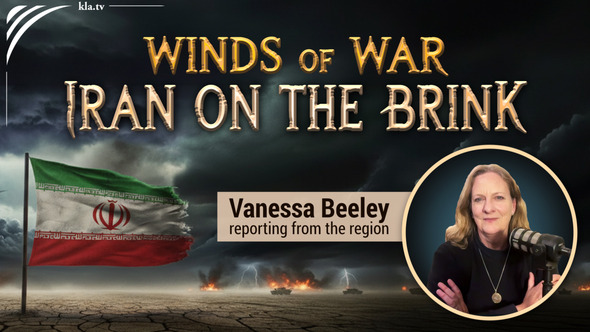
|
Vanessa Beeley is an independent journalist and photographer who has worked extensively in the Middle East. You can follow her work at beeley.substack.com |
|---|
Hashtags: #Iran-en#Syria-en#Interviews-en#WarMongering-en#Israel-Palestine-en#Israel-en#VanessaBeeley-en
Useage rights:
Standard-Kla.TV-Licence


Topics A-Z
Enter a word for search or use the alphabetic search-order









27.02.2026 | www.kla.tv/40460
Interviewer: Vanessa Beeley is a Lebanon-based reporter and writer. Vanessa, thank you so much for coming back on to Kla.tv for another interview. Vanessa Beeley: Thanks for inviting me. Interviewer: For anyone in our international audience who may be unfamiliar with your work, could you give us a brief summary of your reporting work and tell us why you made the Middle East the focus of your efforts? Vanessa Beeley: I'll try to keep it brief. I'm an entirely independent journalist based in the Middle East, really for the last 10 years, living in Syria from 2019 until 2024, up until the very last day when Damascus fell to the al-Qaeda rebranded forces of al-Jolani, or as he's now known, Ahmad al-Sharaa. Now I'm based in Beirut in Lebanon, which of course is on a daily basis under attack also by the Israeli forces. Prior to living in Syria and working in Syria and being on the majority of the front lines during the Syrian Arab Army operations to liberate areas of Syria from the Takfiri forces backed by the US, Israel, Turkey, the UK and the EU. Prior to that I was also Gaza in 2012 and 2013. 2012 under one the former Zionist aggressions against Gaza and during 2013 I spent time Gaza and also in Egypt during the kind of Morsi Era [Mohammed Morsi = Präsident of Egypt, 2012-2013] and then during the protests during which of course he was effectively deposed. Prior to that I guess my interest in the Middle East came from my dad who was British ambassador and one of the most well-known Arabists within the British government from really pre-Second World War onwards. And so I guess I just grew up with the kind of Middle East discussions and discourse at the table and also just really passively being involved in my dad's work until he died in 2001. So that really is the background, very briefly. Interviewer: Thank you. Well, I'd like to begin this interview with a quote from an article I just read. It was, I think it was Glenn Greenwald's latest. And the quote goes like this. „Americans are being bashed over the head with the moral imperative of fighting a new American regime change war. Parenthetically, the exact type of war that President Trump was elected to avoid. This time in Iran, a country three times the population of Iraq.“ Would you agree with the sentiment in that quote? Vanessa Beeley: Well, absolutely. You know, if you go back to the early 2000s and the Brookings Institute paper, „The Path to Persia“, if people read that paper and it doesn't take very long, they'll understand exactly what the U.S. has been planning, of course, in partnership with Israel for the last, let's say, well, really since the Islamic Revolution in 1979 which effectively toppled the Shah, which was very much a regime under the control of the West. And going even further back to the CIA, MI6 toppling of Mossadegh, who really had nationalized the oil industry in Iran and so on, Operation Ajax. So, you know, but we should really expect this after the fall of Syria, after Libya, after Iraq, it's very clear that the United States is absolutely all out to basically secure the national security of Israel, not necessarily of the United States. Interviewer: Now, within that quote, he says, bashed over the head with a moral imperative. And I wonder if it's okay if I introduce sort of a personal anecdote here about something that happened in church the day before yesterday. In my in my Sunday church, there's always a prayer time and and we can have all kinds of prayers: prayers of thanks, prayers of supplication, et cetera. Anyway, when I raised my hand I said, I would like to pray for our nation and our government. And I said, I would like to pray that cooler heads prevail, that they come in and somehow convince the administration, convince the war hawks that this this this belligerent warring nation comes to their senses before we engage in yet another war in Iran. And almost immediately, someone on the other side of the aisle, in retort, he says, He prefaced this with this. „I've been reading lately about the persecution and oppression of Christians in Iran.“ And so he he set this up as if these people need to be liberated. And he says, „if God deems this a necessary war, I'd like to pray for the protection of our people in uniform, all of our sailors and pilots and so forth heading to Iran right now.“ Do you think this is an example of Americans being bashed on the head with a moral imperative? We're just doing the same thing again, are we not? Vanessa Beeley: I'd like to retort to that with an anecdote of having lived in Syria for 10 years. Interviewer: Yeah. Vanessa Beeley: And I can say that Qasem Soleimani, General Qasem Soleimani, who was assassinated by President Trump in 2020, was the number one warrior against ISIS, not the U.S. The U.S. was involved in the creation of ISIS. I mean, we can come on to that. Not only that, he was responsible for training the Christian national defense forces inside Syria to defend themselves against the Takfiri-Wahhabi fanatics who besieged many of the Christian communities, both Orthodox and Catholic, in all regions of Syria. And in fact, when there was a suicide bombing, a double suicide bombing attack on a Lebanese Maronite village in the northeast of Lebanon in 2016, if my memory serves me right, and I went to the village immediately after, it was Hezbollah that is considered as as a proxy of Iran. It isn't the proxy of Iran. It's an independent resistance movement that is allied with Iran. It's a very different thing. And it was Hezbollah that came to the defense of that Christian community, surrounded the village and protected it from the various Wahhabi fanatics within the refugees that had come into Lebanon from Syria. And fast forward to 2022, when I myself spent a lot of time in Iran after the Mahsa Amini orchestrated protests and riots back then. And I visited the Armenian Christian communities in Isfahan. Who are, you know, they are not being persecuted. Iran is inclusive. Syria was inclusive. Who is responsible for the persecution of Christians and displacement of Christians from this region? It is the West, and that includes the U.S. Why? Because they want the field left open for effectively what is a Kabul two scenario where Shia Muslim is going to be pitted against the extremist Sunni Muslim factions. They don't want the Christians as a buffer in the region, and that has been ongoing for for decades. There are plenty of documented papers on it, academic papers on it. Why did Canada, for example, offer fast-track visas to Christians from Syria and European countries did the same? Because they want the Christians to leave the area. So who is persecuting the Christians in this region? And they're Arab Christians. They're not Western Christians. They belong to this region, and they want to stay in this region. They consider themselves to be part of the fabric. of this region, but they are literally being driven out by the regime change projects that introduce these Al Qaeda type elements that of course, consider Christians as infidels. Look at what's happening now in Syria. Christians are being persecuted under the Trump backed Jolani government. And Trump has very recently in the last 48 hours admitted that he put Jolani in power. I would argue with that because MI6 was heavily involved in it and a number of other countries were also heavily involved in the final downfall of Damascus and of Syria as as a sovereign nation. So no, I entirely disagree with the statement. I guess I would question the background to that person's Christianity, because there are a number of, let's say, Zionist leaning Christians in the United States, many of whom are in Trump's administration, who will uphold this kind of narrative because of their allegiance to Israel. Interviewer: Yes. Vanessa Beeley: So but I'm not saying that he is, but I'm saying that that's kind of a common narrative that I'm hearing from that faction in the United States. Interviewer: Yes, and it it seems to be a narrative that is a bit ignorant of history and ignorant of our previous wars because I don't think Christians experienced a net increase in safety and so forth after what we did in Afghanistan, Libya, Lebanon, Iraq, and Gaza. In fact, when you say that they want the Christians out, is this akin to the Israel wanting the Jews out of the surrounding nations? And haven't the Jews been living in relative peace in Iran for centuries? Vanessa Beeley: Yes, and in fact, that's an interesting point because, again, in 2022, I visited Jewish communities also in Isfahan. And I actually asked them why had they not basically moved to Israel during the creation of the State of Israel. And they said, because we belong here. We are effectively Iranian Jews. Iran is our country and we feel safe and we feel protected here. So exactly the opposite. And I believe, i can't remember exactly when, but there was an incentive by Israel actually offering a financial incentive for Iranian Jews to move to Israel. And effectively it was turned down. They didn't want to leave. And I think it's the second largest Jewish population in the world after Israel. Interviewer: Wow. that's That's amazing. I would be surprised that it's even larger than the Jewish population in the United States. You're talking absolute numbers? Vanessa Beeley: As far as I know, double check it. [According to Wikipedia Iran has the third-largest Jewish population, only outnumbered by US and Israel] But that's what I was told when I was in Iran. It's it's a very big population. Interviewer: That's amazing. Okay. Thank you for that background. Now let's talk about the situation right now. If we are on the cusp of war, but be first before I get to that question, I want to ask you, Speaking of the demonstrations in Iran, which have been in the news so much, apparently it's it's it's still trending like crazy. This 36,000 number, etc. Are foreign influences behind the demonstrations in Iran or are they grassroots and purely Iranian? Vanessa Beeley: You know, this is kind of textbook strategy for the intelligence agencies in the West. Interviewer: Yes. Vanessa Beeley: We saw it in Syria, alleged security forces crackdowns on peaceful protests when the reality was that the so-called peaceful protesters were killing not only security forces who were unarmed for the first six months of those protests by decree of the president and the government in Syria so that they didn't harm the their own people in Syria. But even fire brigades, civil defenses were were coming under attack just because they were trying to keep peace among the different factions in the protests back in Syria. And effectively, from what I understand from talking to many different people inside Iran, the protests began peacefully around the the start of January 2026. And they were really among the bazaaries, as they're called. So the people that run the bazaars that have the shops inside the bazaars in Tehran and across Iran. And I met many of them again. I think it was in Isfahan and in Shiraz. And even back in 2022, of course, they were fed up with the economy. They were fed up to a degree with the isolationism, the fact that they couldn't export to everywhere in the world. They had very limited availability of trade and buyers for their products, right? And there was very little tourism because they had depended for a long time on on tourism. Interviewer: Because of the embargo, correct? Vanessa Beeley: Yeah, of course. Who is isolating Iran? It's the United States and the entire Cabal through sanctions, but also through isolationism. And with Trump putting tariffs on anyone that buys Iranian oil, et cetera, et cetera. And so the the economic pressure had reached a point where really the Bazaaris were going out on the streets and saying, like, we need some help. because we're struggling economically. And at that point, the security forces, the police and and and the Basij, as they're called, the the kind of local security forces, really, volunteer security forces, were actually marching with the Bazaaris because they're also on probably among the lowest wages in Iran. Right? So it was if you look at actual videos of the early protests, you'll see how friendly and jovial they all were. And they have a point. Everyone accepts that they have a point. But of course, the entire point of sanctions is to incapacitate a state to be able to improve living conditions inside Iran. Having said that, I do want to make a very quick point. When I went in 2022, coming from Syria, which was being crippled by economic sanctions, war, U.S. occupation of its oil reservoirs and its agricultural areas, I was shocked by how well looked after Iranians are. I went to some of the poorest areas in Tehran. The houses were were boiling hot in midwinter. They had free gas, free electricity, 24-7. The streets were incredibly clean. Fuel for your car, of course, was ridiculously cheap. I think we filled up the camper van we were traveling in with about $3. And everyone has state electricity and gas and water. Of course, there are problems with water now. If we have time, we can come on to that because I do actually think that's part of the hybrid war against Iran. And then basically what happened was, I think it was for three days, so the 8th, 9th, 10th of January, the violent rioters started joining the protests, but they were effectively attacking protesters also. They were attacking anyone that disagreed with them. Many of them were heavily armed. Many of them conducted some really awful attacks on the security forces. There were multiple stabbings, dismemberment of corpses, burning of corpses, burning of mosques, burning of essential infrastructure, the murder of doctors, nurses, medical staff, the burning of hospitals. I mean, which Iranian in their right mind is going to come out on the streets and destroy the infrastructure that they all need? This doesn't, you know, just as in Syria, this doesn't make any sense. Interviewer: So does it make, does it make, sorry, does this make sense as a provocation? Just like say, 25 years ago with the WTO protests in Seattle, where they had the black bloc intervene to get the violence going. Are they trying to provoke a reaction from the Iranian regime in order to get a video worthy moment for international media? Vanessa Beeley: Well, they were basically trying to destabilize Iran internally and turn the people against the regime or against the government. Interviewer: Yes. Yeah. Vanessa Beeley: And effectively what happened, if you look at the numbers that you're talking about, which are insane, like 36,000, I've seen various numbers circulating on social media and in the media. But let's have a look at the actual organization, the main organization that is producing this information is an organization called the Human Rights Activists in Iran or of Iran. And their human rights activist news agency. So H-R-A-I and H-R-A-N-A. And I've seen every single organization media outlet from the United States, from Britain, the BBC, Channel 4, all citing this organization for the numbers that they're then disseminating. Now, you would assume human rights activists of Iran would be based in Iran, right, and reporting from the streets of of Iran. that that would be That's an acceptable assumption from anyone. But none of these media outlets did due diligence because guess where this organization is based? Fairfax, Virginia. And it's funded by the National Endowment for Democracy, NED, which is known to be a CIA asset and and a CIA outreach agent. Interviewer: Yeah, isn't Fairfax, Virginia spook central in the United States? Vanessa Beeley: Yeah, yeah, exactly. Interviewer: Yeah. Yeah. Vanessa Beeley: So, you know, but people are are just simply, and it is the responsibility of the media. I mean, any media outlet should first of all look at the source. But they're not doing that, of course, just as they didn't do it in Syria, just as they relied on CIA and MI6 assets in Syria for their information, which they just regurgitated without any verification whatsoever. That's exactly what they're doing in Iran. And even if you look at media outlets like „Iran International“, again, you would think Iran International It's Iranian based. No, it's Saudi funded. It has studios in Israel and it's actually effectively owned, the director is based in London. Interviewer: That's amazing. You know, I looked at, I typed in a web search about what's going on in Iran today, and Time Magazine and a number of local TV stations around the country, they all sourced Iran International as the authoritative source on all this. Vanessa Beeley: Yeah. Yeah, it's either Iran international or BBC Persia, and I don't have to say too much about the BBC because, you know, they're responsible, in my opinion, for for what is now happening in Syria just as much as the British government is, just as much as the US government is, because the media is effectively an extension of the intelligence apparatus in all of these countries. And it is basically channeling foreign policy strategy and intelligence operations through its media outlets to, as you said, to brainwash people into believing that they're fighting the just war in whatever country that they know nothing about in a region that they probably the majority of them can't even pinpoint on a map, to be honest. Interviewer: Yeah. You know, there's one really bizarre development in this reporting on Iran, and that is, I haven't researched it myself, but I get this from my team at KLA, and they said that Mossad, actually Mossad came out and told the Iranians, they're on their side, that, quote, „we are with you on the ground“. Vanessa Beeley: Yeah. Interviewer: What sort of universe do they think that that's going to be a positive? I mean, do the Iranians not know anything about Mossad? Did this really happen? And what's going on? Why would they do that? Vanessa Beeley: No, they came out very publicly. And actually, if you look at Netanyahu's speeches for, I think, about the last 10 years, he's effectively inciting regime change in Iran. He's telling Iranians, look, if you throw overthrow the regime, we'll lift the sanctions, we'll help you develop, we'll do X, Y, Z to make your life so much better because your regime won't be spending all this money on foreign wars. Well, hold on a minute, isn't Israel probably the most sort of warlike entity in this entire region that has kept the entire region in in a state of war, chaos and destabilization since its inception? Right. But this is all getting projected onto Iran. Interviewer: Yes. Vanessa Beeley: So it's been very clear. Of course, it's clear. And I mean, they put out a very recent documentary on how Mossad was training the Kurdish separatists to overthrow the government in in Iran. So they're blatant about it. They have absolutely no qualms about saying that we want this government gone. Interviewer: Yes. Vanessa Beeley: And we want Iran to be basically balkanized along the lines of the "Clean Break" doctrine [Clean Break Doktrine = policy paper created for Benjamin Netanyahu calling for destruction of the Oslo Peace accords with Palestine and war with Iraq, Syria, Lebanon and Iran] from 1996, 1997. They want the entire region, including Iran, fractured, balkanized and carved up because that makes it so much easier for Israel to both expand, not only expand from a settlement perspective, but to expand economically and from a sphere of influence perspective. Interviewer: I mean, you're answering the question that was coming up next, which which was, what exactly does Israel and the American administration in Washington, D.C. want? At the core, and I think you just answered part of it, they don't want any sort of stable government or country with any kind of military strength, they basically, if they can't have the land, they want their the people around them to be defenseless and weak, correct? Vanessa Beeley: Yep. They don't want any independent sovereign nations. And that's why, of course, they've destroyed Iraq. And if we go back to General Wesley Clark, he named the seven countries with Iran at the end. Syria is is basically pivotal to the breaking of the spine of the resistance axis. What do I mean by the resistance axis? I'm talking about the pro-Palestine, anti-colonialist, anti-imperialist axis, which goes from Iran to Yemen, both of those of course are state resistance actors, to Iraq where you have non-state actors and some state actors because the popular mobilization forces have been absorbed into the official Iraqi military. Syria of course was a resistance state, previously it was a sovereign nation, it had independent banking, it wasn't in debt to the IMF and the World Bank. And it had a policy which basically refused to abandon justice for Palestine. Then you have Lebanon non-state actor, which is Hezbollah and the Amal Movement [Amal Movement = Lebanese political party]. Again, they're very inclusive of other resistance movements, even Christian movements here in Lebanon. So I don't want people to get the impression this is just all an Islamic resistance movement. It isn't. It's inclusive in all those countries of every single sector of society if they are opposed to Israel, the occupation of Palestine, and any imperialist projects. And then, of course, you have Palestine. If you're going to say that this is a Shia Islam thing, the resistance in Palestine is Sunni. Interviewer: Yes. Vanessa Beeley: Absolutely majority Sunni. And yet Iran is defending Palestine because Palestine is the issue that is core to its foreign policy basically. Right. Interviewer: Right, right. Vanessa Beeley: And so what does Israel want? You're absolutely right. When you pinpointed the fact that Israel doesn't want any independent or even not independent, even, basically allied with Israel, like Saudi Arabia. It hasn't signed the Abraham Accords, but it is still working. It was created by the British to work in lockstep with Israel, just like UAE, to a lesser degree Qatar. Qatar is more wedded to Turkey, but was still heavily invested in the takedown of Syria because... Someone told me, it was actually the Venezuela ambassador who was formerly in Syria and now in Lebanon, and he told me he remembers, I think about 20 years ago, and I can't remember the name of the Mossad director who was talking about it, and he said, someone said to him, we should take out Lebanon. He said, no, no, no, we have to take out Syria because if we take out Syria, the whole axis is weakened to a point where then we can take out Lebanon. There's no problem. So this has always been the plan for for Syria to be taken taken out completely. And what happened, I was still in Damascus the night that Jolani's forces entered Damascus and surrounded my house. And at that point, Israel started bombing all of Syria's military installations with bunker buster bombs because there was no Syrian army to fire air defense missiles at the incoming missiles so they could do what they wanted. They destroyed the Navy, they destroyed the Air Force, they destroyed air defense, so they left Syria completely defenseless, actually, in any kind of kinetic war. The same, to an extent, they normalized with Egypt back in 1979, and until now they've ensured that Egypt stays out of the Sinai militarily. Jordan, of course, is pretty much a vassal state still of Great Britain, so it's not necessarily going to be a big threat to Israel. Saudi Arabia, I think, is at some point going to be in the crosshairs because it's doing these ostensible deals with Trump on supplying not only defense capability but offense capability, and that long term is not going to be acceptable to Israel. Turkey also, I think, is going to be a target. We're already seeing a kind of a fracture and fissures appearing in the relationship between Turkey and Israel because you've got competition between Erdogan's Ottoman Empire, neo-Ottoman empire ambitions and Israel's expansion ambitions. So at some point, in my opinion, there is going to be a degree of clash or regime change in Turkey or some degree of pushing back against Turkey and containing it within its borders and reducing its capability to militarily challenge Israel, not now, but in the future. And yes, this is incredibly important for them. That's why they've been pushing Israel For the disarmament of Hezbollah, they're blackmailing the Lebanese government. And both blackmailing and incentivization is coming from Saudi Arabia. Blackmailing is coming from Israel and the US to disarm the resistance. The same in Iraq. Yemen, Trump tried to go up against them. and actually, he had to withdraw after I think it was about three days because the Pentagon threw their hands up in horror and said, you're spending too much money and you're not achieving anything. So, so get out because we need these missiles, whether it's for Iran or China, we don't know. And now, of course, they consider they if if they can weaken or destroy Iran to the extent that they can cut off the head of this resistance axis. And by that, I'm not saying that all these resistance actors are proxies of Iran. That's a very important point to make. They're allies of Iran. But Iran is huge. It's vast. It has enormous capabilities of weapon production, missile development, and so on. And therefore it is to a degree the head of that resistance axis. And so now that's what they need to achieve because once in their minds Iran falls, then it's easy for them to sweep the the rest of the Middle East or West Asia of those resistance actors. Interviewer: Amazing. Well, Vanessa, you know, you're doing a really good job of anticipating my questions. And you you were first to bring up Wesley Clark. And Iran happens to be the last of these seven countries, is it not? I mean, we've done our job on the other six. Vanessa Beeley: Yes. Interviewer: So, and and you just answered why they want to go after Iran for the final, the seventh. What beyond what you just mentioned mentioned, is there going to be any resistance to the Borg, let's call it, the Borg? The cult, as David Icke calls it. If Iran goes down and there's no more resistance in the Middle East to America, to Israel, what happens then? Vanessa Beeley: That's, and yeah, I think that's the million dollar question. it's It's the reason for the anxiety for the people here in Lebanon, for the people in Iraq, Yemen, to a degree. Yemen is is kind of, I put that to one side because Ansar Allah [Ansar Allah = Also known as Huthi Movement] as a movement is extraordinary. What they've achieved despite being under aggression since 2015 themselves for the last 11 years and under a severe blockade and sanctions, starvation, lack of medical care, etc. And yet they were still able to close the Red Sea to shipping to the Zionist entity during well, the genocide is still ongoing. It's been ongoing for 100 years, but let's say since the 7th of October, right? And it is still happening. People are still being, Palestinians are still being slaughtered in Gaza and West Bank, but we can we can possibly come on to that a bit later in the talk. Interviewer: Okay. Vanessa Beeley: But I think the scary thing is for me, and it's something that I study a lot and research a lot, the infiltration of, for example, Unit 8200, the Zionist spy unit, into all sectors of British society, whether it's health, whether it's cybersecurity, whether it's the military the Ministry of Defense, who store all their information on Oracle, which is basically Zionist owned, right? You've had Yossi Cohen, the former director of Mossad saying every phone in the world today has a bit of Israel in it. And that's after they killed and maimed 3000 people here in Lebanon, the majority civilians, children, women in their homes through the Pager attack [Pager attack = Terror attack by the Israeli government in 2024 making pagers of Lebanese and Syrian Citizens explode], and then gave the golden Pager award to to Trump. I mean, it's just pure psychopathy as far as I'm concerned. Interviewer: Was that golden pager a warning to him? Vanessa Beeley: Oh possibly. I don't know. Interviewer: Yeah. Vanessa Beeley: I mean, I can't speculate on that. I mean, he seemed quite happy to receive it. And I didn't see him objecting to you know the mutilation of 3000 people here in Lebanon. Interviewer: Yes, yes. Vanessa Beeley: And I have to say that was horrifying because many of them at that time were brought to hospitals in Damascus. And I had doctors who'd gone through 14 years of war and seeing awful injuries in floods of tears over that. You know A mother who who was begging the doctor to take her eyes to give them to her daughter because she had an entire life ahead of her and and she was completely blinded. So you know I don't have any great sympathy whether it was given as a warning or not I don't care. The fact is that Trump signed off on on everything that has happened to the people of this region, whether he was in government or not. He paved the way for what happened in Syria in his first administration. He picked up from where Biden left off. And in fact, it increased under his watch in this second administration because he took any kind of block off arms supply and support for Israel, which enable even more slaughter. I mean, to give you another story from here in the last three days: He's currently a civilian, right? And I mean, he lives in the south, and of course, everyone in the south, just like in Gaza, everyone is Hamas, everyone who lives in the south of Lebanon is Hezbollah or connected to Hezbollah and therefore a legitimate target. He'd gone with his wife to his wife's parents' house. And while he was there, he received a phone call from an Israeli who said to him, „okay, you have a choice. You die with your family or you die alone, but you're going to die. So make a choice.“ He basically made the choice. he He kept the family in the house. He got in his car. He drove away and they killed him. That's the mentality that people need to understand that we're dealing with. That's just one story. And then look at what the Takfiris [Takfiri = Muslim accusing other Muslim for being an apostate] are doing in Syria to to the minorities there, to the Alawites , to the Jews, to the Christians, now to the Kurdish civilians. And so for me... I think when there is no resistance left in West Asia, when there's no barrier for that wave of psychopathic Satanism, I can't describe it any other way. Interviewer: Yeah. Vanessa Beeley: There's a million stories I could tell you from inside Syria. Interviewer: Yep. Yep. Vanessa Beeley: And just consider that Trump has just enabled the release of ISIS in northeast Syria. So he's increased the number of terrorists in Syria by about 20,000. And that's a conservative estimate. Interviewer: Yeah. Vanessa Beeley: And those are being fostered and and armed and equipped by the United States. What happens when this region, if it does, falls to Israel and the United States? Where do they go? Interviewer: Yeah. Vanessa Beeley: Who's going to receive the the blowback of all of this interference in in this country, in this region? Interviewer: Yes. Yes. And you know, you hear the word regime change coming from the U.S. regime. We need regime change in Iraq, regime in Iran, regime change in Iran. Isn't the Syria example? I mean, it should be like the talking point for the for peace lovers like you and me. The talking point should be, this is what you get with regime change. Should it not? Just point to Syria before we go into Iran. Vanessa Beeley: Well, I mean, even before Syria, how's women's rights doing in Afghanistan? Interviewer: Yeah. Vanessa Beeley: That was the main reason that the US went into Afghanistan. You remember all the Avaaz women's rights adverts that were on kind of buses and all over the place? We're going to liberate women in Afghanistan. How are they doing now under the Taliban? If you look at Libya, it's just a drug-fueled sex slave, sex trade hub now, right? Iraq. Economically, how is Iraq doing? And that's despite the alleged billions of aid that poured in after the second Gulf invasion, after the second Iraq invasion, which, of course, look at anybody can look up what Paul Bremer [Paul Bremer = American named presidential envoy to Iraq by George Bush, 2003-2004] did. And all of this money coming in that didn't go to the people, it went to the ruling elite in Iraq to keep them happy, keep them in the U.S. pocket, continue to allow the U.S. to occupy Iraqi territory militarily. And then look at Syria, exactly the same thing. Tom Barrack [Thomas Barrack = appointed US-Ambassador to Turkey and Special Envoy to Syria by Trump] is doing exactly the same thing. All these nefarious pledges and and financial investment that's coming into Syria, where is it going? No one's got electricity. Everyone's unemployed. Everyone is starving. No one has any kind of dignity. There's no safety. There's no law. There's no security. Interviewer: And this is all according to plan. Vanessa Beeley: Yeah. Interviewer: Yep. Vanessa Beeley: Yeah, because they don't want, and and that's the point I also want to make. What is happening here? What is happening in Gaza? I mean, now you've got the introduction of digital surveillance, so you're bringing the technocracy into Gaza. It already existed in Hebron in the West Bank, which is one of the most surveilled areas in Palestine, and and vindictively surveilled, right? Malevolent. It's not for security. It's to kill Palestinians. Interviewer: Right. Vanessa Beeley: That's going to come everywhere in the world. You're seeing it now with with the introduction of Palantir into American security systems, into ICE. They were brought in by Trump, and they're all Zionist-affiliated agencies. Interviewer: Okay. But just to finish up, i mean, we can't finish up with any place because they're all so interconnected. But to kind of finish up with Iran, my last question on Iran would be, how much support does the Iranian government have from the Iranian people? We're led to believe that they're at odds. Vanessa Beeley: Anyone should go to a a viable Iranian channel on social media and look at the celebrations of the 47th anniversary of the Islamic revolution and the millions who came out on the streets, students, workers, even people who are opposed to the government came out on the streets to support the government because they understand that Iran is being targeted. And the same happened in Syria in the early days. No one filmed the hundreds of thousands that came out in support of President Assad. Of course they didn't. That's not newsworthy. That doesn't support American and Israeli foreign policy. So they're not going to show that. But there are multiple images, even after the protests, or during the protests actually, there there were huge numbers. I mean, I am talking millions in Tehran and in cities across the whole of Iran, even some areas which people told me, people don't usually even come out of their houses. It's cold and they don't want to come out on the streets. But even in these cities and villages like Mashhad, for example, there were tens of thousands out in support of the government and the military. Interviewer: Yes. Okay. Moving on, Vanessa. Briefly, It seems like it seems like a Gaza is on the back burner. We're all focused on Iran now. So we've temporarily forgotten about Gaza. And by extension, we've forgotten about the West Bank, which is experiencing things very similar to what's going on in Gaza. Ring our bells, shake our head a little. What should we be also focused on at the same time as we prepare for a war in Iran, concerning Gaza and the West Bank? Vanessa Beeley: You know, I mean, I say people talk about a two-state solution, and I've always opposed it. I've always said it's it's not viable. Even in 1936, the Peel Commission [Peel Commission = British Commission in Palestine, the first to suggest a two-state solution] dismissed it as not being viable at all, despite, of course, being aligned with British policy at the time. Interviewer: Yes. Vanessa Beeley: But what territory is left? What stone are you going to put? What remnants of Palestinians are you going to build two state on? We look at Gaza now and since Trump's ridiculous board of peace, which is clearly intended to replace the United Nations to some degree. When we look at the so-called peace plan, what does it mean? It just means really the final solution, the elimination of any resistance, but also of the majority of Palestinians. Israel hasn't stopped bombing. It hasn't stopped starving them. It is only allowing a trickle of humanitarian aid in and nothing, as far as I'm aware, has got in through Rafah [Rafah = Palestinian city in the south of Gaza] . And what is the intention of the Peace Board and the members of the so-called Peace Board, which is kind of to some degree one of the executive bodies, I think, is being headed up by Tony Blair who was responsible alongside Bush with the of the destruction of Iraq and former Yugoslavia and was ridiculously made Middle East so-called peace envoy for for a number of years and is sort of roundly hated. Interviewer: Yes, isn't Tony Blair on the Gaza Peace Board? Vanessa Beeley: Yeah, exactly. And effectively, what is the plan? And I‘ve been saying this from the beginning, and again, people have to remember that the Gaza model is what is going to be rolled out globally, in my opinion, with the upcoming rise of the technocracy and so on. And effectively what it is, Gaza will be made into a link in the India Middle East Economic Corridor, which will go from Mumbai through the Arab Gulf states. Gaza will be made into a sort of Dubai style free trade zone. Palestinians that remain will be kept in labor camps. So they'll be basically kept in concentration camps. And the digital surveillance is going to ensure that they only get fed if they provide biometric security identification. They're suggesting to carve Gaza up into security zones, effectively controlled by a number of countries, the majority of which, of course, have access to what I call the Wahhabi fanatical military, whether it's Kosovo, Indonesia, I can't remember all of the countries that are intended to make up the security forces. So effectively, they'll be aligned with Israel to a large degree, because as we know, Israel has been funding and arming ISIS elements in Gaza to attack Hamas and attack civilians there as well. So they're using them as a proxy both in Syria also against Iran in the future and in Gaza. And so Palestinians are not going to have any agency. They're just going to become cheap labor, effectively, while Israel and the United States and that entire cartel is going to steal Palestinian gas, of course, which hasn't yet been explored. Interviewer: Oh, yeah. Vanessa Beeley: And you're quite right in saying that what is happening in West Bank is exactly the same, and it's been ongoing since October the seventh. Now Israel has brought in this new legislation where they can effectively appropriate Palestinian land in Area C, which is really the the largest section of territory within the West Bank because it's divided into A, B, and C. And they'll appropriate Palestinian land as state land. And that way they're going to actually annex around 83% of area 3. At the same time, of course, they're increasing, absolutely exponentially the building of settlements in area A and B. And now they're bringing in tanks and fighter jets, military, and so on. So now the genocide is starting. It was already ongoing, but now it's intensifying in the West Bank. So as I say, where is this two-state solution going to end up? The Palestinian Authority, I mean, even Russia negotiates with the Palestinian Authority and Russia is talking about giving one billion in in reconstruction for Gaza to who? To Israel, to the Palestinian Authority, which is a stooge of Israel, to the Trump Peace Board. All of them have the same intention. All of them have the same goal, which is to eliminate resistance, basically eliminate Palestinians, eliminate the Palestinian cause, and subsume Palestine, into what will be a sort of hybrid state of of Zionist-movement power and dominance in the region backed by the United States and and Britain and so on, and disappear Palestinians. Interviewer: Amazing. Now, you mentioned you mentioned turning it a Dubai-style state, and you mentioned gas. I read that there might be a motherload of natural gas off the shores of Gaza. Do you know about that? Vanessa Beeley: Yeah. Yes. Oh Gosh, I've forgotten the actual numbers now. But yeah, it is very big. And of course, they're already using the gas, not on the Gaza coastline, But the gas that they are using off the Israeli coastline is, of course, Palestinian gas. There's also gas off the coast of Lebanon, which at the moment there's an agreement of exploration by both Israel and Lebanon, if I remember correctly. There's also gas fields off the Mediterranean coast of Syria. So you know if we're talking resources, but also one of the most important resources for Israel is water. And of course, 30% of their water intake comes from the occupied Syrian Golan territory, which Trump has of course now gifted to Israel, even though it's Syrian territory. Interviewer: Yes. Vanessa Beeley: And the territory within the south of Syria that Israel has occupied also contains some of the largest water resources in the region, supplying not only Syria but also Jordan, for example. Interviewer: Yes. Vanessa Beeley: So water is a very, very important resource on the list. Interviewer: What a savior Trump is. He's given water to Israel. No wonder they they minted a gold coin of him with him on one side and King Cyrus on the other, liberating the people of Israel. There's something you talk about called the negotiations trap. And when you talk about what seems to me irreconcilable differences between the two sides. I think these negotiations are meant to have it that way. Like you put the Palestinians in a situation where that there's nothing that that the allies say offer that is amenable to their interests. This is all on purpose. Are negotiations, have they ever been, like, Camp David or have they ever been legitimate? Has the American Israeli side ever gone into these and negotiations in good faith? Vanessa Beeley: No, in my opinion. Because you know if you talk about the Oslo Accords [Oslo-Accords = Series of peace agreements from 1993 between Israel und Palestine (PLO)], what happened, I mean, every single step or or in the process of negotiation has further reduced Palestinian agency and their ability to actually seek justice, reparations, independence, freedom from, you know, what is an oppressive occupation. Did that improve after the Oslo agreement, after the Camp David? No, not really. It got worse. And that's the point. I think it was President Assad actually at the emergency Arab summit before the fall of Syria that he actually said there is no point in negotiating or compromising or making concessions for Israel because there's no respect for that compromise. There's no respect for those concessions. They just take more. And and you know that that is that is absolutely visible for everyone to see if they're paying attention. Interviewer: Yes. Vanessa Beeley: And the fact that in the 12-day war, of course, that was a trap. The assassination of General Qasem Soleimani and, by the way, the commander of the resistance forces in Iraq that were fighting ISIS at the time, Abu Mahdi al-Mohandis, who I met in 2017 in Iraq, he was also assassinated. They were lured to Baghdad on the basis of negotiations with Saudi Arabia. So, you know, when you talk about negotiations being a trap, they are exactly that. The 12-day war began when the Iranians believed they were still in the negotiation track, when they were were thinking that they were getting somewhere with the negotiations. Now, I will say negotiations are also to buy time. It may be that Iran also needs to buy time. There are air defense equipment coming in from China, not to the extent that people are actually seeing it or saying it is happening, but it is coming in. Interviewer: Okay. Vanessa Beeley: And Iran needs time to prepare because they're facing not only a kinetic war, they're facing a hybrid war. As I said, Israel is training the Kurdistan separatists on the border with Iran, but also even because of course they can cross border quite easily from the north of Iran and the western borders of Iran. And so there is a threat of attacks on the borders with Iran from the west and the northwest. And then you've got Trump building up what I think is potentially as big as the buildup for the 2003 Iraq invasion. That isn't happening for show. A lot of people are kind of saying, well, maybe he's doing it just to put pressure on the negotiations. No, he isn't, because he doesn't want to achieve anything out of the negotiations, because ultimately Iran might agree to only enrich uranium to the point of supplying civilian electricity and so on, which is what they've been intending to do anyway, because of course, because of sanctions, electricity is under pressure In Iran. Energy is under pressure in Iran, and they need to find a replacement for it. So if you like, America is creating the environment in which Iran has to try and find alternative ways of providing energy to the population. Then Israel is demanding that the missile capability is reduced to 300 kilometers, which is kind of nothing. In other words, that it's no threat to to Israel. Well, they're not going to do that. No country is willingly going to decimate their own defense capability, right? And so, they're yeah, again, just like Hamas, they're being put in a corner where the negotiation demands from the Israeli-American side is crossing Iran's red line every time. But this is a ploy to then say, well, you know, Iran pulled out of the negotiations. Interviewer: Yes. Vanessa Beeley: They're so intractable. They're not going to you know they're not going to make compromises and so on. Well, to a degree, why should they make compromises? They know the war is coming. Interviewer: Yeah. Vanessa Beeley: It's not going to stop. They know the war is coming. So of course they're not going to back down on a number of those points. And why should they? America wouldn't. You know, if if the same were reversed and China was building up on America's coastline. And they were demanding negotiations with America to reduce their missile capability, their defense capability, their progress and development in technology capability, what would America say? But it becomes very worrying, and I was going to mention Latin in America because we've talked about the Abraham Accords that were brought in by Jared Kushner [Jared Kushner = Son in law of Donald Trump, closely intertwined with Israels Government] and, of course, Jared Kushner is heavily involved in the development of the waterfront estate in in Gaza. He pushed, first of all, the Abraham Accords to basically capture the Arab Gulf states in in this region. And Morocco, I think, was one of the first signatories. But let's have a look at Latin America and what's going on there. The fact that Trump kidnapped an acknowledged president of Venezuela. He's now besieging and starving Cuba. And meanwhile, Milei in Argentina has introduced the Isaac Accords in Latin America, right? [Isaac Accords = Strengthening ideological and economic ties between Israel and Latin America] And America is ensuring that almost every new government across Latin America is right wing, fascist, Zionist aligned. And look at the recent wildfires in Patagonia in Argentina that have been blamed by locals upon the Israeli settlers. And going back to the so the beginning of Zionism, Theodor Herzl actually was eyeing up a number of other countries other than Palestine for Jewish settlers post Second World War. And one of those was Patagonia or an area in Patagonia between Chile and Argentina. Interviewer: Oh, right. Vanessa Beeley: Right. Interviewer: Yep. Vanessa Beeley: And Cyprus and of course, Israel has effectively now pretty much occupied Cyprus and sort of inveigled itself with the Greek Cypriot government there and is is now pushing back against Turkey in in northern Cyprus. Vanessa Beeley: So in in my opinion, we're already there. It's just not formalized because to a degree, Israel still has wars to fight here. It still needs to get rid of Iran. You know, so it's still ongoing. But once that is done, there's nothing to stop it. We're already, in my opinion, in that state. And when we look at the incoming surveillance, the incoming CBDC, and everything is going to be centralized and everything is going to be surveilled, nothing is going to be done that isn't watched by the government, basically. Who's bringing all that in? If you look at every single organization, whether it's Palantir, BlackRock, Oracle and a number of others. They're all infested with former Israeli spy unit 8200 actors. And the directors or the or the founders are are all Peter Thiel of Palantir, Alex Karp, Larry Fink, all of them, Larry Ellison, all of them are self-avowed Zionists, pro-Zionists, pro-Israel. I think now we're talking about a sort of transnational ruling elite that exists in every single country and are allying on certain aspects, even China with America. America's weapons industry depends on China that has a monopoly on the rare earth minerals, for example. Interviewer: Yeah. Vanessa Beeley: Russia now is pivoting under Trump back towards the United States. That's very clear. And I think that was clear as being one of the reasons why Syria was abandoned and allowed to fall because Trump came back into power. And I was saying at the time, that's it. Russia's going to assume that it now has a chance at negotiation, ending the war in Ukraine, and it will withdraw. I didn't think it would happen in this way, but I had already predicted that they would probably start withdrawing assistance for Syria at that point. And it happened. but it happened in a far more dramatic way than than I thought, than anyone envisaged it would do, to be honest. Interviewer: All right. Well, Vanessa Beely, you've done an excellent job of highlighting what's going on and what we're headed towards. I want to thank you so much for your the hour you've given us and best of luck with your continued work. Vanessa Beeley: Thank you so much. Thanks for having me on. It's always a pleasure to discuss with you.
from -